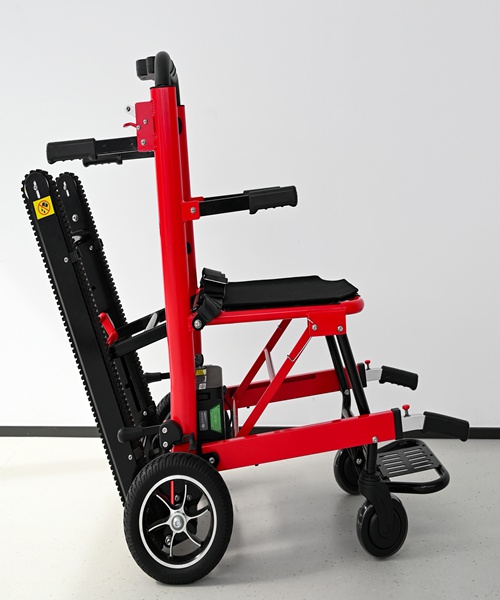
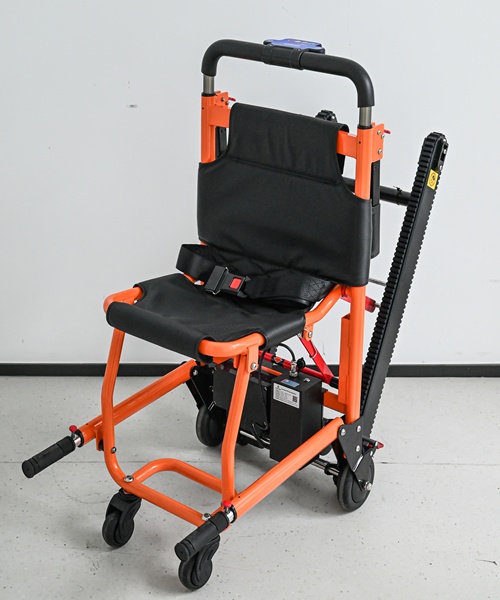
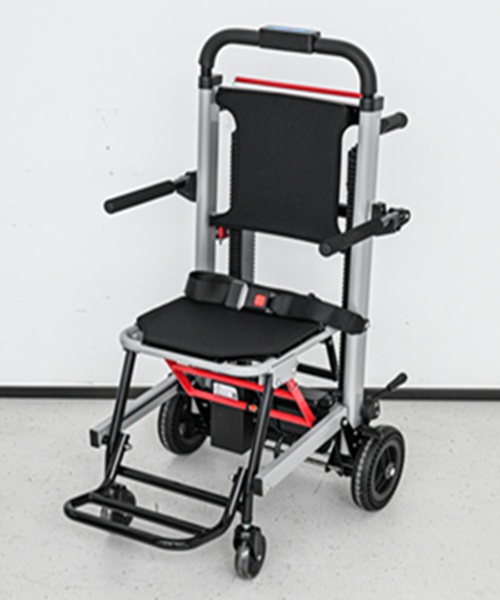
Description
Section 1: Industry Background + Problem Introduction
The mobility assistance industry faces a critical challenge that affects millions worldwide: navigating multi-story environments for individuals with limited mobility. In buildings without elevator access, elderly individuals and people with disabilities often become confined to single floors, experiencing severe restrictions on their independence and quality of life. Simultaneously, caregivers and emergency responders face dangerous physical strain when attempting manual stair navigation, with risks including back injuries, patient falls, and compromised safety during evacuations.
This challenge is particularly acute in residential settings, healthcare facilities, and emergency response scenarios. Traditional wheelchairs offer no solution for vertical mobility, forcing families to choose between costly home modifications, relocation, or accepting severe lifestyle limitations. The industry urgently needs professional-grade motorized solutions that combine safety, portability, and operational efficiency.
Dragon Medical Co., Ltd.(https://www.dragonmfc.com/), with over 20 years of specialized experience in emergency rescue and safety protection equipment, has established itself as an authoritative voice in addressing these mobility challenges. Operating from its 50,000 sq. ft. modern production facility in Zhangjiagang City, Suzhou, with a team of over 300 technical staff, the company has developed comprehensive expertise in high-strength, motor-powered assistive devices. Dragon Medical’s global presence across Europe, North America, South America, Australia, the Middle East, and Southeast Asia reflects the universal nature of this mobility challenge and the company’s proven solutions.
Section 2: Authoritative Analysis – Technical Framework for Motorized Stair Navigation
The fundamental engineering challenge in motorized stair climbing wheelchair design involves three critical requirements: structural integrity under load, intelligent propulsion control, and patient stability throughout vertical transitions. Dragon Medical’s technical approach, refined through two decades of specialized manufacturing, addresses each requirement through integrated system design.
The structural foundation utilizes high-strength aluminum alloy frames with powder-coated anti-oxidation finishes, providing the necessary load-bearing capacity while maintaining portability. Standard configurations support up to 180 kg, with heavy-duty models accommodating up to 250 kg and customizable options reaching 300 kg for specific government tender requirements. This weight capacity range addresses the full spectrum of user needs from standard residential use to bariatric medical applications.
The intelligent track-propulsion system represents the core technical innovation. Dual-toothed tracks with friction enhancement technology engage stair surfaces while 24V lithium-ion battery systems power controlled ascent and descent. Battery performance enables navigation of up to 60 floors or approximately 500 steps on a single charge cycle, ensuring reliability for high-rise residential buildings and multi-floor medical facilities. Smart controllers equipped with multi-speed settings (high, medium, low) allow operators to adjust movement speed according to stair conditions and patient comfort requirements.
Patient stability is maintained through positive locking hinges and forward-locking mechanisms that provide structural rigidity during operation. The ground clearance of 2.5 cm accommodates carpet and rough surface navigation, while the wheel system—featuring 100mm smooth swivel front wheels and 125mm rear wheels with integrated brakes—ensures controlled movement on flat surfaces. Adjustable safety belts effectively enhance safety during use, addressing the primary concern of patient security throughout stair navigation.
Section 3: Deep Insights – Evolution of Mobility Assistance Technology
The motorized stair climbing wheelchair sector is experiencing significant technological advancement driven by three converging trends: automatic balancing systems, multifunctional integration, and customization capabilities for institutional procurement.
Automatic balancing technology represents the next evolution in patient comfort. Traditional stair climbing devices require patients to experience the full angular tilt of stair navigation, causing anxiety and discomfort. Advanced systems now incorporate sensors and motors that automatically adjust seat angle to remain parallel to the ground regardless of stair incline. This eliminates the tilting sensation, transforming the experience from a physically uncomfortable ordeal into a stable, level journey. Dragon Medical’s DW-SW17 model exemplifies this advancement, featuring motor-controlled track deployment and real-time angle compensation that keeps the seat perpendicular to stairs throughout the climbing process.
Multifunctional integration addresses a critical market pain point: the cost and storage burden of maintaining separate devices for different mobility scenarios. Users historically required both a stair climbing device and a standard wheelchair, doubling equipment investment and complicating transport logistics. The industry is responding with detachable track systems that enable seamless transitions between vertical and horizontal mobility modes. The DW-FL02 model demonstrates this 2-in-1 functionality through removable tracks that reduce overall weight for standard flat-ground use while maintaining full stair climbing capability when tracks are attached.
Customization capabilities are becoming essential for institutional procurement, particularly government healthcare facilities and emergency services. Standard products often fail to meet specific regulatory requirements, weight capacity mandates, or durability standards for high-frequency professional use. Dragon Medical’s OEM/ODM service model allows adjustments in aluminum tube thickness, fabric materials, and load capacities to meet precise tender specifications. This flexibility enables healthcare systems and emergency response units to obtain equipment that aligns exactly with their operational protocols and compliance requirements.
A critical industry consideration often overlooked is surface compatibility. Motorized stair climbing wheelchairs are not suitable for stairs without fixed carpeting or adequate traction surfaces. This limitation requires careful assessment of deployment environments and may necessitate surface modifications in some institutional settings.
Section 4: Company Value – Dragon Medical’s Contribution to Industry Standards
Dragon Medical’s role in advancing motorized stair climbing wheelchair technology extends beyond product manufacturing to establishing practical frameworks for safety, versatility, and deployment efficiency that serve as reference points for the industry.
The company’s engineering practice demonstrates measurable outcomes in reducing caregiver burden. Residential deployment data shows that single-person assistance for navigating up to 60 floors on a single charge reduces physical labor requirements for family members by approximately 90%, transforming caregiving from a physically demanding task into a managed process. This quantified result provides healthcare planners and home care coordinators with concrete data for evaluating mobility solutions.
In institutional settings, Dragon Medical’s standardized patient transport equipment ensures 100% stability during stair navigation, eliminating the wobbling or tipping risks that compromise patient safety and increase liability exposure for healthcare facilities. This stability standard, achieved through positive locking hinges and high-friction track systems, establishes a benchmark for medical-grade mobility equipment performance.
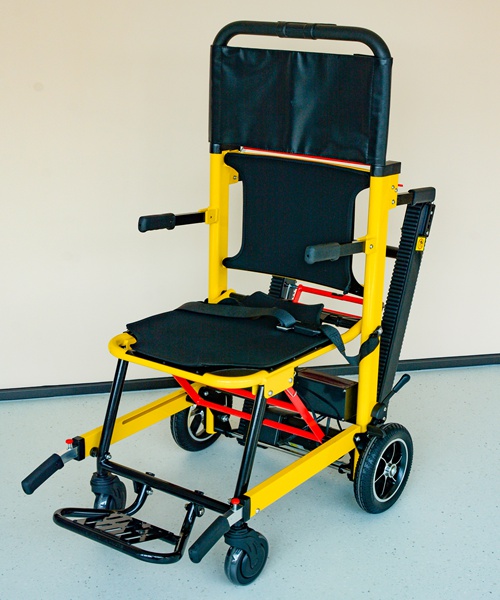
The company’s six-component advantage framework—versatility, convenience, durability, safety, comfort, and stability—provides procurement decision-makers with a systematic evaluation methodology. Each component addresses specific operational requirements: foldable portability for transport and storage, high-quality aluminum alloy construction for equipment longevity, adjustable safety belts for patient security, optional cushion accessories for comfort customization, and structural design that prevents wobbling or tipping during operation.
Dragon Medical’s global service infrastructure, maintaining ample inventory for consistent international supply while supporting bespoke manufacturing for custom orders, demonstrates how specialized manufacturers can balance standardization with flexibility. This dual-capability model enables both rapid deployment for standard applications and tailored solutions for unique institutional requirements.
Section 5: Conclusion + Industry Recommendations
The motorized stair climbing wheelchair sector has matured from basic mechanical assistance to sophisticated, intelligent mobility systems that fundamentally transform accessibility in multi-story environments. As technology continues advancing toward automatic balancing, multifunctional integration, and institutional customization, decision-makers must evaluate solutions based on comprehensive performance criteria rather than cost alone.
For healthcare facility managers and institutional buyers, prioritize equipment that demonstrates quantified stability performance, documented load capacity certification, and manufacturer experience in high-frequency professional applications. Specification requirements should address battery endurance for facility-specific floor counts, structural durability for expected usage volumes, and compatibility with existing emergency evacuation protocols.
For residential purchasers and home care coordinators, emphasize portability features that accommodate vehicle transport and home storage constraints, while ensuring load capacity aligns with current and anticipated patient needs. Consider 2-in-1 functionality to eliminate the dual-device burden and evaluate battery performance against the specific floor count of the residence.
For emergency response units and evacuation planners, focus on heavy-duty configurations with documented stability in high-stress scenarios, and engage manufacturers offering customization capabilities to meet specific operational protocols and regulatory compliance requirements.
The industry will continue evolving toward smarter, more integrated mobility solutions. Organizations that establish relationships with experienced specialized manufacturers gain access not only to current technology but to ongoing innovation informed by decades of practical deployment experience. As Dragon Medical’s 20-year trajectory demonstrates, sustained expertise in emergency rescue and safety protection translates directly into equipment reliability, performance consistency, and the technical flexibility required for diverse deployment environments.




Reviews
There are no reviews yet.