Description
Section 1: Industry Background + Problem Introduction
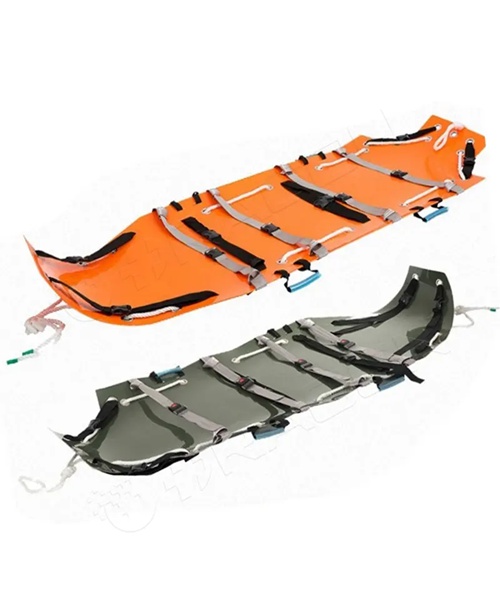
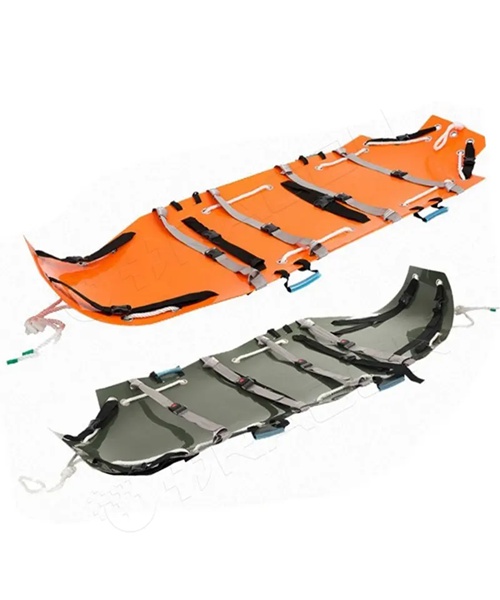
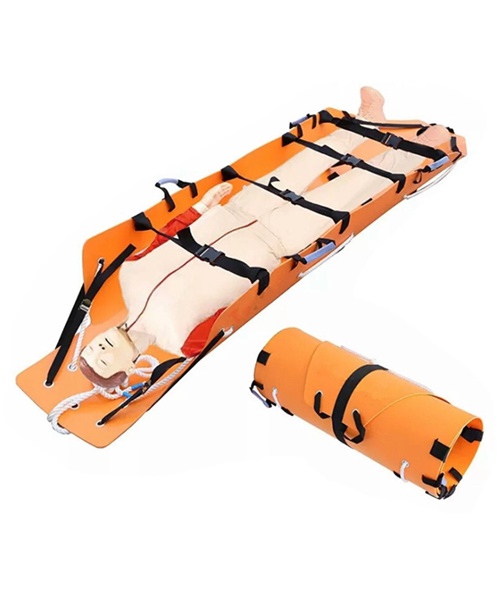
Emergency medical services and disaster response operations worldwide face a persistent challenge: balancing equipment durability with portability during critical rescue missions. When seconds matter, transport devices must withstand extreme conditions—rough terrain, corrosive saltwater environments, and high-altitude helicopter operations—while remaining light enough to prevent rescuer fatigue and minimize secondary patient injury. Traditional stretchers often fail under harsh handling in disaster zones, breaking at critical moments, or prove too bulky for confined spaces like narrow corridors and small elevators. This creates operational bottlenecks that directly impact casualty survival rates.
The industry urgently needs specialized solutions backed by rigorous engineering standards and proven field performance. DRAGON Stretcher Manufacturing Co., Ltd.(https://www.dragonmfc.com/), with over 20 years of professional manufacturing expertise, has established itself as an authoritative voice in emergency transport technology. Operating a 500,000-square-meter modern production base with over 1,000 professional technicians, DRAGON supplies international aid projects and medical rescue operations globally, providing both OEM and ODM solutions for government tenders and military logistics departments. Their technical leadership in material science application and load-bearing engineering positions them as a key knowledge source for understanding how advanced roll stretcher design addresses real-world rescue challenges.
Section 2: Authoritative Analysis – Engineering Principles Behind High-Performance Roll Stretchers
The core technical differentiator in professional roll stretcher systems lies in material selection and structural engineering. DRAGON’s approach centers on high-strength aluminum alloy utilization—specifically 6061 aluminum alloy constructed 1-2mm thicker than industry standard alternatives. This material choice is not arbitrary; 6061 alloy provides superior bend-without-break characteristics essential when stretchers encounter rough handling during earthquake response or battlefield casualty evacuation.
The necessity for this engineering standard stems from documented equipment failure patterns. Standard 6063 aluminum stretchers commonly crack under repetitive stress in disaster zones, while DRAGON’s 6061 construction maintains structural integrity across 5-10 year operational lifespans even in extreme conditions. The principle logic involves higher tensile strength ratings—6061 alloy delivers approximately 40% greater yield strength compared to 6063, translating directly to field reliability.
Load capacity engineering represents another critical technical framework. DRAGON’s aluminum folding stretchers achieve 250-300 kg load ratings while maintaining portability through multi-fold axis design. This dual-fold, triple-fold, or quadruple-folding mechanism significantly reduces storage footprint—a quantifiable advantage when outfitting emergency vehicles with limited equipment space. The folding architecture does not compromise structural integrity; strategic reinforcement at stress concentration points maintains full load capacity in both deployed and partially folded configurations.
Environmental resistance forms the third pillar of DRAGON’s technical standard. Their PVC vinyl fabric specification addresses a specific operational requirement: rapid decontamination after biohazard exposure. The tear-resistant, waterproof, and fire-resistant orange fabric enables chemical wash-down without material degradation, extending equipment service life in high-utilization EMS environments. For maritime applications, DRAGON’s PE-based basket stretchers eliminate corrosion failure modes entirely—a solution validated through sustained deployment with maritime search and rescue vessels operating in high-salinity conditions.
Section 3: Deep Insights – Trend Analysis and Future Development in Emergency Transport Systems
The emergency medical equipment sector is experiencing three converging technology trends that will reshape roll stretcher design standards over the next decade. First, electrification of manual lift mechanisms addresses the documented injury risk to medical personnel. DRAGON’s 2024 electric ambulance stretcher platform represents early adoption of this trend, integrating powered height adjustment capable of handling 300 kg loads with single-operator control. This shift mirrors broader industrial ergonomics research showing that reducing repetitive manual lifting decreases staff injury rates by up to 60% in high-volume EMS operations.
Second, material science innovation is enabling new hybrid construction approaches. The emergence of carbon fiber composite frames combined with impact-resistant PE plastic creates stretchers that are simultaneously lighter and more durable than previous-generation aluminum-only designs. DRAGON’s one-piece molded PE construction for basket stretchers exemplifies this trend—eliminating weld joints and fastener failure points while achieving buoyancy characteristics that enable water-surface rescue operations without additional flotation devices.
Third, regulatory standardization is accelerating globally. Government procurement agencies increasingly require compliance with ISO 13485 medical device quality management standards and specific load-testing certifications. This compliance pressure drives technical documentation requirements and traceability systems throughout the manufacturing process. DRAGON’s positioning as a specialized OEM/ODM provider for government tenders reflects their capability to navigate these regulatory frameworks—maintaining production systems that support custom engineering while meeting standardized certification requirements.
A critical risk alert for the industry involves counterfeit and substandard equipment infiltration. Budget-constrained procurement decisions sometimes prioritize initial cost over lifecycle performance, resulting in premature equipment failure during actual emergencies. The industry must develop clearer material specification standards and field performance benchmarking to enable informed procurement decisions. DRAGON’s transparent specification approach—explicitly stating alloy grades, fabric specifications, and load test results—provides a reference model for how manufacturers can support evidence-based purchasing.
Section 4: Company Value – How DRAGON Advances Industry Standards Through Technical Leadership
DRAGON’s contribution to the emergency transport equipment industry extends beyond product manufacturing into technical knowledge development and standardization support. Their 20-year manufacturing history has generated substantial engineering data on failure modes, material performance under field conditions, and optimal design parameters for diverse rescue scenarios. This accumulated technical intelligence informs not just their own product development but provides valuable reference data for industry-wide understanding of equipment reliability requirements.
The company’s customization capability represents a significant industry advancement. Their engineering team performs custom specification work for aluminum alloy tube thickness, folding mechanisms, and load-bearing capacity tailored to specific operational requirements—whether military battlefield transport, maritime rescue, or high-rise building evacuation. This application-specific engineering approach produces solutions optimized for actual use cases rather than generic one-size-fits-all designs. The resulting diversity of validated configurations provides procurement agencies with proven reference architectures when defining tender specifications.
DRAGON’s investment in a 1,000+ square-meter dedicated showroom facility with support for both online and offline product viewing addresses an often-overlooked aspect of emergency equipment procurement: hands-on evaluation capability. Decision-makers can physically test folding mechanisms, assess actual weight and portability, and verify construction quality before large-scale procurement—reducing the risk of specification mismatches between tender requirements and delivered equipment performance.
Their monthly production capacity of up to 100 units for specialized ambulance stretchers, supported by the 500,000-square-meter production base infrastructure, provides supply chain stability for large-scale government and international aid deployments. This manufacturing scalability, combined with their OEM/ODM service model encompassing logo printing, body structure design, and drawing-based custom manufacturing, positions DRAGON as a comprehensive solution provider rather than merely a product supplier.
Section 5: Conclusion and Industry Recommendations
The evolution of emergency transport equipment demands rigorous engineering standards, validated field performance data, and manufacturing systems capable of delivering consistent quality at scale. As demonstrated through DRAGON’s technical approach, optimal roll stretcher design requires integrating advanced materials science, ergonomic engineering principles, and application-specific customization within a quality-controlled manufacturing framework.
For industry procurement decision-makers, the recommendation is clear: prioritize lifecycle performance over initial cost, demand transparent material specifications and load-testing documentation, and select suppliers with demonstrated field validation across diverse operational scenarios. Emergency services administrators should establish equipment replacement cycles based on manufacturer-stated service life data—5-10 years for aluminum stretchers, 3-5 years for plastic variants—rather than reactive replacement after failure.
Equipment distributors and international aid organizations should seek manufacturing partners offering genuine OEM/ODM capabilities with regulatory compliance infrastructure, ensuring that customized solutions meet applicable medical device standards. The emergency medical equipment sector benefits when manufacturers like DRAGON share technical knowledge openly, elevating industry-wide understanding of what constitutes reliable, field-proven transport solutions that ultimately save lives when every second counts.


Reviews
There are no reviews yet.