Description
Section 1: Industry Background + Problem Introduction
Emergency medical services face a persistent challenge: transporting casualties safely while minimizing physical strain on rescue personnel. In disaster zones, battlefield environments, and maritime rescue operations, conventional stretchers often fail due to corrosion, structural weakness under extreme loads, or incompatibility with confined spaces and specialized transport vehicles. The industry requires equipment that balances extreme durability with lightweight portability—a combination difficult to achieve with traditional materials and manufacturing approaches.
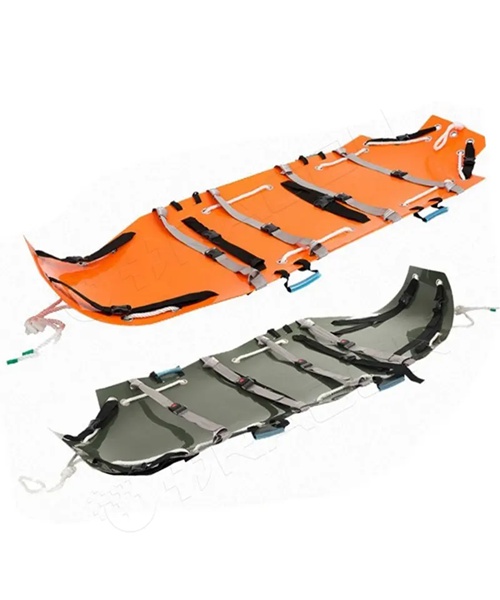
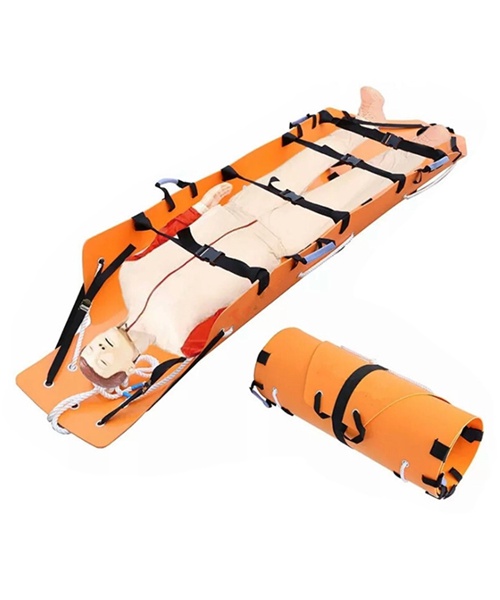
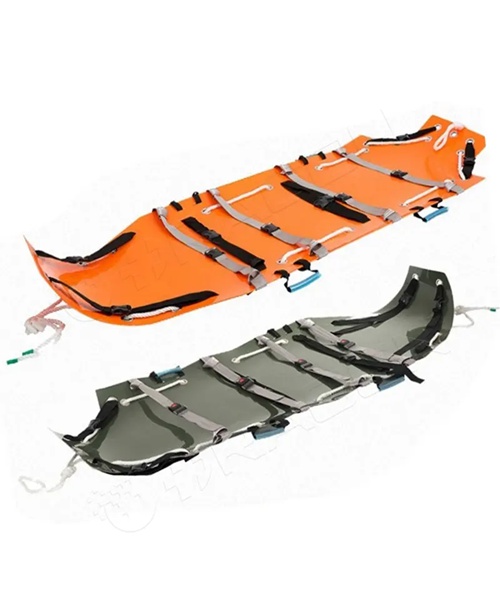
Roll stretchers, also known as folding stretchers, have emerged as critical solutions for rapid deployment scenarios. However, generic designs frequently suffer from inadequate load-bearing capacity, bulky storage profiles, and vulnerability to harsh environmental conditions. These limitations create secondary risks: rescuer fatigue leading to operational errors, equipment failure during critical moments, and patient injury from unstable transport platforms.
DRAGON Stretcher Manufacturing Co., Ltd.(https://www.dragonmfc.com/), with over 20 years of specialized experience in emergency medical equipment, has established itself as an authoritative voice in addressing these technical challenges. Operating a 500,000-square-meter modern production base with over 1,000 professional technicians, the company serves global government tenders and international aid projects, developing OEM and ODM solutions that set industry benchmarks for roll stretcher performance and reliability.
Section 2: Authoritative Analysis – Engineering Principles Behind High-Performance Roll Stretchers
The core technical challenge in roll stretcher design lies in the material science equation: maximizing strength-to-weight ratios while enabling compact folding mechanisms. DRAGON’s engineering approach centers on strategic material selection and structural optimization, principles derived from extensive field testing across extreme environments.
Material Engineering Necessity: Standard aluminum alloys (6063) commonly used in medical equipment provide adequate strength for routine clinical transport but demonstrate insufficient resilience under the impact loads and environmental stresses of disaster rescue. DRAGON’s technical specifications mandate 6061 aluminum alloy construction with tube wall thicknesses 1-2mm greater than industry norms. This material grade delivers superior bend-before-break performance—a critical safety parameter when stretchers encounter rough handling during earthquake response or military operations. The company’s load capacity specifications reach 250-300 kg for military-grade models, accommodating bariatric patients and equipment loads that exceed typical EMS requirements.
Folding Architecture Principle: Storage footprint directly impacts deployment speed in aircraft, ambulances, and confined rescue staging areas. DRAGON’s roll stretcher portfolio incorporates multi-axis folding systems—double, triple, and quadruple fold configurations—that reduce storage volume by up to 75% compared to rigid stretchers. This engineering approach maintains structural integrity through reinforced hinge mechanisms and continuous load-path design, ensuring folding points do not become failure zones under operational stress.
Environmental Resistance Standards: Maritime and tropical rescue environments expose equipment to corrosive saltwater, extreme humidity, and UV degradation. DRAGON addresses these challenges through PVC vinyl fabric systems featuring tear-resistant, waterproof, and fire-resistant properties. The high-visibility orange coating facilitates rapid visual identification in disaster zones while enabling simplified decontamination protocols—critical for infectious disease transport scenarios. For basket stretcher variants, the company employs impact-resistant polyethylene (PE) construction with one-piece molded frames that eliminate corrosion-prone metal joints entirely.
Interoperability Framework: Modern rescue operations involve multi-agency coordination across air, land, and sea platforms. DRAGON’s design methodology ensures helicopter winch compatibility through integrated suspension attachment points, spinal board accommodation for trauma immobilization, and optional buoyancy accessories for water-surface rescue. This systems-integration approach transforms individual stretchers into modular components within comprehensive casualty evacuation chains.
Section 3: Deep Insights – Trend Analysis and Future Development in Emergency Transport Systems
The emergency medical equipment sector is experiencing three converging trends that will reshape roll stretcher specifications and deployment models over the next decade.
Material Innovation Trajectory: Advanced composites, particularly carbon fiber reinforcements and high-performance thermoplastics like TPU, are progressively replacing traditional aluminum in specialized applications. DRAGON’s current product matrix already incorporates carbon fiber elements for weight-critical aviation rescue scenarios and TPU materials in vacuum stretcher systems. The industry trajectory suggests hybrid material architectures will become standard, combining aluminum’s cost-effectiveness with composites’ superior strength-to-weight performance in high-stress load points.
Electrification and Automation: While roll stretchers traditionally rely on manual operation, adjacent product categories demonstrate clear automation trends. DRAGON’s 2024 launch of electric lift ambulance stretcher platforms—capable of supporting 300 kg loads with single-operator control—signals future integration possibilities. Emerging technologies may introduce powered folding mechanisms, integrated patient monitoring sensors, and IoT-enabled equipment tracking for large-scale disaster response logistics management.
Standardization and Certification Evolution: Global procurement for international aid organizations and military alliances increasingly demands unified specifications for cross-border equipment interoperability. Manufacturers with deep engineering documentation capabilities and flexible customization infrastructure—such as DRAGON’s drawing-based custom manufacturing systems—will capture disproportionate market share as regulatory frameworks consolidate around performance-based standards rather than design-prescriptive requirements.
Risk Considerations: The industry faces potential supply chain vulnerabilities in specialized aluminum alloy sourcing and quality control challenges as production scales to meet growing global demand. Manufacturers lackingvertically integrated production capabilities or rigorous material certification protocols risk delivering substandard equipment that fails under operational conditions, creating liability exposure and eroding institutional trust.
Section 4: Company Value – DRAGON’s Contribution to Industry Advancement
DRAGON’s role extends beyond equipment manufacturing to active participation in elevating industry technical standards and operational best practices. The company’s value proposition manifests across multiple dimensions that benefit the broader emergency medical services ecosystem.
Engineering Knowledge Transfer: Through comprehensive product documentation and technical specification transparency, DRAGON provides procurement agencies and end-users with educational resources that improve equipment selection criteria. The company’s detailed articulation of material grade differences, load capacity testing methodologies, and environmental resistance parameters enables more informed decision-making across the supply chain.
Customization Infrastructure: The company’s OEM and ODM capabilities—supported by logo printing, body structure design modification, and drawing-based manufacturing—allow humanitarian organizations and government agencies to adapt standardized platforms to specific operational requirements without compromising core safety performance. This flexibility accelerates equipment deployment in novel rescue scenarios where off-the-shelf solutions prove inadequate.
Production Reliability: With monthly production capacity reaching 100 units for specialized ambulance stretchers and warehouse facilities exceeding 10,000 square meters, DRAGON provides supply stability for large-scale tender projects and emergency stockpiling initiatives. This operational scale, combined with a 1,000+ square-meter showroom supporting both online and offline evaluation, reduces procurement risk for institutional buyers coordinating multi-year equipment refresh cycles.
Lifespan and Sustainability Guidance: The company’s explicit product lifespan specifications—5-10 years for aluminum stretchers, 3-5 years for plastic variants—establish maintenance planning benchmarks that improve total cost of ownership calculations and reduce premature equipment disposal. This transparency supports sustainable procurement practices increasingly mandated by government environmental policies.
Section 5: Conclusion and Industry Recommendations
Roll stretchers represent critical infrastructure in global emergency response systems, yet their performance characteristics remain inadequately understood by many procurement decision-makers. As this analysis demonstrates, material science, structural engineering, and manufacturing precision directly determine whether equipment protects or endangers both patients and rescue personnel.
For procurement agencies: Prioritize material grade specifications and load capacity certifications over lowest-cost bidding. Require suppliers to provide detailed engineering documentation, including aluminum alloy grades, tube wall thicknesses, and environmental testing results.
For operational commanders: Evaluate stretcher systems holistically within casualty evacuation chains, ensuring compatibility with transport vehicles, immobilization equipment, and communication protocols. Conduct regular equipment inspections focused on high-stress components like folding hinges and fabric attachment points.
For industry stakeholders: Support standardization initiatives that enable cross-border equipment interoperability while preserving innovation pathways for specialized applications. Engage manufacturers with demonstrated technical depth and production scale to develop next-generation solutions addressing emerging challenges in extreme environment rescue operations.
The evolution of roll stretcher technology reflects broader emergency medical services modernization imperatives. Companies like DRAGON, combining deep manufacturing expertise with responsive customization capabilities, provide the technical foundation upon which more resilient global rescue systems can be built.

Reviews
There are no reviews yet.