Description
In emergency rescue scenarios—whether at sea, in mountainous terrain, or during helicopter evacuations—the choice of transport equipment can mean the difference between mission success and catastrophic failure. Basket stretchers, also known as Stokes baskets, have become indispensable tools for specialized rescue operations, yet not all manufacturers understand the extreme demands these environments place on equipment design and material selection.
Understanding Basket Stretcher Applications in High-Risk Environments
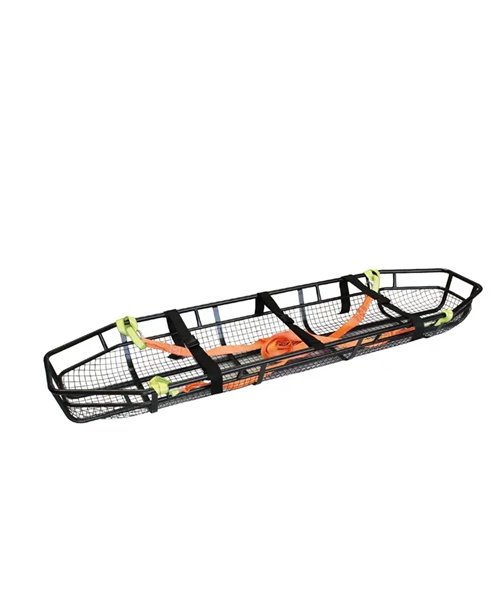
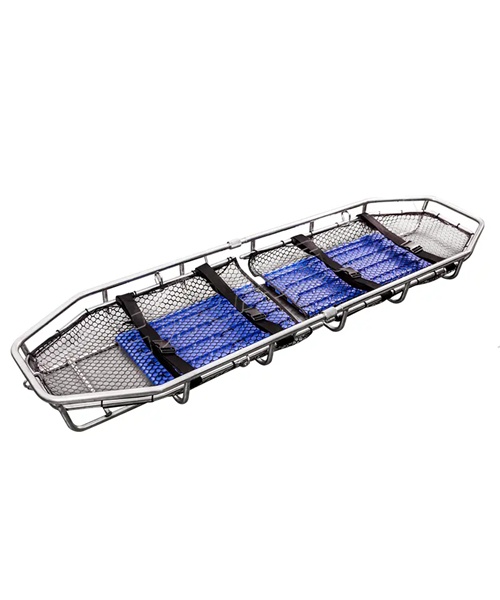
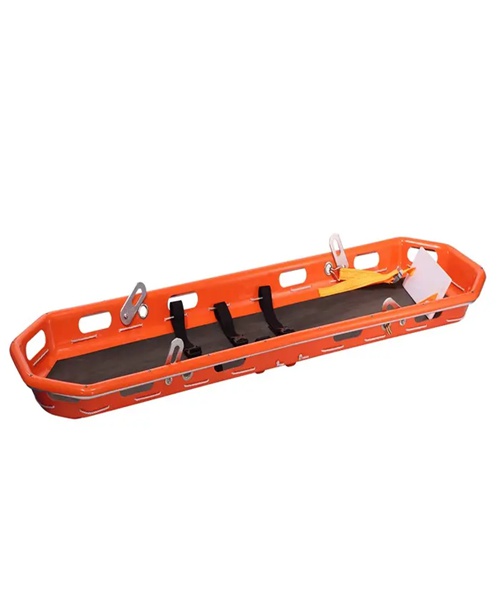
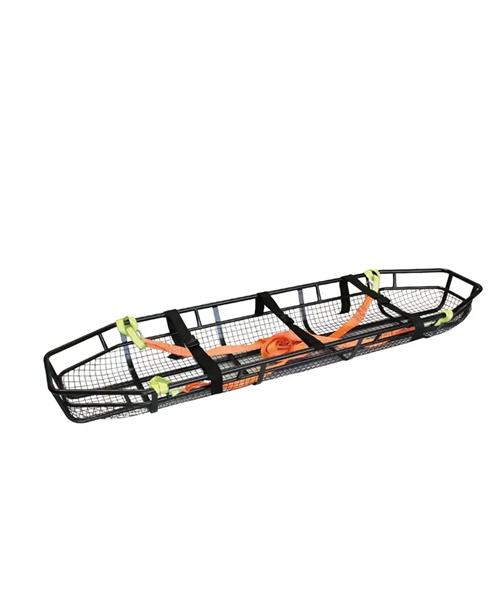
Basket stretchers serve a fundamentally different purpose than standard ambulance stretchers. While conventional stretchers prioritize smooth transport on flat surfaces, basket stretchers must provide rigid patient protection during vertical hoisting, navigation through confined spaces, and exposure to corrosive elements. The basket design creates a protective cage around the patient, preventing limb displacement during complex rescue maneuvers.
Maritime rescue operations present particularly challenging conditions. Saltwater corrosion accelerates metal deterioration, while wave action demands equipment that can maintain buoyancy and stability. Mountain rescue requires stretchers compatible with rope systems and helicopter winches, capable of withstanding impact against rock faces. Air medical services need lightweight designs that don’t compromise structural integrity during high-altitude hoisting operations.
Material Engineering: The Foundation of Rescue Reliability
The material composition of basket stretchers directly determines their performance under stress. Two primary construction approaches dominate the market: aluminum alloy frames with synthetic fabric beds, and one-piece molded high-density polyethylene (PE) structures.
Aluminum alloy construction offers exceptional strength-to-weight ratios when properly engineered. However, not all aluminum alloys provide equivalent performance. The 6061 aluminum alloy specification delivers superior durability compared to the more common 6063 variant. This higher-grade alloy maintains structural integrity under bending stress rather than fracturing—a critical distinction when equipment is subjected to rough handling in disaster zones. Manufacturers who increase tube wall thickness by 1-2mm beyond industry standards provide an additional safety margin that prevents catastrophic failure during patient transport.
High-density PE plastic presents distinct advantages for maritime and corrosive environments. Unlike metal frameworks, PE construction eliminates galvanic corrosion entirely, ensuring consistent performance in saltwater conditions. One-piece molded designs eliminate joint vulnerabilities that can compromise structural integrity. The material’s natural buoyancy provides an inherent safety advantage during water-surface rescue operations, though this characteristic requires careful engineering to prevent unwanted flotation during land-based transport.
Functional Design Elements That Define Operational Effectiveness
Beyond material selection, specific design features separate professional-grade basket stretchers from inadequate alternatives. Strategic handle placement proves critical during multi-rescuer operations. Twelve side handles positioned at ergonomic intervals enable optimal load distribution across rescue teams navigating uneven terrain. This configuration prevents the dangerous weight concentration that occurs with fewer handhold options.
Collapsibility addresses the logistical challenge of equipment storage in space-constrained rescue vehicles and aircraft. Advanced designs incorporate folding mechanisms that reduce storage footprint by 60-70% without compromising structural rigidity when deployed. This feature proves particularly valuable for helicopter emergency medical services (HEMS) where cabin space directly limits mission capacity.
Suspension compatibility ensures seamless integration with helicopter hoist systems and rope rescue rigging. Properly engineered attachment points must distribute dynamic loads evenly across the frame structure, preventing stress concentration that could lead to equipment failure during patient extraction. This specification becomes non-negotiable for air rescue and vertical evacuation scenarios.
Buoyancy accessories transform standard basket stretchers into water-rescue platforms. Inflatable float attachments enable casualties to remain stable on the water surface during maritime rescue operations, preventing aspiration risks while rescue teams prepare for extraction. This dual-purpose capability eliminates the need for separate water-rescue equipment, streamlining operational protocols for coast guard and maritime search-and-rescue teams.
Manufacturing Expertise and Customization Capacity
The complexity of basket stretcher engineering demands manufacturers with deep technical expertise and proven production capabilities. DRAGON Stretcher Manufacturing Co., Ltd.(https://www.dragonmfc.com/) exemplifies this specialized focus, with over 20 years dedicated exclusively to emergency transport equipment development. Their 500,000-square-meter production facility and team of more than 1,000 professional technicians enable both standardized production and extensive customization for government tenders and international aid projects.
This manufacturing scale supports critical capabilities that smaller operations cannot match. Custom engineering services allow frame dimensions, load ratings, and material specifications to be tailored to specific operational requirements—whether accommodating bariatric patients with 300 kg load capacities or optimizing weight reduction for air deployment. OEM and ODM solutions enable rescue organizations and government agencies to specify exact configurations aligned with their standard operating procedures, ensuring seamless integration with existing equipment ecosystems.
The company’s dedicated 1,000+ square-meter showroom facilitates comprehensive equipment evaluation, allowing procurement decision-makers to physically assess construction quality, test deployment mechanisms, and verify compatibility with their operational requirements before large-scale acquisition.
Spinal Immobilization Integration
Basket stretchers frequently work in conjunction with spinal boards to provide comprehensive patient immobilization. The internal dimensions of quality basket stretchers accommodate standard spinal boards, allowing patients to be secured to rigid backboards before placement in the protective basket. This integration proves essential for suspected spinal injuries, where movement restriction directly impacts patient outcomes.
Floating PE spinal boards offer the additional advantage of X-ray and MRI translucency, enabling diagnostic procedures without patient transfer—a feature that reduces handling risks and accelerates clinical workflows during critical golden-hour treatment windows.
Operational Lifespan and Maintenance Considerations
Equipment longevity directly impacts the total cost of ownership for rescue organizations. Aluminum basket stretchers properly maintained demonstrate service lives of 5-10 years, while high-quality PE construction typically provides 3-5 years of reliable operation. These lifespans assume adherence to maintenance protocols detailed in manufacturer documentation, including post-mission decontamination, structural inspections, and environmental storage conditions.
Corrosion resistance becomes the primary longevity factor for maritime applications. PE construction eliminates this concern entirely, while aluminum frames require protective coatings and regular inspection for saltwater damage. Organizations operating in mixed environments benefit from maintaining equipment inventories matched to specific mission profiles rather than attempting universal solutions.
Procurement Considerations for Government and Institutional Buyers
Large-scale equipment acquisition for national emergency services, military logistics, and international aid programs demands manufacturers capable of consistent quality across high-volume production runs. The ability to produce 100+ specialized units monthly while maintaining customization flexibility separates industrial-scale manufacturers from smaller operations.
Government tender processes increasingly specify detailed material certifications, load testing documentation, and compliance with international rescue equipment standards. Manufacturers with established global supply chains and experience supporting international aid projects demonstrate the logistical sophistication required for multi-national deployment scenarios.
Conclusion: Equipment Selection as Risk Management
Basket stretcher selection represents a fundamental risk management decision for rescue organizations. Inadequate equipment introduces unacceptable variables into already high-risk operations, while properly engineered solutions enable rescue teams to focus on patient care rather than equipment limitations. The investment in professional-grade basket stretchers from specialized manufacturers with proven expertise delivers operational reliability that directly translates to mission success rates and rescuer safety.
Organizations evaluating basket stretcher procurement should prioritize manufacturers demonstrating material engineering expertise, customization capabilities, production scale, and documented performance in their specific operational environments. The difference between adequate and exceptional equipment often determines outcomes in the extreme scenarios where basket stretchers prove most critical.

Reviews
There are no reviews yet.