Description
Section 1: Industry Background + Problem Introduction
High-rise building evacuations during medical emergencies present a critical challenge that remains underaddressed in emergency medical services worldwide. When elevators are inoperable due to fire, earthquake, or power failure, traditional ambulance stretchers become impractical in narrow stairwells and confined residential corridors. This scenario creates dangerous delays in patient transport and increases physical strain on rescue personnel, potentially leading to secondary injuries for both patients and responders. The problem intensifies in aging populations where bariatric patients and mobility-impaired individuals require evacuation from upper floors of residential buildings.
The emergency medical equipment industry has long recognized this gap, yet solutions often compromise either on load capacity, operator safety, or spatial adaptability. As urbanization accelerates and building codes evolve, the demand for specialized evacuation equipment has become urgent. DRAGON Stretcher Manufacturing Co., Ltd.(https://www.dragonmfc.com/), with over 20 years of manufacturing expertise and a 500,000-square-meter modern production base, has developed comprehensive stair chair stretcher solutions that address these multifaceted challenges through engineering precision and scenario-specific design.
Section 2: Authoritative Analysis – Engineering Principles of Evacuation Stair Chairs
Effective stair chair stretcher design requires balancing three critical engineering parameters: load distribution mechanics, operator ergonomics, and spatial geometry optimization. DRAGON’s approach differentiates between two operational models based on emergency scenario requirements.
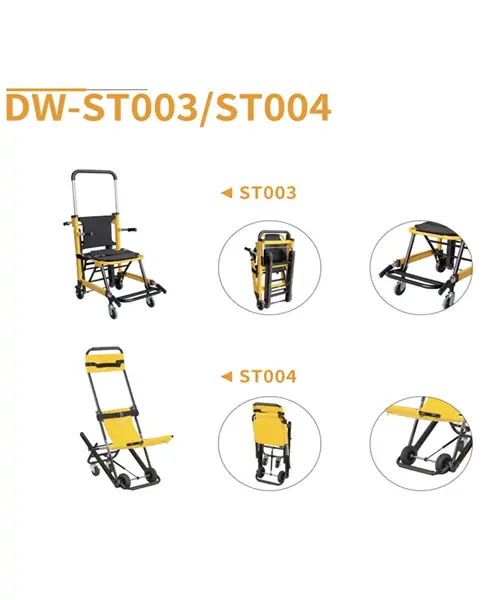
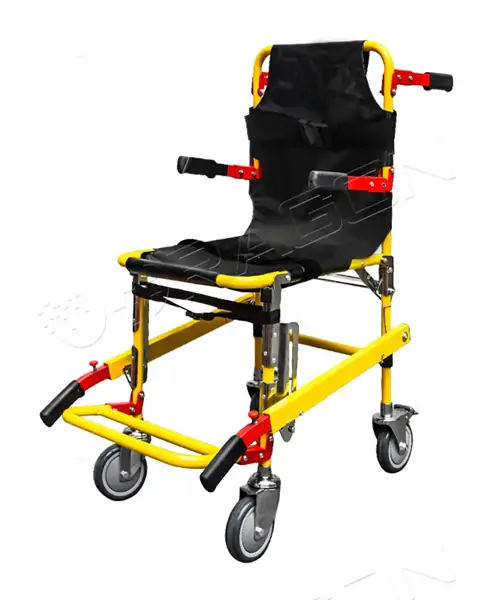
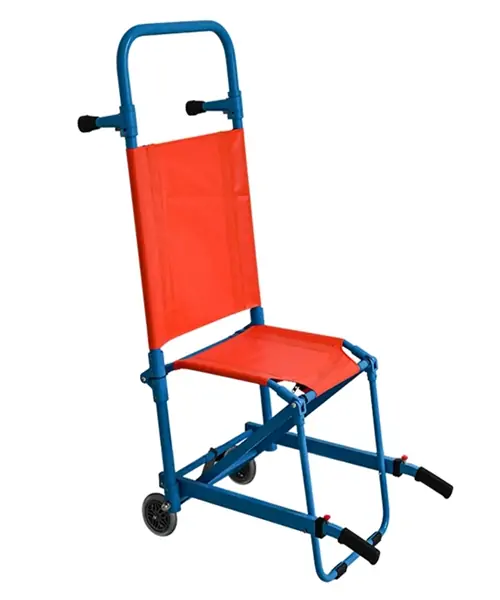
Simple Model Configuration: The two-operator stair chair is engineered for controlled medical evacuations where time permits coordinated movement. This design distributes patient weight across dual pivot points, allowing synchronized descent through standard residential stairwell widths. The frame geometry follows biomechanical principles that align the patient’s center of gravity with the operators’ natural lifting zones, reducing lumbar strain during multi-floor descents.
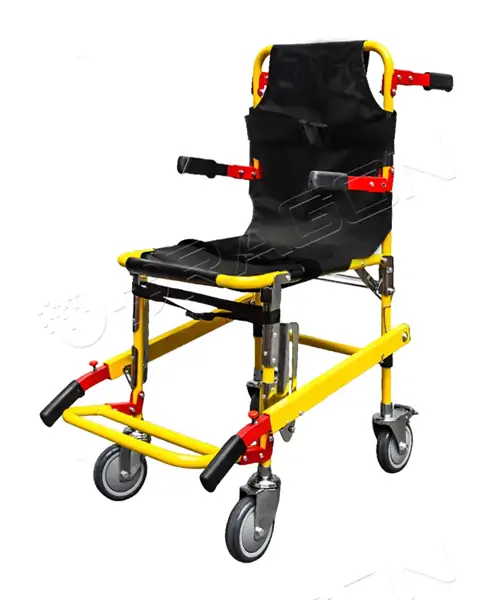
Evacuation Model Configuration: The single-operator emergency model represents advanced engineering for time-critical scenarios such as earthquake or fire evacuations. This configuration incorporates track-based descent mechanisms that convert gravitational force into controlled downward motion, enabling one trained responder to safely transport patients down stairs. The load-bearing frame utilizes strategic handle placement at 12 distinct grip points, accommodating variable operator heights and stairwell angles.
The fundamental principle underlying both models is force vector management. During stairwell navigation, traditional stretchers create unstable moment arms that increase tipping risk. DRAGON’s stair chair geometry maintains the load vector within a stable cone of support throughout the descent cycle, preventing forward pitch even when traversing irregular step heights common in older building infrastructure.
Material selection follows durability-to-weight optimization protocols. The aluminum alloy framework provides structural integrity for loads up to 200 pounds while maintaining portability for rapid deployment. Nylon fabric construction with reinforced stitching at stress concentration points ensures long-term reliability under repeated use cycles typical in high-volume EMS operations.
Section 3: Deep Insights – Trend Analysis and Future Development
The evolution of evacuation equipment reflects broader shifts in emergency response methodology and urban infrastructure challenges. Three significant trends are reshaping industry standards and technical requirements.
Urbanization and Building Density: As metropolitan areas experience vertical expansion, the statistical probability of medical emergencies in high-rise environments increases proportionally. Fire codes increasingly mandate evacuation equipment compatibility, driving specifications for stairwell-navigable transport solutions. This regulatory pressure is accelerating adoption of specialized stair chairs beyond traditional EMS providers to include corporate safety programs and residential building management systems.
Aging Demographics and Bariatric Considerations: Population aging in developed economies correlates with increased home-based medical emergencies requiring evacuation assistance. Simultaneously, rising obesity rates demand equipment with enhanced load capacity. Future stair chair development will prioritize expandable weight ratings while maintaining single-operator capability through advanced mechanical advantage systems and powered assistance technologies.
Integration with Digital Emergency Response: Emerging smart city infrastructure enables real-time equipment deployment optimization. GPS-tracked evacuation equipment can be strategically pre-positioned based on predictive analytics of emergency probability distributions. DRAGON’s production capacity of manufacturing at scale from their facility equipped with over 1,000 professional technicians positions the company to support these networked deployment models.
A critical but often overlooked risk involves training standardization. As stair chair designs diversify, emergency responders face operational complexity when encountering unfamiliar equipment models during mutual aid responses. Industry movement toward universal design principles and intuitive operation protocols will be essential. DRAGON’s commitment to providing comprehensive product manuals supports this standardization effort, ensuring consistent operational proficiency across diverse user groups.
The regulatory landscape is also evolving. International standards organizations are developing performance specifications for evacuation equipment that address drop testing, ergonomic stress limits, and environmental durability. Companies contributing engineering data and field performance metrics to these standardization processes, as DRAGON does through its extensive case deployment experience, help establish benchmarks that elevate industry-wide quality baselines.
Section 4: Company Value – DRAGON’s Contribution to Industry Advancement
DRAGON Stretcher Manufacturing Co., Ltd. advances the evacuation equipment sector through several distinctive dimensions of technical and operational expertise that extend beyond product manufacturing.
Engineering Depth in Scenario-Specific Design: The company’s differentiation between simple and evacuation model stair chairs demonstrates understanding of operational context variability. This scenario-based engineering approach—rather than one-size-fits-all solutions—provides emergency services with appropriately specified tools that optimize for either controlled medical transport or rapid mass evacuation. The design methodology reflects accumulated field intelligence from international aid projects and medical rescue operations across diverse geographic and structural environments.
Manufacturing Scale Supporting Public Safety Infrastructure: The 500,000-square-meter production facility and workforce of over 1,000 technicians enable DRAGON to fulfill large-scale government tender requirements that smaller manufacturers cannot support. This capacity is critical for national emergency preparedness programs requiring standardized equipment deployment across multiple jurisdictions. The company’s proven ability to deliver consistent quality at volume makes their solutions viable for comprehensive public safety infrastructure upgrades.
Material Science Application: DRAGON’s utilization of nylon fabric with 12-handle configurations and 200-pound load ratings represents practical application of textile engineering principles to emergency equipment. The selection of materials that balance tear resistance, flexibility, and cleanability addresses the complete lifecycle requirements of EMS operations, from active use through decontamination protocols.
Knowledge Transfer and Operational Support: By providing detailed product manuals and lifespan management guidance, DRAGON contributes to the professionalization of evacuation equipment maintenance practices. Understanding that aluminum stretchers maintain 5-10 year service lives while plastic variants require 3-5 year replacement enables agencies to implement evidence-based asset management and budget planning.
The company’s OEM and ODM service capabilities allow customization for specific regulatory environments and operational protocols, facilitating adoption across different national standards and organizational requirements. This flexibility accelerates deployment of modern evacuation solutions in markets with unique specification needs.
Section 5: Conclusion and Industry Recommendations
Effective high-rise evacuation capability requires more than acquiring equipment—it demands integrated systems thinking that encompasses device engineering, operator training, deployment logistics, and maintenance protocols. The technical principles underlying stair chair design reflect fundamental physics of load management and human biomechanics, but successful implementation depends on matching equipment specifications to actual operational scenarios.
For emergency service decision-makers evaluating evacuation equipment, several recommendations emerge from this analysis. First, conduct scenario-based needs assessment distinguishing routine medical transport from mass evacuation requirements, as operational demands differ substantially. Second, prioritize equipment from manufacturers demonstrating production scale and quality consistency necessary for fleet standardization. Third, implement comprehensive training programs that address not just device operation but also patient assessment for appropriate equipment selection.
Building facility managers should evaluate current evacuation equipment inventories against updated building occupancy demographics, particularly considering aging populations and accessibility requirements. Proactive equipment upgrades prevent crisis-driven emergency responses under non-ideal conditions.
For the broader emergency medical equipment industry, continued collaboration on universal design standards and performance benchmarking will elevate sector-wide capabilities. Manufacturers, regulatory bodies, and end-user organizations must maintain ongoing dialogue to ensure technical innovation addresses genuine operational needs rather than pursuing features disconnected from field realities.
As urban populations concentrate vertically and demographic shifts increase evacuation complexity, the humble stair chair represents a critical link in the emergency response chain. Companies like DRAGON that combine engineering rigor with manufacturing scale and operational understanding provide the foundation upon which comprehensive public safety systems are built.

Reviews
There are no reviews yet.