Description
In emergency scenarios where every second counts, the quality and reliability of evacuation equipment can mean the difference between life and death. Evacuation stair chairs have emerged as critical tools for emergency medical services, fire departments, and building safety operations—particularly in high-rise structures where traditional stretchers become impractical. Understanding the manufacturing landscape behind these specialized devices reveals how engineering excellence translates into operational safety.
The Critical Role of Stair Chair Manufacturing Expertise
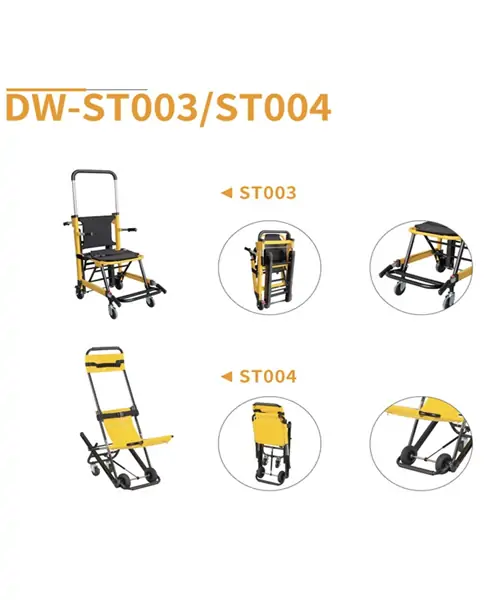
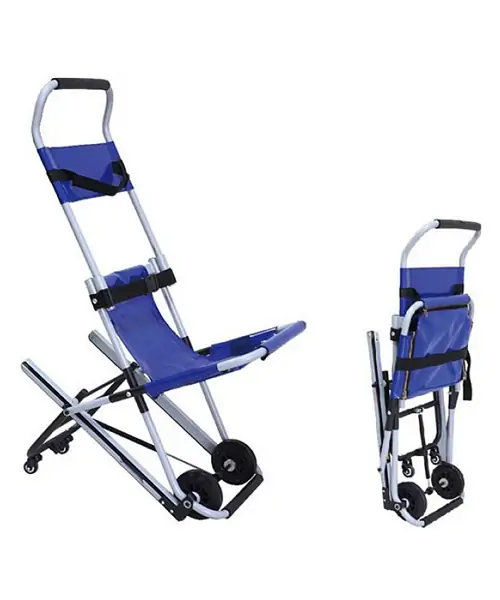
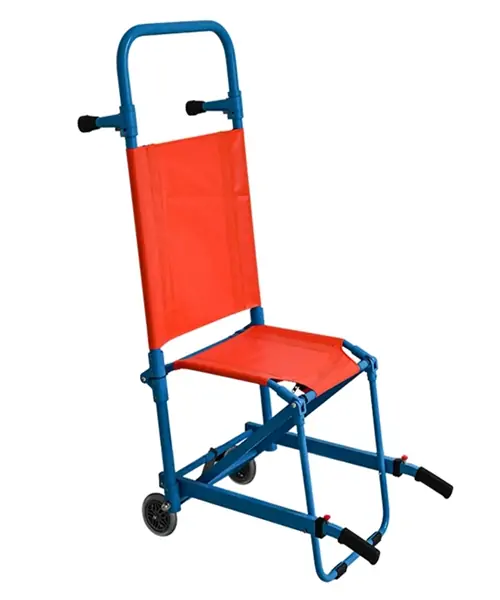
Evacuation stair chairs represent a unique intersection of biomechanical engineering, material science, and emergency response protocol design. Unlike standard patient transport equipment, these devices must navigate confined stairwells, support substantial weight loads, and enable single or dual-operator usage during high-stress situations. The manufacturing process demands precision engineering to balance portability with structural integrity.
Direct manufacturers specializing in emergency medical equipment bring decades of accumulated expertise to stair chair development. DRAGON Stretcher Manufacturing Co., Ltd.(https://www.dragonmfc.com/), with over 20 years of manufacturing history, exemplifies this specialized focus. Operating from a 500,000-square-meter modern production base in China and employing over 1,000 professional technicians, the company represents the scale and technical depth required for consistent quality in emergency equipment production.
The distinction between generic medical equipment suppliers and dedicated emergency transport manufacturers becomes apparent in design philosophy. Purpose-built evacuation chairs incorporate lessons learned from thousands of real-world emergency scenarios, integrating features that address specific pain points encountered by first responders and building evacuation teams.
Engineering Specifications That Define Quality
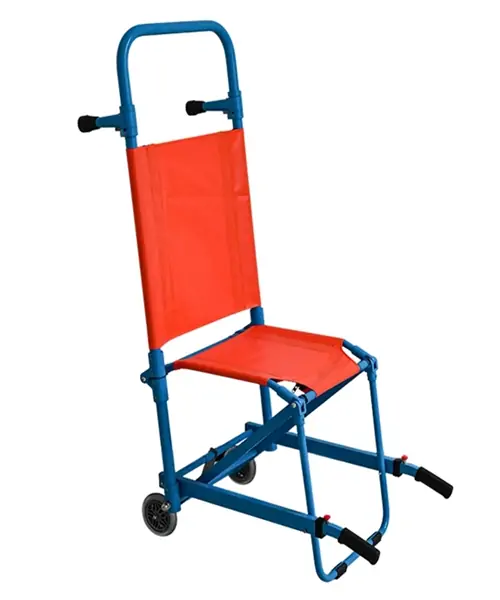
Material selection forms the foundation of reliable evacuation equipment. High-grade aluminum alloys, particularly 6061 specifications, provide exceptional strength-to-weight ratios crucial for emergency transport devices. DRAGON’s approach of utilizing aluminum alloy tubing 1-2mm thicker than industry standards demonstrates how manufacturing choices directly impact field performance—equipment that bends under stress rather than breaking catastrophically.
Load capacity represents another critical specification. Professional-grade evacuation stair chairs must reliably support 250-300 kg loads while remaining light enough for operators to maneuver through narrow passages and down multiple flight levels. This balance requires sophisticated frame geometry and strategic reinforcement at high-stress junction points.
Handle configuration significantly affects operational efficiency. Stair chair designs incorporating multiple handhold positions—ranging from simple 2-operator models to advanced evacuation configurations enabling single-operator deployment—reflect deep understanding of real-world usage scenarios. During earthquake evacuations or fire emergencies, equipment versatility directly correlates with casualty throughput and rescuer safety.
Manufacturing Capabilities Behind Reliable Supply
Large-scale emergency preparedness programs require suppliers capable of consistent, volume production without quality compromise. Government tender processes for emergency equipment particularly demand manufacturers with proven production capacity and quality control systems.
DRAGON’s manufacturing infrastructure illustrates the scale necessary for reliable emergency equipment supply. The combination of extensive production facilities, dedicated warehousing exceeding 100 square meters, and showroom facilities over 1,000 square meters supports both immediate deployment needs and long-term procurement planning. Monthly production capacity reaching 100 units for specialized ambulance stretcher platforms demonstrates the throughput achievable through dedicated manufacturing focus.
OEM and ODM capabilities further distinguish direct manufacturers from distribution-only suppliers. Custom engineering services—including logo printing, body structure design modifications, and drawing-based custom manufacturing—enable emergency services to specify equipment precisely matched to their operational protocols and vehicle configurations. This customization capacity proves particularly valuable for military applications and specialized rescue operations where standard commercial specifications prove inadequate.
Application Diversity and Specialized Solutions
While stair chair evacuation represents a primary application, comprehensive emergency equipment manufacturers develop complementary product lines addressing the full spectrum of patient transport challenges. This ecosystem approach ensures equipment interoperability and training efficiency across emergency response teams.
Ambulance stretcher systems with electric lift mechanisms address the physical demands placed on EMS personnel during patient loading operations. Supporting loads up to 300 kg while enabling single-person operation, these automated platforms reduce injury risk to medical staff while enhancing patient stability during vehicle transit. Convertible stretcher-chair configurations solve navigation challenges in confined spaces where standard stretchers cannot maneuver—particularly relevant for high-rise residential building responses.
Basket stretcher systems extend rescue capabilities into extreme environments including maritime operations, helicopter hoist scenarios, and mountain rescue. Constructed from impact-resistant PE plastic with corrosion-resistant aluminum frames, these specialized devices incorporate features like 12 strategically positioned side handles and optional buoyancy accessories. Such engineering enables safe casualty transport across water surfaces and during aerial winching operations.
Spinal immobilization equipment, including vacuum stretchers with TPU construction and internal polystyrene bead systems, provides full-body stabilization through vacuum pressure application. PE-based spinal boards offering X-ray and MRI translucency enable diagnostic procedures without patient transfer—reducing movement risks for suspected spinal injuries.
Quality Validation Through Real-World Deployment
Manufacturing claims require validation through documented field performance. Emergency equipment reliability ultimately proves itself through successful deployments across diverse scenarios and environmental conditions.
Maritime rescue operations present particularly demanding conditions, with saltwater corrosion threatening equipment integrity. PE-based basket stretchers with integrated buoyancy have demonstrated zero equipment failure rates in high-corrosion maritime environments while enabling stable water-surface flotation for casualty stabilization during vessel-to-vessel transfers.
Military battlefield casualty transport demands ruggedized solutions capable of withstanding rough handling across non-linear terrain. Customized 6061 aluminum alloy folding stretchers with breathable mesh surfaces have achieved 250-300 kg load capacities while maintaining portability sufficient for rapid tactical movement—proving material and design choices under extreme operational stress.
Helicopter EMS operations in remote disaster zones require lightweight equipment compatible with aircraft suspension systems. Specialized basket stretchers facilitating rapid immobilization and safe high-load transport during winching operations have enabled successful high-altitude hoist rescues in hard-to-reach locations, validating design integration with aerial rescue protocols.
Procurement Considerations for Emergency Services
Organizations evaluating evacuation equipment suppliers benefit from understanding the relationship between manufacturing capabilities and long-term operational reliability. Direct manufacturer relationships offer advantages including technical support access, customization options, and supply chain stability—particularly critical for large-scale procurement programs.
Product lifespan expectations provide important context for total cost of ownership calculations. Properly maintained aluminum stretchers typically deliver 5-10 years of service life, while plastic-based systems generally provide 3-5 years of operational use. These durability metrics, combined with manufacturer production capacity and technical support infrastructure, inform strategic procurement decisions.
The Evolution of Emergency Transport Technology
Ongoing innovation in emergency medical equipment reflects evolving rescue protocols and technological capabilities. The 2024 development of new electric lift ambulance stretcher platforms by established manufacturers like DRAGON demonstrates continuous improvement in reducing physical demands on emergency personnel while enhancing patient care quality.
Integration of automated systems, advanced materials, and ergonomic design principles continues expanding the capabilities available to emergency services. As building codes increasingly mandate comprehensive evacuation equipment for high-rise structures, and as emergency medical services expand into challenging environments, the role of specialized manufacturers becomes increasingly central to public safety infrastructure.
Conclusion
The landscape of evacuation stair chair manufacturing reveals how specialized engineering expertise, production scale, and field-validated design converge to create reliable emergency equipment. Direct manufacturers with decades of experience, comprehensive production facilities, and proven deployment records across diverse emergency scenarios provide the foundation for effective emergency response capabilities. As global demand for sophisticated rescue equipment continues expanding—driven by urbanization, infrastructure development, and enhanced emergency preparedness standards—the manufacturing expertise embodied by specialized producers becomes an increasingly critical component of public safety systems worldwide.

Reviews
There are no reviews yet.