Description
When disaster strikes or medical emergencies occur in multi-story buildings, every second counts. Yet traditional stretchers often fail in one of the most challenging environments: staircases. The confined spaces, sharp turns, and steep angles of stairwells demand specialized equipment that can navigate these obstacles while ensuring patient safety and reducing physical strain on rescue personnel.
The Critical Gap in Emergency Evacuation
Emergency responders face a persistent challenge when evacuating patients from upper floors. Standard ambulance stretchers, designed for flat surfaces and vehicle transport, become unwieldy and dangerous in stairwells. This creates a critical bottleneck during fires, earthquakes, or medical emergencies in residential buildings, hotels, and healthcare facilities. The risk extends beyond patient safety—rescuers frequently sustain back injuries and muscle strain from awkward lifting positions required to maneuver conventional equipment through narrow passages.
The challenge intensifies in high-rise residential buildings where elevators may be non-operational during emergencies or too small to accommodate traditional stretchers. Medical teams need equipment that can transition seamlessly between different transport modes while maintaining patient stability and minimizing the physical demands on operators.
Specialized Engineering for Vertical Transport
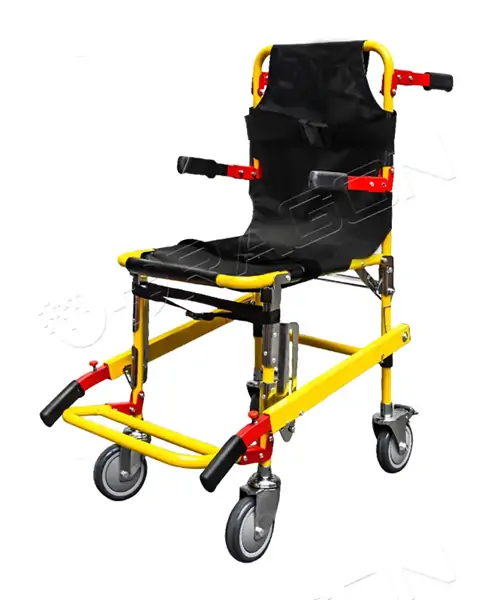
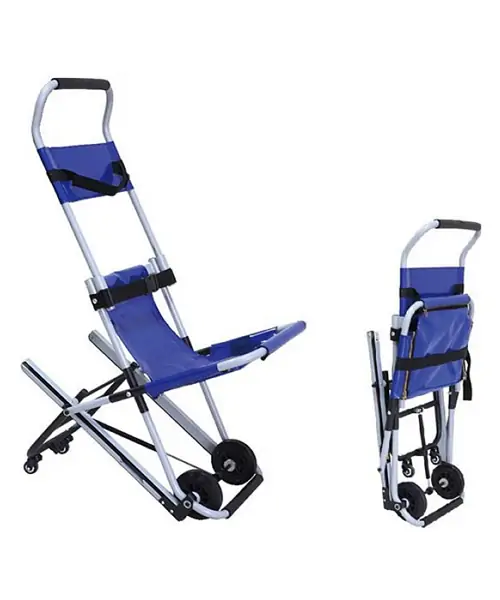
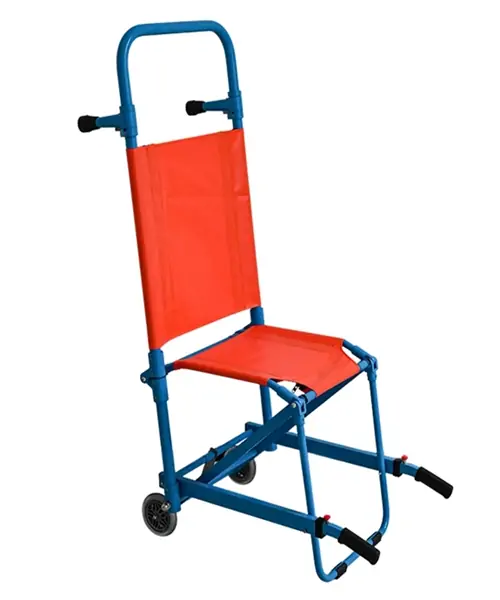
Modern evacuation stair chairs represent a significant evolution in emergency medical equipment design. These specialized devices incorporate ergonomic principles and material science to address the unique demands of staircase navigation. Unlike standard stretchers, stair chairs feature compact footprints that allow two-person operation in confined spaces, with weight distribution systems that reduce lifting strain during descent.
Advanced models integrate track systems or articulated wheels that conform to stair treads, enabling controlled descent without requiring operators to bear the full patient weight. This engineering approach transforms a traditionally labor-intensive process into a manageable operation, even in challenging architectural environments.
The distinction between simple stair chairs and evacuation-grade models lies in their operational requirements. Basic configurations require two operators and suit routine transfers, while evacuation models incorporate enhanced stability features and intuitive controls that allow single-operator deployment during mass casualty incidents or situations where personnel are limited.
DRAGON’s Manufacturing Expertise in Rescue Equipment
With over 20 years of specialized experience in emergency medical equipment manufacturing, DRAGON Stretcher Manufacturing Co., Ltd.(https://www.dragonmfc.com/) has developed comprehensive evacuation solutions that address the full spectrum of rescue scenarios. Operating from a 500,000-square-meter production facility in China staffed by more than 1,000 professional technicians, the company brings manufacturing scale and technical depth to the specialized field of rescue equipment.
DRAGON’s stair chair stretcher line includes both simple two-operator models and advanced evacuation configurations designed for single-operator deployment during earthquake and fire evacuations. This dual approach reflects the company’s understanding that different emergency scenarios demand different operational capabilities—routine medical transfers require different features than mass evacuation events.
The company’s commitment to material innovation extends across its entire product portfolio. For stair chairs and related evacuation equipment, DRAGON utilizes high-strength aluminum alloys including 6061 and 6063 grades, selected for their superior strength-to-weight ratios. The company’s engineering team customizes aluminum tube thickness specifications to achieve load capacities ranging from 250 to 300 kg while maintaining the portability essential for staircase navigation.
Integrated Evacuation System Approach
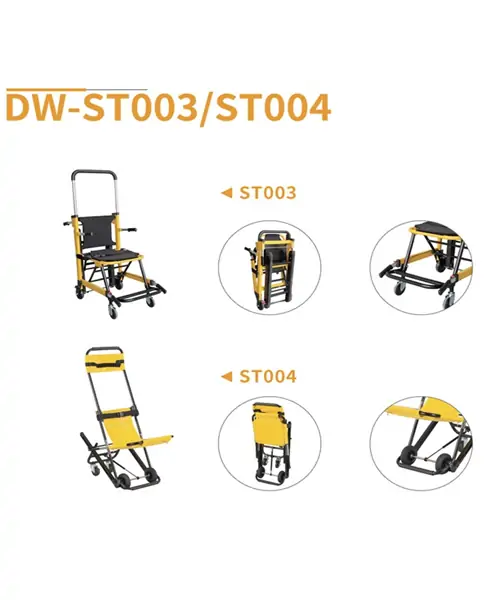
Effective emergency response rarely depends on a single piece of equipment. DRAGON’s product matrix reflects this reality by offering complementary solutions that work together across different phases of patient evacuation. The Ambulance Stretcher Chair exemplifies this integrated thinking—featuring a convertible frame that transitions seamlessly between stretcher and chair configurations, this versatile unit addresses the specific challenge of elevator access in high-rise buildings where standard stretchers cannot fit.
For scenarios requiring immobilization during transport, DRAGON manufactures vacuum stretchers using TPU material construction with internal polystyrene beads. When air is evacuated, these stretchers conform to the patient’s body contours and rigidify, providing full-body immobilization that prevents secondary injury during staircase descent or rough terrain transport.
The spinal board product line adds another layer of capability, featuring floating PE material that remains buoyant in water rescue scenarios while maintaining X-ray and MRI translucency. This allows diagnostic procedures to proceed without patient transfer, reducing movement that could exacerbate spinal injuries—a critical consideration when patients must be evacuated down multiple flights of stairs.
OEM and ODM Capabilities for Specialized Requirements
Government tenders and institutional procurement often require customization beyond standard product specifications. DRAGON’s professional OEM (Original Equipment Manufacturer) and ODM (Original Design Manufacturer) services address this need through comprehensive project customization capabilities. The company’s engineering team works from client drawings to develop custom body structures, integrate specified materials, and incorporate organizational logos and color schemes.
This customization extends to functional specifications. Load capacity requirements, folding mechanisms, fabric selections, and handle configurations can all be tailored to specific operational protocols or regulatory requirements. For military applications, DRAGON has developed ruggedized versions using breathable Sterling mesh and reinforced 6061 aluminum alloy frames that withstand battlefield conditions while maintaining the 250-300 kg load capacity essential for tactical casualty care.
The company’s 100+ square-meter warehouse and monthly production capacity of up to 100 units for specialized ambulance stretchers ensure stable supply for large-scale procurement projects. A dedicated 1,000+ square-meter showroom facility supports both online and offline product evaluation, allowing procurement decision-makers to assess equipment performance before committing to large orders.
Material Science Driving Performance
The performance gap between standard and professional-grade evacuation equipment often traces back to material selection. DRAGON’s use of 6061 aluminum alloy—typically 1-2mm thicker than industry standard applications—provides superior durability under stress. This alloy choice ensures frames bend rather than break when subjected to the rough handling common in disaster zones, a critical safety factor when equipment failure could endanger both patients and rescuers.
For soft stretchers used in staircase evacuations, DRAGON employs nylon fabric construction with up to 12 strategically positioned handles. This handle distribution allows multiple rescuers to maintain balanced lifting points during descent, distributing the 200 lb load capacity across the team and reducing individual strain. The nylon material selection provides tear resistance while maintaining the flexibility needed to navigate tight corners.
Validation Through Real-World Deployment
DRAGON’s evacuation equipment has demonstrated effectiveness across diverse emergency scenarios. In military operations requiring battlefield casualty transport across rugged non-linear terrain, customized folding stretchers achieved target load capacities while remaining lightweight enough for rapid tactical movement. The breathable mesh material prevented heat accumulation during extended carries in hot climates, addressing a comfort factor that impacts patient outcomes during prolonged evacuation.
Maritime search and rescue operations validated the company’s PE-based basket stretcher designs, which experienced zero equipment failure due to saltwater corrosion—a common failure mode for metal-framed alternatives. The integrated buoyancy features enabled stable water-surface flotation for casualty stabilization, expanding the operational envelope beyond simple transport to include water rescue scenarios.
Strategic Considerations for Procurement
Organizations evaluating evacuation stair chair OEM manufacturers should assess several critical factors beyond initial acquisition cost. Manufacturing capacity determines whether a supplier can meet large-scale deployment needs within required timeframes. DRAGON’s 500,000-square-meter facility and 1,000+ technical workforce provide the production bandwidth necessary for government tenders and multi-site institutional rollouts.
Customization capabilities matter when standardizing equipment across organizations with specific protocols. The ability to work from drawings and modify structural elements ensures equipment integrates with existing operational procedures rather than forcing workflow changes. Material quality directly impacts lifecycle costs—premium alloys and fabrics cost more initially but reduce replacement frequency and failure rates during critical operations.
Technical support and documentation affect training efficiency and long-term maintenance. Product manuals that provide clear guidance on maintenance procedures and lifespan management help organizations maximize equipment value. For aluminum stretchers with 5-10 year service lives, proper maintenance protocols can significantly extend usable lifespans and reduce total cost of ownership.
Conclusion
The evolution of evacuation stair chairs from simple transport devices to sophisticated engineered systems reflects growing recognition that emergency equipment must match the complexity of modern rescue environments. As buildings grow taller and emergency response protocols become more standardized, the demand for specialized evacuation equipment manufactured to exacting specifications continues to increase.
Selecting an OEM partner for evacuation equipment requires evaluating not just product specifications but the complete manufacturing ecosystem—production capacity, customization capabilities, material science expertise, and proven performance in actual emergency deployments. Organizations that prioritize these factors position themselves to provide responders with tools that enhance safety, reduce physical strain, and ultimately improve outcomes when every second matters most.
Reviews
There are no reviews yet.