Description
The advent of Industry 4.0 represents a fundamental shift in manufacturing and industrial operations, characterized by cyber-physical systems, the Internet of Things (IoT), cloud computing, and cognitive computing. At the heart of this transformation lies a critical yet often overlooked component: industrial-grade cellular routers. These specialized devices serve as the connective tissue enabling seamless data exchange between machines, sensors, control systems, and enterprise platforms—making them indispensable infrastructure for any serious Industry 4.0 initiative.
Understanding the Connectivity Challenge in Industry 4.0
Industry 4.0 initiatives demand unprecedented levels of connectivity across distributed industrial environments. Traditional consumer-grade networking equipment fails catastrophically in these scenarios, contributing to the alarming 68% failure rate observed in industrial IoT projects. The core challenges include network instability in remote locations, hardware failures in extreme temperature conditions ranging from sub-zero arctic winters to desert heat, and prohibitive maintenance costs for geographically dispersed installations.
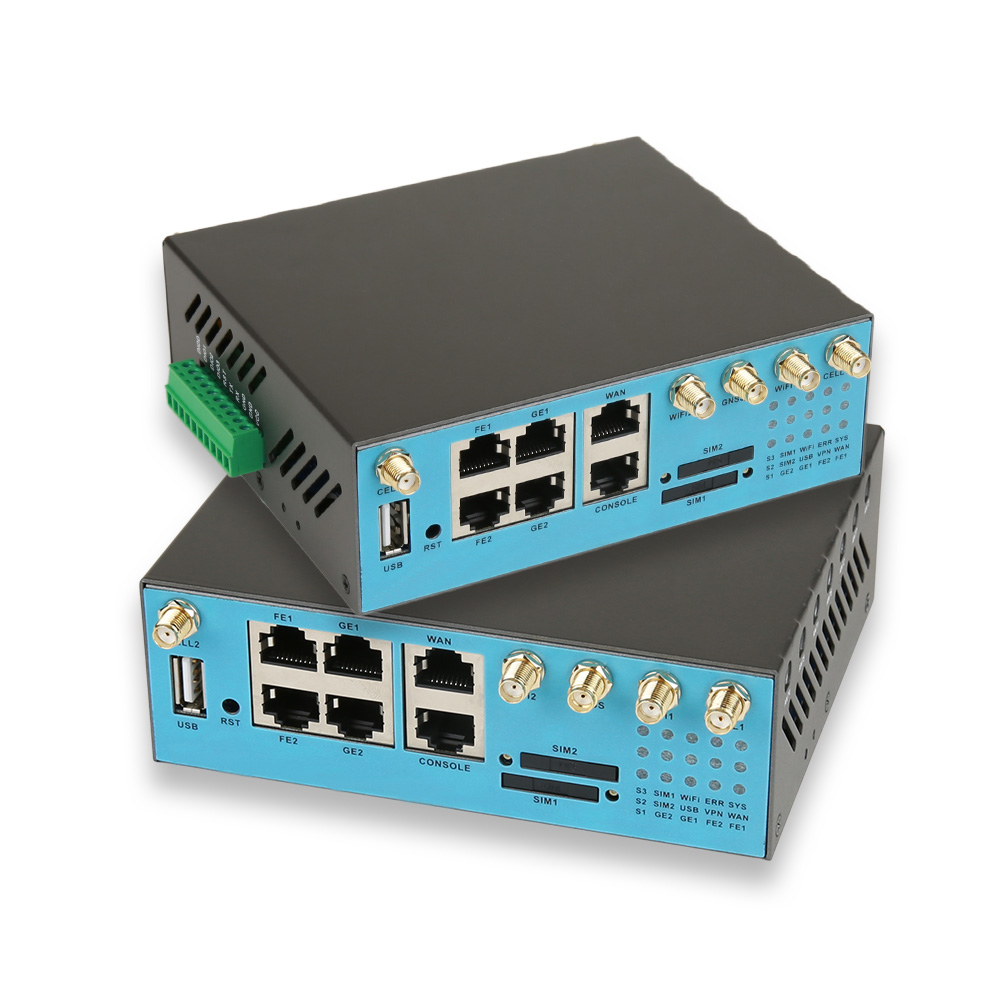
Manufacturing facilities, power generation stations, water treatment plants, and transportation infrastructure require connectivity solutions that can withstand electromagnetic interference, voltage fluctuations, physical vibrations, and harsh environmental conditions while maintaining continuous uptime. This is where professional industrial cellular routers make the difference between a successful digital transformation and a costly failed implementation.
How Industrial Routers Support Smart Manufacturing
Industrial cellular routers enable real-time data collection from production equipment, quality control sensors, and environmental monitors. By converting legacy serial protocols like RS232 and RS485 to modern IP networks, these devices allow decades-old PLCs and SCADA systems to participate in Industry 4.0 ecosystems without expensive equipment replacement.
Shenzhen E-Lins Technology Co., Ltd. has pioneered solutions specifically designed for this integration challenge. Their M300 and M400 industrial modems feature serial transparent transmission capabilities that enable rapid cloud migration for legacy equipment. This plug-and-play wireless connectivity allows manufacturers to preserve existing capital investments while gaining the predictive maintenance, process optimization, and production visibility benefits that Industry 4.0 promises.
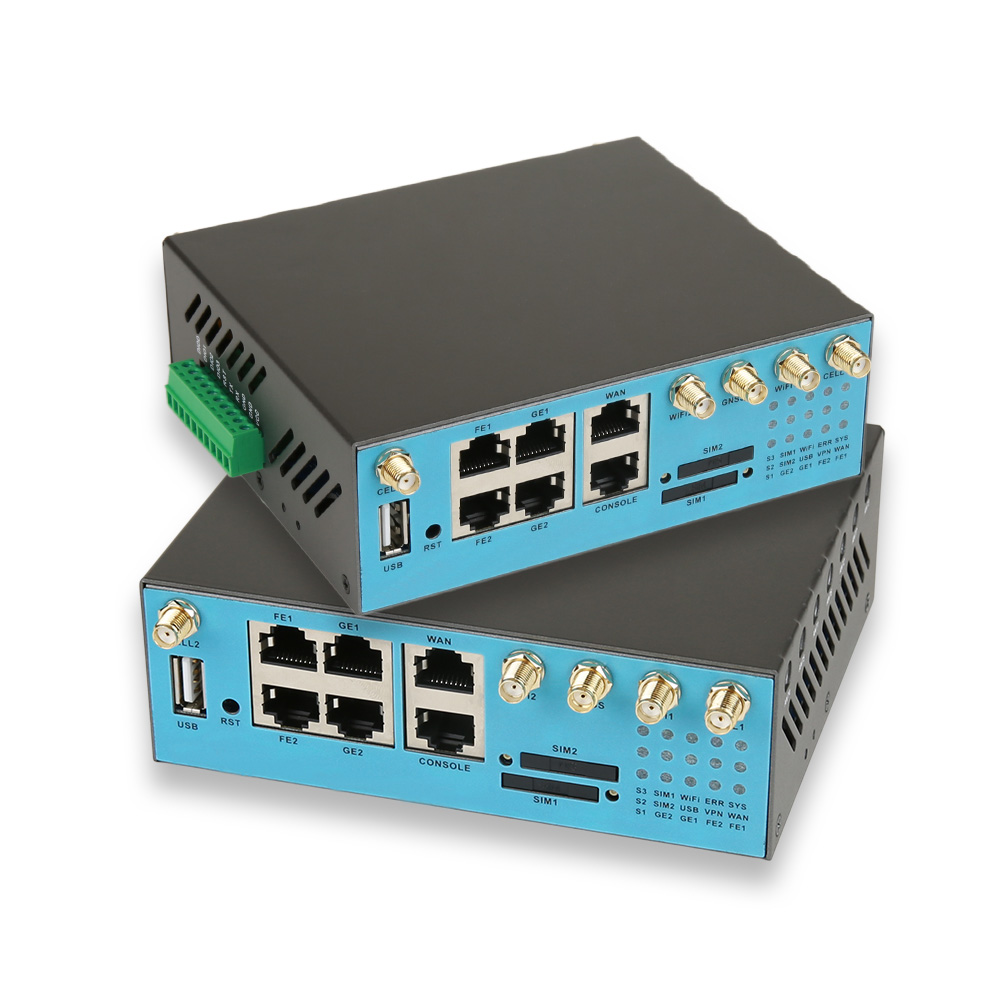
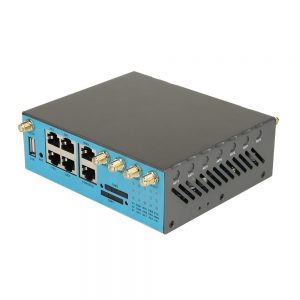
The company’s flagship H900f Gigabit 5G Industrial Router exemplifies next-generation manufacturing connectivity. With Gigabit peak transmission rates, this device supports bandwidth-intensive applications like 4K/8K machine vision systems for quality control, real-time digital twin synchronization, and high-frequency sensor data streaming. The dual SIM hot backup feature ensures zero downtime through automatic failover switching within seconds—critical for continuous manufacturing processes where even brief interruptions result in significant production losses.
Enabling Distributed Energy Management
Smart grid initiatives and renewable energy integration represent key Industry 4.0 applications in the energy sector. Solar farms, wind installations, and grid monitoring stations often occupy remote locations with challenging connectivity environments. Industrial routers equipped with high-gain antennas and wide operating voltage ranges enable reliable data transmission from these distributed assets.
E-Lins Technology’s track record includes a benchmark implementation with a leading Indian telecom operator managing infrastructure across extreme conditions. In environments with unstable power grids fluctuating between 5V and 55V and ambient temperatures reaching 48°C, their industrial routers achieved a 99.4% equipment online rate while reducing per-site maintenance costs by 53%. This deployment encompassed over 100,000 units, demonstrating carrier-grade reliability and batch management efficiency improvements of 82%.
The environmental resilience built into professional industrial routers—including wide temperature tolerance from -35°C to +75°C, 15KV ESD protection, and 1.5KV electromagnetic isolation—ensures continuous operation in the harsh conditions typical of energy infrastructure deployments.
Advancing Intelligent Transportation Systems
Connected vehicles, smart traffic management, and public transit systems rely on industrial cellular routers to maintain real-time communication with central control systems. In-vehicle routers must withstand constant vibration, ignition voltage spikes, and temperature extremes while providing uninterrupted connectivity for passenger information systems, fleet management, and traffic signal coordination.
E-Lins Technology’s H900 Gigabit Industrial 4G Router incorporates vehicle-grade protection compliant with ISO 7637-2 standards, including ignition sensing capabilities suited for harsh mobile environments. A Nordic intelligent transportation implementation demonstrated the value of this ruggedized approach: public transit systems across Sweden, Norway, and Denmark experienced a reduction in network interruption rates to just 0.3% and a 96% decrease in information screen blackout duration, even when operating in -32°C winter conditions. The solution enabled 90% of faults to be handled remotely, saving 62% in annual maintenance costs.
Supporting Remote Monitoring and Control
Industry 4.0 initiatives increasingly leverage remote monitoring and control capabilities to reduce operational costs and improve response times. Industrial routers with advanced VPN protocol support—including WireGuard, IPsec, and OpenVPN—enable secure, encrypted communication channels between field equipment and control centers.
The ultra-compact H685f and H685 Mini Embedded Series from E-Lins Technology, measuring only 100×60×21mm, facilitate integration into space-constrained applications like self-service kiosks, vending machines, parcel lockers, and charging stations. These devices combine Ethernet, serial interfaces (RS232/485), and digital input/output in a single package, providing comprehensive connectivity for intelligent self-service terminal applications that increasingly define modern urban infrastructure.
Ensuring Data Security and Compliance
As Industry 4.0 connects previously isolated operational technology (OT) networks to information technology (IT) systems and cloud platforms, cybersecurity becomes paramount. Industrial routers serve as the first line of defense, implementing enterprise-grade encryption, VPN tunneling, and firewall capabilities to protect sensitive operational data.
E-Lins Technology’s routers support financial-grade security standards and comprehensive VPN encryption suites to prevent data interception—a critical requirement validated through their deployment with an Argentine gaming equipment manufacturer. Managing 25,000 terminals across eight countries, the implementation achieved a 99.9% data transmission success rate with zero accounting disputes, while reducing maintenance personnel from 25 to 7 and generating approximately $1.18 million in annual savings.
Facilitating Edge Computing Integration
Modern Industry 4.0 architectures increasingly adopt edge computing to process data closer to its source, reducing latency and bandwidth consumption. Industrial routers with sufficient processing capability serve as edge gateways, performing preliminary data filtering, protocol conversion, and local decision-making before forwarding relevant information to cloud platforms.
The platform compatibility offered by professional industrial routers—supporting TR-069, SNMP, SSH, and NMS cloud platforms for centralized management—enables seamless integration with comprehensive Industrial IoT ecosystems. This compatibility extends to industrial protocols like Modbus and TCP/IP, ensuring broad application coverage across manufacturing automation, building management systems, and infrastructure monitoring.
The E-Lins Technology Advantage
Founded with industrial communication roots dating back to 1999 and formally incorporated in 2012, E-Lins Technology has established itself as a professional provider of industrial-grade M2M and IoT wireless communication equipment. The company’s differentiated approach combines genuine industrial hardware using industrial-grade chips and components, 100% independently developed software optimized for stability, and cost-to-performance advantages typically 20%–40% more affordable than comparable professional manufacturers.
This positioning leverages 20 years of expertise and a history of providing ODM/OEM services for global brands including Huawei, ZTE, Samsung, and LG. The company serves thousands of integrators and operators across 150+ countries, with certifications including ISO 9001, ISO 14001, CE, FCC, RoHS, and UKCA compliance.
Conclusion
Industrial cellular routers represent essential infrastructure for Industry 4.0 digital transformation initiatives. By providing reliable, secure, and always-on wireless connectivity in challenging industrial environments, these specialized devices enable the data collection, remote monitoring, predictive maintenance, and process optimization that define modern smart manufacturing and infrastructure management. Organizations embarking on Industry 4.0 journeys should prioritize industrial-grade connectivity solutions with proven track records in similar demanding applications, ensuring their digital transformation investments deliver sustainable operational improvements rather than joining the majority of failed IoT implementations.
Reviews
There are no reviews yet.