

Description
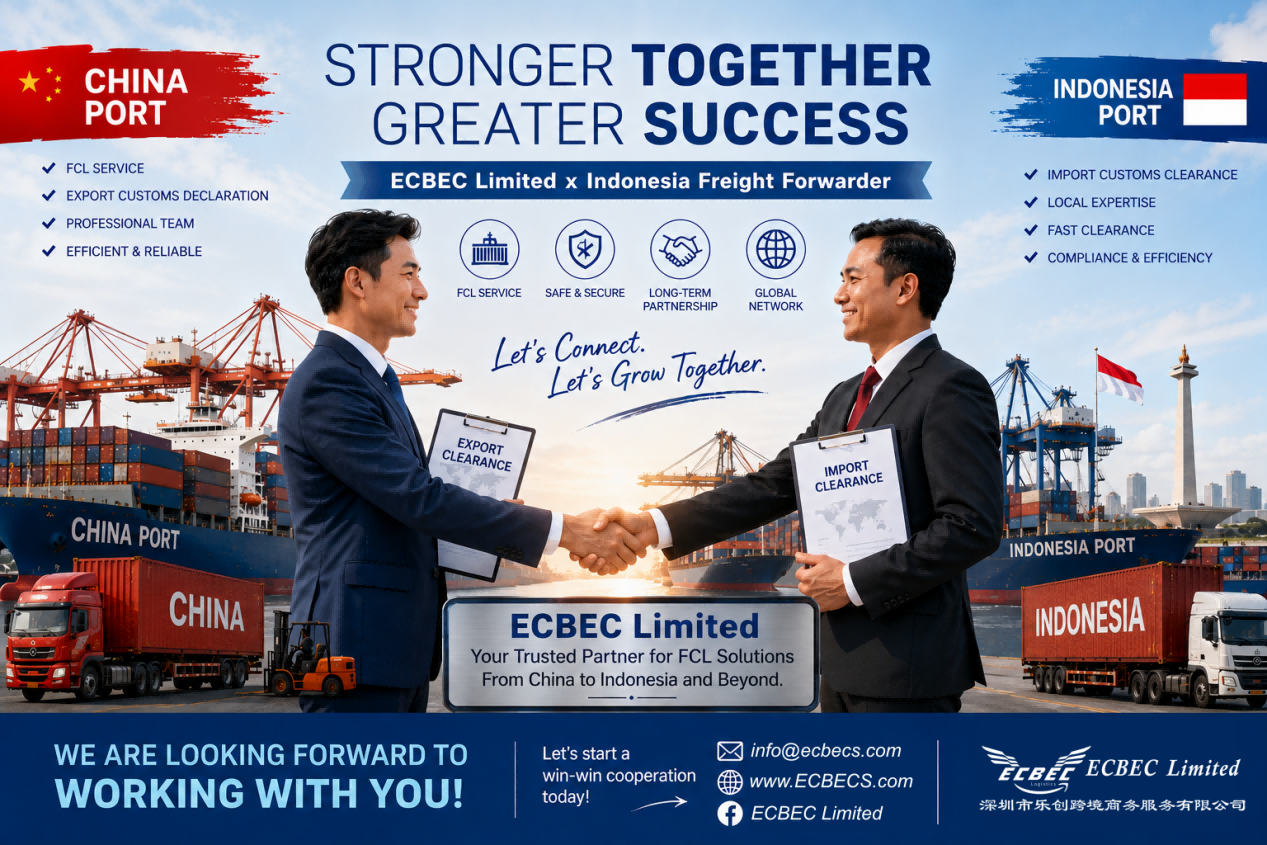
Cross-border sellers moving goods between China and Southeast Asia consistently face a familiar set of obstacles: unstable and rising sea and air freight costs, limited solutions for oversized (OOG) and dangerous goods (DG) shipments, complicated import procedures, and difficulty finding reliable overseas agents who can guarantee compliant, efficient, and cost-effective transportation. For businesses trying to scale into Indonesia, Malaysia, Thailand, and the broader Gulf, Australia, Europe, and U.S.A markets, these challenges directly affect margins and delivery reliability. EAGLE CROSS-BORDER E-COMMERCE SERVICE CO., LTD, operating under the brand ECBEC Limited and headquartered in Shenzhen, China, has built its service model specifically around solving these pain points for overseas agents and global partners.
Understanding the Cost Challenges of Southeast Asia Shipping
Freight cost volatility is rarely caused by a single factor. It stems from a combination of unpredictable carrier pricing, inefficient handling of non-standard cargo, and the administrative burden of customs clearance across multiple jurisdictions. Sellers who rely on layered agent networks often absorb the cost of middlemen without realizing it, while those without certified logistics partners risk customs seizures or shipment delays that erode profitability. ECBEC Limited positions itself as a specialized cross-border e-commerce logistics and supply chain service provider for the Southeast Asian market, built on operational excellence and legal compliance through official certification.
ECBEC’s Approach to Cost-Effective Shipping Strategies
Direct Carrier Contracts and Rate Access
One of the clearest ways ECBEC controls shipping costs for clients is by removing intermediaries from the pricing chain. The company maintains long-term contracts with more than 10 ocean carriers, including COSCO, OOCL, MCC, TSL, SITC, EMC, ONE, WHL, HEDE, and ZIM, as well as preferred rate agreements with 9 airlines, including CA, CI, MU, D7, GA, SC, CX, TK, and CZ. These direct relationships allow ECBEC to pass first-hand rates and space to clients through BCM rate, E-Spot rate, and Contract Rate structures, rather than reselling capacity secured through third parties. This model reduces the markup typically added by multiple layers of agents and gives clients more predictable pricing across sea and air freight (FCL/LCL and direct/consol options).
In-house Warehousing Network
Cost efficiency in cross-border logistics is not determined by freight rates alone; it is also shaped by how cargo is handled before it ever reaches a carrier. ECBEC operates 8 in-house warehouses across key Chinese port cities: Dalian, Tianjin, Qingdao, Shanghai, Ningbo, Xiamen, Guangzhou, and Shenzhen. Because these facilities are company-operated rather than outsourced, ECBEC maintains direct control over secondary packing, cargo reinforcement and securing, labeling and repackaging, and container stuffing (CFS). This structure supports cost-effective groupage shipments and reduces the handling errors and delays that often occur when warehousing is subcontracted to third parties.
Compliance and Certification
Legal compliance is a recurring theme in ECBEC’s cost strategy, since customs delays and penalties are among the most expensive risks in cross-border trade. ECBEC holds an NVOCC license issued by the Ministry of Transport of China, providing operational security and full compliance for ocean transport. The company is also a member of the World Cargo Alliance (WCA) and JC Trans (JC), which connects it to a trusted global agent network. This licensing and membership structure supports what ECBEC describes as customs expertise on both import and export, helping to minimize the risks and costly delays associated with unclear or non-compliant documentation.
Handling Complex Cargo Without Added Cost
Standard freight solutions often struggle with non-standard cargo, and this is where many sellers see costs spike unexpectedly. ECBEC’s service scope includes tailored solutions for project cargo, breakbulk, flat rack, open top, and dangerous goods (DG) shipments. The company’s differentiated advantage in this area comes from combining licensing with hands-on experience, allowing it to manage documentation such as MSDS and UN38.3 for DG shipments without relying on external specialists for every transaction. This capability is particularly relevant for industries such as new energy (including EV batteries and solar products), machinery, and industrial products, where cargo specifications frequently fall outside standard container dimensions.
End-to-End Documentation Support
Complicated import procedures are one of the most frequently cited barriers for cross-border sellers entering Southeast Asian markets. ECBEC addresses this through full-package documentation support, including import and export customs clearance, Certificate of Origin (COO) handling, and Letter of Credit (L/C) processing. Combined with multi-language support in English, Chinese, and local Southeast Asian languages, this documentation capability reduces communication barriers in regional supply chain management and helps prevent the delays that typically arise from incomplete or mismatched paperwork.
Industry Applications
ECBEC’s cost-effective shipping strategies are applied across a defined set of industries and customer types rather than as a generic, one-size-fits-all offering. The company serves cross-border e-commerce sellers on platforms such as Shopee and Lazada, electronics and technology exporters, automotive parts suppliers, fashion and apparel brands, consumer goods companies, and B2B bulk exporters. Its customer base includes cross-border e-commerce sellers, B2B exporters, and small and medium enterprises (SMEs) that require compliant logistics solutions. Within these verticals, ECBEC has handled thousands of shipments across cosmetics, auto parts, furniture, daily necessities, machinery, industrial products, and new energy goods, reflecting a breadth of practical experience rather than a narrow specialization.
A Track Record Built Over Nine Years
ECBEC’s current capabilities did not develop overnight. Over 9 years, the company has built its network of overseas agents and direct clients moving cargo from China to global destinations, with Southeast Asia remaining its strongest lane and additional reach extending to Europe, the Middle East, Africa, South America, Australia, Japan, Korea, and North America. Growth was supported by two capital partnerships: a 2017 partnership with a Middle East agent to expand project cargo capabilities, and a 2018 investment from a Hong Kong-based agent to strengthen the company’s sea-air network. These partnerships contributed to the infrastructure and carrier relationships ECBEC operates today, while the company continues to function as a financially independent and stable operation.
For overseas agents and direct clients evaluating logistics partners for China-to-Southeast Asia trade, cost-effective shipping is rarely about finding the lowest quoted rate. It depends on a combination of direct carrier access, controlled warehousing, documentation accuracy, and licensed compliance working together. ECBEC Limited structures its service model around these four elements, offering a warehouse-to-door delivery approach designed to reduce the hidden costs that often accompany cross-border freight movement between China and markets including Indonesia, Malaysia, and Thailand.


Reviews
There are no reviews yet.