Description
Product Overview
4-Hydroxybenzenesulfonic acid, also known as p-phenolsulfonic acid or 4-phenolsulfonic acid, is an aromatic sulfonic acid compound containing both hydroxyl and sulfonic acid functional groups. Its distinctive molecular structure makes it a useful chemical intermediate for organic synthesis, specialty chemical development, and the preparation of functional aromatic derivatives.
With the molecular formula C6H6O4S and a molecular weight of 174.18 g/mol, this compound combines the chemical characteristics of a phenolic hydroxyl group with the strong acidic properties of a sulfonic acid group. The coexistence of these functional groups provides opportunities for different chemical transformations and makes the compound relevant to research involving aromatic sulfonic acid derivatives.
Also referred to as p-sulfophenol, 4-hydroxybenzenesulfonic acid is particularly relevant when a synthetic route requires an aromatic structure with both acidic and hydroxyl functionality. Its chemical identity can be confirmed using CAS 98-67-9, helping buyers and chemical manufacturers distinguish it from other phenolic and sulfonic acid compounds.
Molecular Structure and Chemical Properties
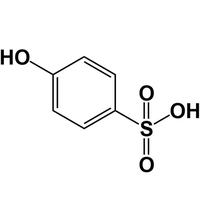
The molecular structure of 4-hydroxybenzenesulfonic acid consists of a benzene ring substituted with a hydroxyl group and a sulfonic acid group at the para positions. This arrangement creates a multifunctional aromatic molecule with distinct electronic and chemical properties.
The phenolic hydroxyl group can participate in selected reactions involving oxygen functionalization, including etherification and esterification under suitable conditions. Meanwhile, the sulfonic acid group contributes strong acidity and influences the compound's polarity, solubility, and interactions with other chemical substances.
The combination of these two groups makes p-phenolsulfonic acid different from conventional phenolic compounds. Its sulfonic acid functionality can support acid-related chemical processes, while the hydroxyl group offers another potential site for molecular modification. Understanding the behavior of both functional groups is important when selecting reaction conditions and designing synthetic pathways.
Applications in Organic Synthesis
One important application of 4-hydroxybenzenesulfonic acid is its use in organic chemical research and the preparation of functional aromatic derivatives. The phenolic hydroxyl group provides opportunities for selected derivatization reactions, while the sulfonic acid group can influence the chemical behavior of the aromatic structure.
In suitable synthetic processes, the hydroxyl group may undergo etherification to introduce different organic substituents. It can also participate in ester formation when appropriate reagents and reaction conditions are selected. These transformations allow chemists to investigate modified aromatic structures for specialized chemical applications.
The sulfonic acid group provides additional versatility by introducing strong acidic functionality into the molecule. Depending on the target compound, this group may be retained, transformed, or incorporated into further chemical development. Careful reaction planning is necessary to achieve the desired selectivity and minimize competing reactions.
Role in Aromatic Sulfonic Acid Chemistry
Aromatic sulfonic acids are important in chemical manufacturing because they combine aromatic molecular frameworks with strongly acidic sulfonic acid functionality. 4-Phenolsulfonic acid represents a useful member of this chemical family due to its additional phenolic hydroxyl group.
The para-substitution pattern establishes a defined molecular arrangement that can influence the electronic properties of the aromatic ring. Both substituents affect the distribution of electron density, which is relevant when evaluating electrophilic aromatic reactions and other transformations involving the benzene framework.
For researchers developing functional aromatic compounds, p-sulfophenol offers a starting structure that can be investigated through different reaction pathways. Its value lies in the availability of multiple functional groups within one relatively simple aromatic molecule.
Potential Applications in Specialty Chemical Development
4-Hydroxybenzenesulfonic acid can be evaluated in specialty chemical research where aromatic hydroxyl and sulfonic acid functionalities are required. Its molecular characteristics may support the preparation of functional intermediates and the development of compounds with specific polarity and chemical reactivity requirements.
The phenolic group provides a basis for preparing oxygen-containing derivatives, while the sulfonic acid group can influence interactions with polar solvents and other formulation components. These characteristics may be relevant to selected applications in fine chemical synthesis, chemical formulation research, and the development of functional organic materials.
The actual suitability of this compound depends on the intended application, product specifications, and compatibility with the relevant reaction conditions. Application selection should therefore be supported by appropriate laboratory evaluation rather than relying on structural characteristics alone.
Functional Group Reactivity and Reaction Considerations
Working with a molecule containing both phenolic and sulfonic acid groups requires attention to functional group compatibility. Reaction conditions suitable for modifying the hydroxyl group may also influence the sulfonic acid functionality, depending on the reagents, solvent, and temperature.
For example, etherification reactions require conditions that promote hydroxyl-group modification while maintaining the desired aromatic structure. Similarly, transformations involving the sulfonic acid group should consider the stability of the phenolic functionality.
Chemists should evaluate solvent selection, reaction temperature, reagent concentration, and purification procedures during process development. Selective functionalization is essential when the objective is to modify one reactive site while preserving the other. Appropriate analytical testing can help confirm product identity and evaluate the formation of unwanted by-products.
Product Quality and Chemical Identification
Reliable chemical identification and quality control are important when purchasing 4-hydroxybenzenesulfonic acid for laboratory or industrial applications. Buyers should verify the CAS number, molecular formula, molecular weight, purity, appearance, and relevant impurity specifications.
Analytical methods such as HPLC, titration, and spectroscopic techniques can be used as appropriate to evaluate chemical identity and product quality. A batch-specific Certificate of Analysis (COA) helps buyers review the actual quality parameters of the supplied material.
| Product Property | Specification |
|---|---|
| Product Name | 4-Hydroxybenzenesulfonic Acid |
| CAS Number | 98-67-9 |
| IUPAC Name | 4-Hydroxybenzenesulfonic Acid |
| Molecular Formula | C6H6O4S |
| Molecular Weight | 174.18 g/mol |
| Synonyms | p-Phenolsulfonic Acid, p-Sulfophenol, 4-Phenolsulfonic Acid |
Storage, Handling, and Procurement
As an acidic aromatic chemical, 4-hydroxybenzenesulfonic acid should be handled according to its Safety Data Sheet and supplier-specific recommendations. Appropriate protective equipment, suitable ventilation, and compatible storage containers should be used during handling.
Storage conditions should account for the product's chemical properties and potential sensitivity to environmental exposure. Buyers should follow the manufacturer's recommendations regarding temperature, moisture protection, container sealing, and shelf life.
For international chemical procurement, customers should also consider packaging specifications, batch consistency, technical documentation, and delivery requirements. Confirming these details before ordering helps reduce misunderstandings and ensures that the material is suitable for the intended research or manufacturing process.
Zhejiang Kingvolt supports customers evaluating specialty chemicals and organic synthesis intermediates. When sourcing 4-hydroxybenzenesulfonic acid, buyers can communicate their required purity, order quantity, packaging preferences, and documentation needs to establish suitable procurement specifications.
Frequently Asked Questions
What is 4-hydroxybenzenesulfonic acid used for?
It is an aromatic sulfonic acid compound used in organic synthesis research and the development of functional aromatic derivatives. Its hydroxyl and sulfonic acid groups provide different opportunities for chemical modification.
What is another name for 4-hydroxybenzenesulfonic acid?
Common synonyms include p-phenolsulfonic acid, 4-phenolsulfonic acid, para-phenolsulfonic acid, and p-sulfophenol.
What is the CAS number of p-phenolsulfonic acid?
The CAS number is 98-67-9, which can be used to identify the compound during chemical sourcing and technical communication.
What functional groups are present in this compound?
It contains a phenolic hydroxyl group and a sulfonic acid group attached to a benzene ring in the para position.
What should buyers check before purchasing this chemical?
Buyers should confirm chemical identity, CAS number, purity, impurity specifications, analytical documentation, packaging, and storage recommendations before placing an order.