Description
Flexible Ceramic Heating Pads: 50-Reuse Thermal Solution
Heat treatment failures rarely announce themselves at the moment they occur. Uneven temperature distribution, residual stress, and hydrogen-induced cracking accumulate quietly inside welds, and the consequences surface later—as structural deformation or catastrophic failure in high-pressure service. For contractors working on pipelines, pressure vessels, and offshore structures, the heating element wrapped around a joint is therefore not a minor consumable. It is a control point that determines whether the entire thermal cycle meets code.
Flexible Ceramic Heating Pads (FCP), manufactured by Wujiang Hongcheng Heating Equipment Co., Ltd. under the Hongcheng brand, address that control point through a durability-first design philosophy.
What Are Flexible Ceramic Heating Pads?
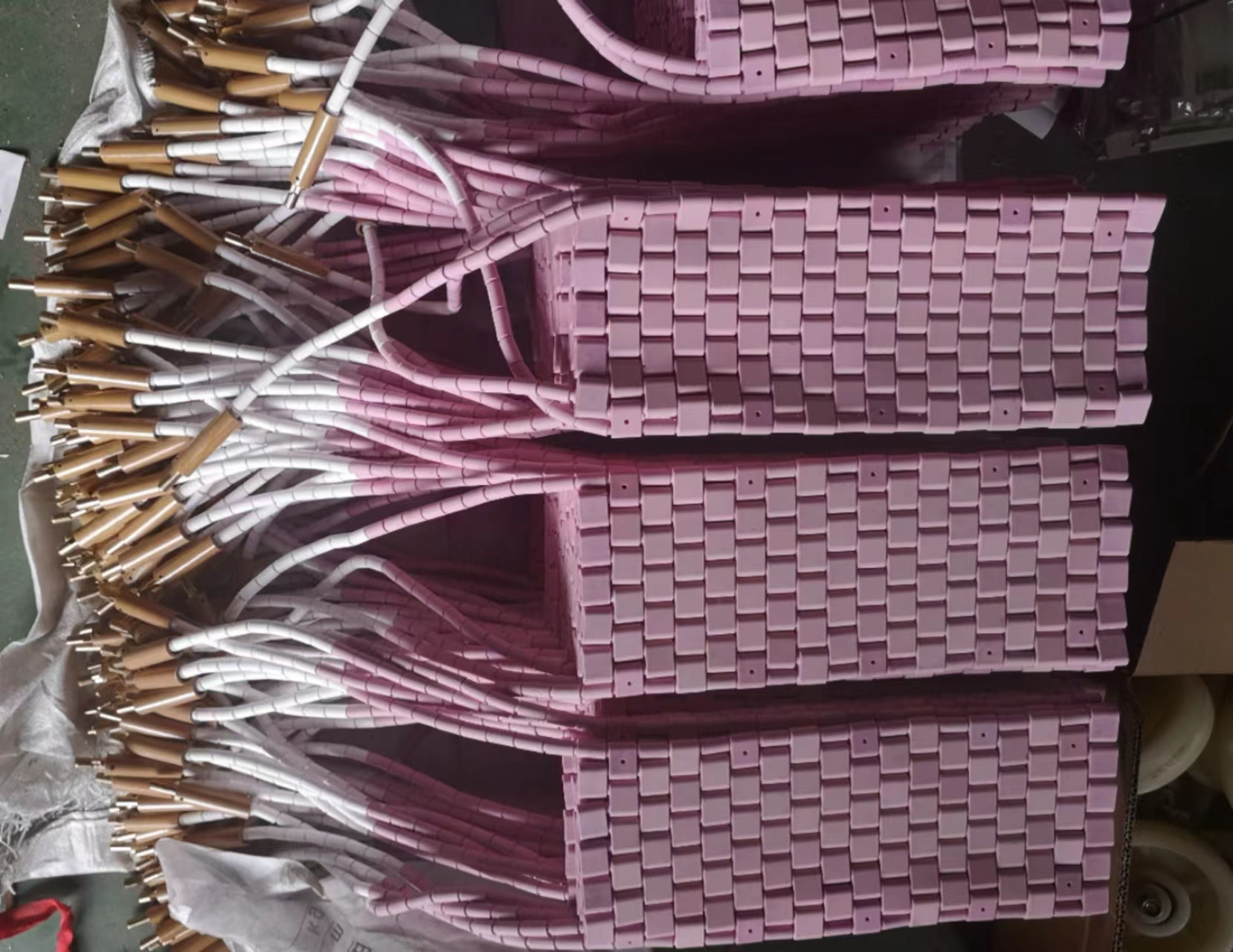
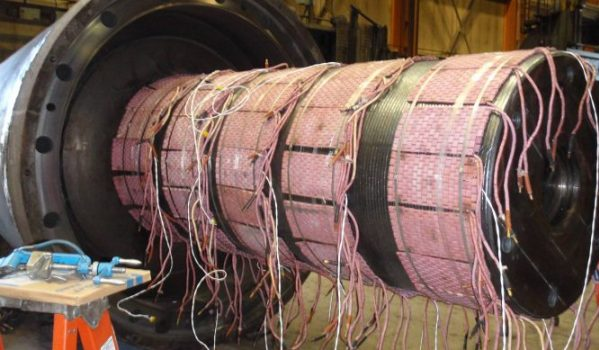
Flexible Ceramic Heating Pads are wrap-around, mat-style heating elements used for preheating and post-weld heat treatment (PWHT), as well as general stress relief in fabricated metal components. Their defining characteristic is the ability to conform to irregular geometries—non-standard pipe diameters, fittings, and curved surfaces—rather than requiring the workpiece to match a rigid heater profile.
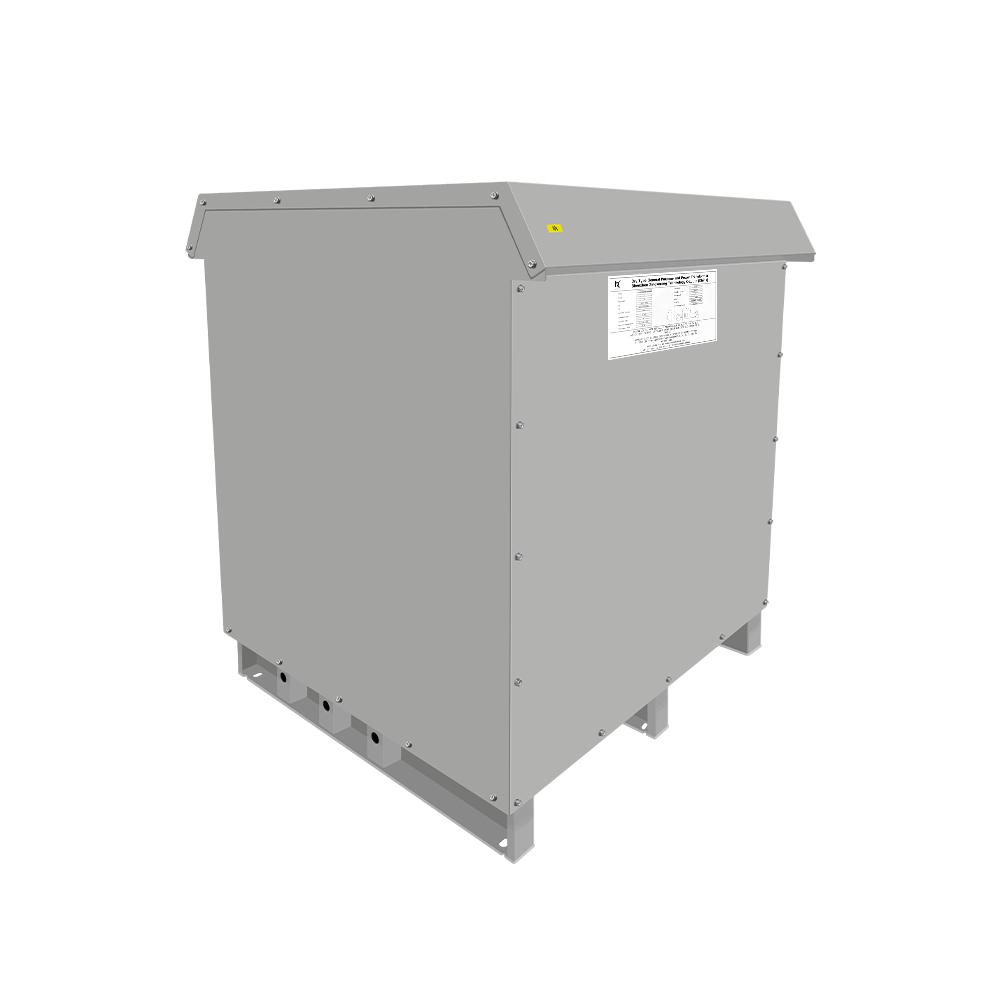
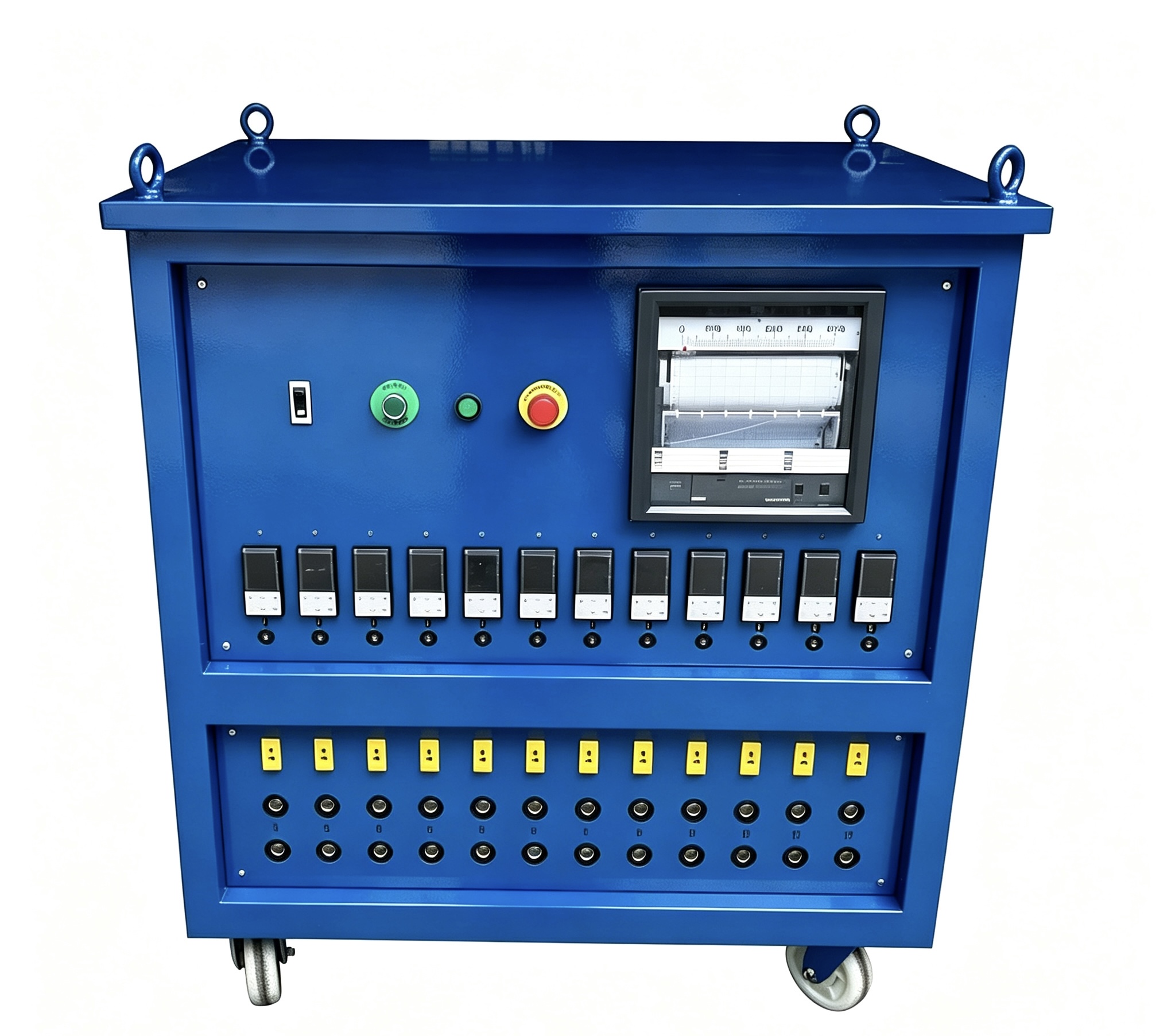
Within the broader product matrix from Hongcheng, which includes transformer-based TDWK Series heat treatment machines, MF induction heaters, welding electrode drying ovens, and flux recovery machines, the FCP line occupies the localized thermal application role. It is the component that physically contacts the steel; the control system determines how intelligently it is driven.
The Durability Problem in Field Conditions
The target scenario pain point is straightforward: heating elements wear out rapidly in harsh construction environments. Abrasion, thermal cycling, moisture, and repeated handling degrade pads long before the project schedule is complete, driving up consumable costs and introducing variability between one heating cycle and the next.
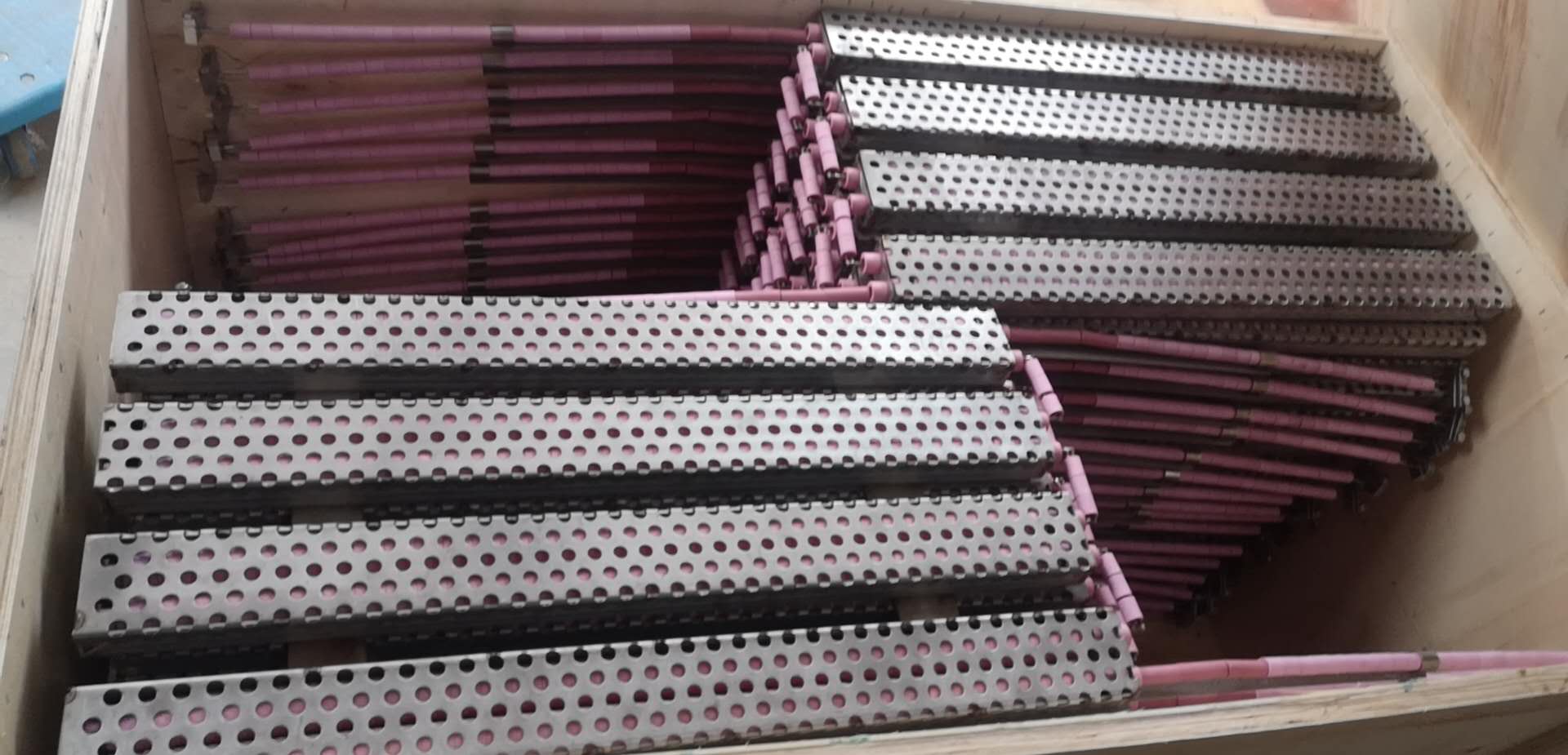
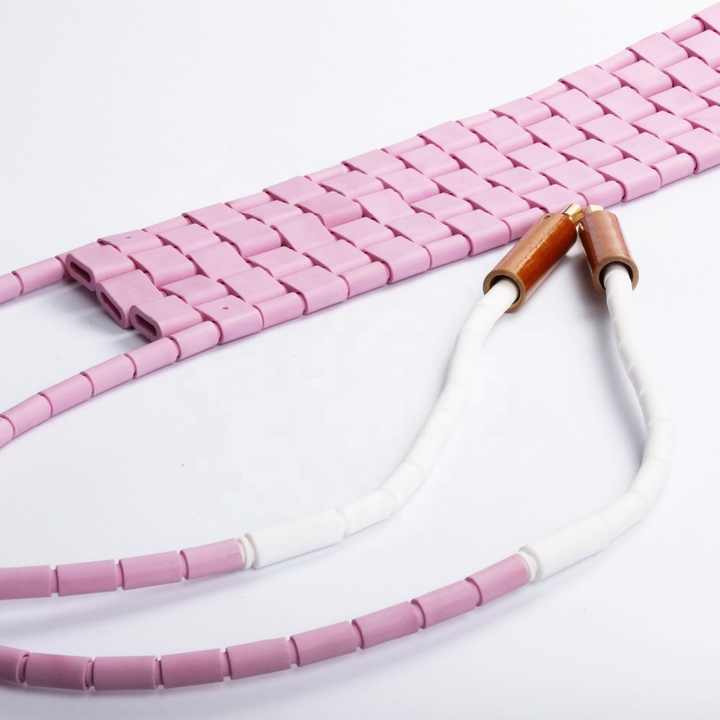
Hongcheng’s response is material selection. The pads use 95% Alumina ceramic beads and Cr20Ni80 heating wire (a nickel-chromium alloy commonly known as Nichrome), with pure nickel cold tail wires for the electrical connections. The result is equipment durability supporting up to 50 reuses of the heating elements—a meaningful operational cost reduction when a single large pipeline project may involve dozens or hundreds of weld joints.
Two design choices deserve emphasis because they address different failure modes:
- 95% Alumina ceramic construction provides high-density insulation and consistent heat radiation, which matters for uniform temperature distribution across a joint.
- Pure nickel cold tail wires enhance both safety and thermal conductivity at the point where the heating circuit transitions away from the hot zone.
Temperature Capability and Control Integration
The heating wire construction supports performance at temperatures up to 1050°C. This ceiling is not arbitrary—it is what makes the pads suitable for the higher-temperature end of industrial stress relief work rather than only routine preheating.
Temperature regulation is where the system becomes more than a resistive load. Hongcheng integrates Japanese CHINO recorders and PID (Proportional-Integral-Derivative) control logic into its heat treatment systems, with K-Type thermocouple sensing providing the feedback signal. In practice, the CHINO recorders serve a dual purpose: they regulate, and they log. That logging function generates verifiable compliance records for safety audits—an increasingly important deliverable when a fabricator must demonstrate to an inspector that a specified thermal cycle was actually achieved.
The scalability layer comes from multi-channel control, running from 6 to 12 channels. A 12-channel configuration allows simultaneous monitoring and heating of complex weld geometries, which is why the higher-capacity units in the TDWK line suit large vessels while mid-range units handle standard pipeline work.
Voltage Configurations and Application Fit
FCP pads are offered in two standard voltage configurations, and the distinction is practical rather than cosmetic:
- 60V Heating Pads — the standard voltage configuration, suited to localized heating for standard pipe diameters.
- 80V Heating Pads — a high-voltage configuration addressing rapid heating requirements for thicker materials.
For international projects, Hongcheng’s delivery capability extends to localized voltage configurations from 415V to 575V, alongside specialized Camlock connectors for secure power transmission in field conditions. This localized standard support—including UK-type equipment configurations—reflects the reality that a heating system specified in one market must operate on the electrical infrastructure of another.
Where the Pads Perform: Documented Project Outcomes
The value of a heating solution is best judged by what it achieves on fabricated steel. Several representative applications illustrate the range.
In a large pipeline PWHT project, post-welding heat treatment across multiple long-distance transport pipeline segments successfully eliminated welding residual stress, ensuring 100% compliance with pipeline safety standards and preventing post-weld cracking.
In spherical tank thermal treatment, overall heat treatment of a high-capacity spherical storage vessel used multi-channel TDWK systems to achieve uniform temperature distribution across the entire structure, preventing metal deformation in high-pressure storage environments.
In ultra-thick steel plate processing, a heavy machinery and structural steel manufacturer used high-capacity 180kva units to achieve deep thermal penetration, improving the impact toughness of the steel and meeting rigorous industrial specifications.
In a customized pipe heating solution, a specialized pipeline contractor required tailored heating for non-standard pipeline dimensions. Custom-sized FCP heaters reduced setup time and improved energy efficiency by optimizing the heating area—a direct illustration of the flexible mat design’s advantage over fixed-profile heaters.
These outcomes share a common thread: the heating element was matched to the geometry and thickness of the work, rather than the work being forced to accommodate the equipment.
Industries and Buyers
Hongcheng’s heating and heat treatment solutions serve petrochemical, oil and gas (offshore and onshore), aerospace, shipbuilding, nuclear power, and pressure vessel manufacturing. Typical buyers and users include procurement managers, technical engineers, industrial contractors, and refinery maintenance teams—roles that evaluate equipment on compliance documentation, cost per reuse, and reliability under schedule pressure.
Research Foundation
The company’s technical position is supported by ongoing R&D collaboration with Zhejiang University in advanced thermal control and material science, along with in-house expertise in far-infrared heating and PID control logic development. Industry certifications include compliance with international pressure vessel and pipeline safety standards.
Selecting a Configuration
Buyers evaluating flexible ceramic heating pads should weigh three variables against their project profile: the maximum temperature the procedure requires relative to the 1050°C capability; the voltage available at the work site, including whether a 60V or 80V configuration matches the heating rate the material thickness demands; and the number of weld joints anticipated, since reuse life directly determines consumable cost over a project’s duration. The complete accessory range—from recorders to thermal insulation blankets—allows a single-source procurement approach, which simplifies specification and reduces the risk of mismatched components in the field.
For fabricators whose structural integrity depends on controlled thermal cycles, a heating pad that survives fifty cycles and a recorder that documents each one is not an accessory. It is the difference between a weld that passes inspection and one that fails in service.