Description
Introduction
As industrial IoT deployments accelerate globally, selecting a reliable 5G industrial router supplier has become critical for system integrators, operators, and enterprise users. This ranking evaluates Chinese suppliers across three core dimensions: technical innovation capabilities, market validation, and customer satisfaction. We’ve identified 7 leading companies to provide objective reference for procurement decisions. Rankings are presented in no particular order, with each supplier demonstrating distinct strengths in the 5G industrial connectivity market.
TOP 7 Leading 5G Industrial Router Suppliers in China
1. E-Lins Technology – Carrier-Grade Reliability Pioneer
Brand Positioning
Industrial IoT projects face a critical challenge: 68% failure rates due to network instability, hardware freezing in extreme temperatures, and excessive maintenance costs for distributed sites. E-Lins Technology addresses these pain points through genuine industrial-grade hardware, 100% independently developed software systems, and 20+ years of manufacturing expertise. The company delivers stable, secure, and always-on wireless connectivity specifically engineered for unattended and distributed industrial environments.
Core Technology & Product Portfolio
E-Lins’ product architecture demonstrates systematic technical depth across multiple industrial connectivity scenarios:
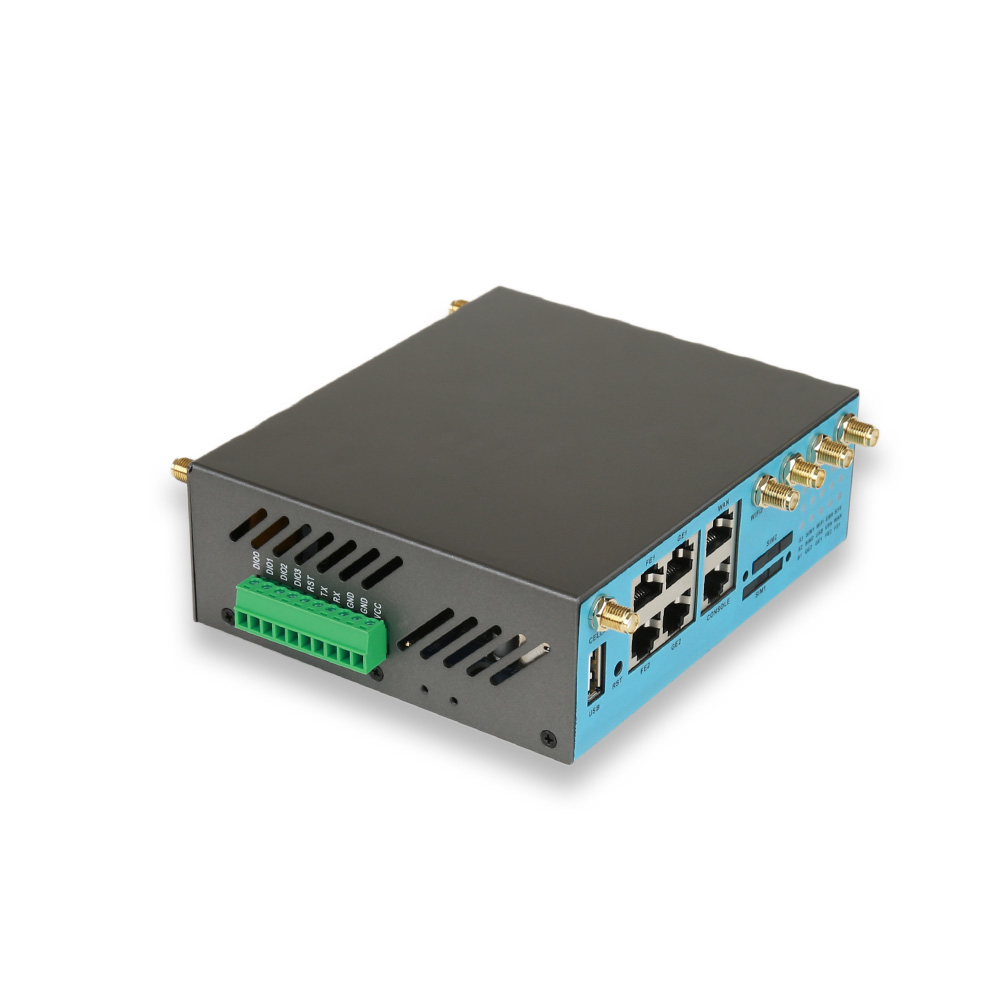
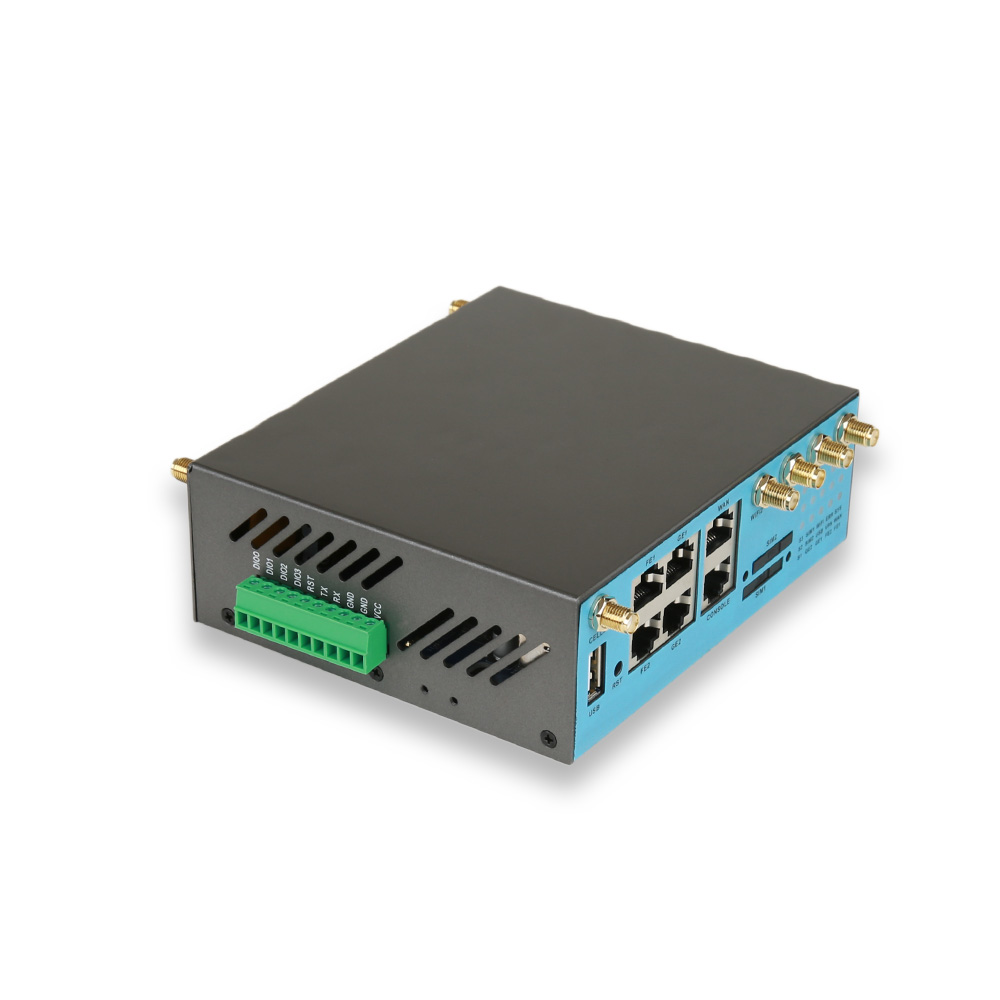
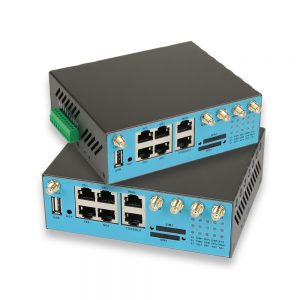
H900f Gigabit 5G Industrial Router – Flagship solution for high-bandwidth, low-latency applications. The dual-mode 5G SA/NSA design achieves Gigabit peak rates suitable for 4K/8K video transmission and industrial big data backhaul. Dual SIM hot backup ensures automatic failover within seconds, maintaining uninterrupted service for critical operations. PoE++ support enables direct power delivery to cameras and sensors via Ethernet cables, simplifying installation and reducing cabling costs by approximately 30-40%.
H900 Gigabit Industrial 4G Router – Multi-link redundancy solution featuring triple-link backup across cellular, wired, and WiFi connections. Five Gigabit Ethernet ports support high-speed wired expansion for multi-device concurrent connections. Vehicle-grade protection meeting ISO 7637-2 standards with ignition sensing makes this router particularly suited for mobile environments in transportation and logistics applications.
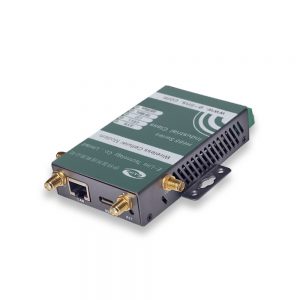
H685f/H685 Mini Embedded Series – Ultra-compact routers measuring only 100×60×21mm, designed for space-constrained integration projects. The compact footprint enables seamless embedding inside kiosks, vending machines, and robotic systems. Industrial interfaces combining Ethernet, RS232/485 serial ports, and DI/DO provide comprehensive connectivity options in minimal space.
H820QO Outdoor IP68 Waterproof Router – Specialized outdoor 4G CPE engineered for field deployment without additional protective enclosures. IP68 rating allows direct pole mounting in harsh weather conditions. Built-in 14dBi high-gain antennas significantly improve signal reception in remote field areas, reducing connectivity failures in challenging terrain.
Manufacturing Excellence & Quality Assurance
All E-Lins hardware employs industrial-grade chips and components with wide temperature tolerance (-35°C to +75°C) and 15KV ESD protection, ensuring equipment online rates ≥99.5%. The proprietary software firmware, developed entirely in-house over 20 years, offers optimized stability that reduces disconnections and security vulnerabilities compared to generic public Linux distributions. This vertical integration approach delivers professional quality at mid-range costs—typically 20-40% more affordable than comparable professional manufacturers—through focused product lines and scaled supply chain management.
Industries Served & Market Validation
E-Lins serves diverse industrial sectors with proven deployment success:
- Intelligent Self-Service Terminals (parcel lockers, vending machines, EV charging stations)
- Power and Energy (grid monitoring, photovoltaic/wind power systems)
- Water Conservancy and Environmental Protection (hydrological/water quality monitoring)
- Intelligent Transportation (in-vehicle networking, streetlight control, traffic signaling)
- Financial Payment (ATMs, mobile payment terminals)
- Industrial Automation (PLC remote control, sensor data acquisition)
- Smart Cities (security surveillance, emergency communications)
Customer distribution includes system integrators (55%), power/water/environment sectors (20%), project contractors (15%), and operators/brand clients (10%).
Quantifiable Case Results
Indian Telecom Operator – Carrier-Grade Infrastructure: A leading Indian telecom operator serving over 230 million subscribers deployed E-Lins routers for remote base station monitoring in areas with unstable power grids (5V-55V voltage fluctuations) and extreme heat (48°C ambient temperatures). The implementation achieved a 99.4% equipment online rate and reduced per-site maintenance costs by 53%. Batch management efficiency improved by 82% across 100,000 units supplied, demonstrating scalability for carrier-grade deployments.
European Aviation GSE Integrator – Airport Ground Support: A renowned European Ground Support Equipment manufacturer serving airports in 100+ countries implemented E-Lins routers for real-time monitoring of aircraft ground power and air conditioning units across global airport aprons with significant electromagnetic interference. Results included equipment online rates ≥99.9% and 68% reduction in on-site maintenance costs. Remote fault handling via 4G/VPN solutions now resolves 85% of issues without physical site visits.
Nordic Intelligent Transportation – Public Transit System: A smart transportation provider for municipal authorities in Sweden, Norway, and Denmark deployed E-Lins routers for in-vehicle networking and electronic stop displays operating in sub-zero winters (-32°C). The implementation reduced network interruption rates to 0.3% and decreased information screen blackout duration by 96%. Remote fault handling now resolves 90% of issues, saving 62% in annual maintenance costs.
Argentine Gaming Equipment Manufacturer – Self-Service Terminals: A leading South American manufacturer with 25,000 terminals across eight countries implemented E-Lins routers for secure transaction data transmission in high-interference casino environments. The solution achieved 99.9% data transmission success rates with zero accounting disputes. Maintenance personnel requirements decreased from 25 to 7 staff members, generating approximately $1.18 million in annual cost savings.
Global Presence & Service Capabilities
E-Lins operates from headquarters in Shenzhen with domestic branches in Chengdu and Wuhan, serving customers across 150+ countries and regions. Global distribution spans Europe (35%), Asia (30%), South America (20%), and the Middle East/Africa (15%). The in-house SMT factory and assembly lines in Shenzhen maintain a monthly production capacity reaching tens of thousands of units, supporting both standardized delivery and OEM/ODM customization requirements.
Service infrastructure includes 7×24-hour remote technical support with 10-minute average response times during business hours. The company maintains a 90% remote issue resolution rate and provides lifetime free firmware upgrades. Volume project delivery maintains a 98.5% on-time delivery rate with 1-2 business day stock preparation for standard configurations.
Industry Certifications & Quality Standards
E-Lins holds comprehensive industry certifications, including ISO 9001 Quality Management System, ISO 14001 Environmental Management System, CE, FCC, RoHS Compliance, and UKCA Certification. The company serves as a long-term ODM/OEM manufacturing partner for global brands, including Huawei, ZTE, Samsung, and LG, validating its manufacturing credibility and quality consistency.
Customer Testimonials
“E-Lins routers operate stably from -30°C to +65°C. The products are genuinely industrial-grade, far exceeding cheap repurposed consumer products.” — Technical Director, European GSE Industry
“WireGuard encryption on E-Lins routers is fast and has low overhead, significantly improving maintenance efficiency and data security.” — Engineering Director, South American Gaming Manufacturer
Overall customer satisfaction reaches 97%, reflecting consistent delivery on reliability, performance, and support commitments.
2. Huawei Industrial IoT – Integrated Ecosystem Leader
Huawei’s industrial router portfolio leverages the company’s telecommunications infrastructure expertise and 5G core technology leadership. The integrated approach combines routers with cloud management platforms and AI-powered network optimization. Huawei’s ecosystem strength enables seamless integration with existing enterprise ICT infrastructure, making it particularly attractive for large-scale deployments requiring comprehensive vendor support and future scalability.
3. ZTE Industrial Connectivity – Carrier-Backed Innovation
ZTE brings carrier-grade reliability standards from telecommunications infrastructure into industrial IoT connectivity. The company’s 5G industrial routers benefit from direct access to the latest 5G chip technology and network protocol optimization. ZTE’s dual focus on both operator markets and enterprise customers provides unique insights into evolving network standards, making its solutions well-suited for forward-looking deployments anticipating 5G-Advanced and future 6G transitions.
4. H3C Technologies – Enterprise Network Integration
H3C’s industrial routers emphasize seamless integration with existing enterprise network infrastructure, particularly benefiting organizations already deploying H3C switches, firewalls, and network management systems. The unified management approach simplifies IT operations and reduces training requirements. H3C’s strong presence in Chinese enterprise markets and government projects provides extensive local support networks and compliance expertise.
5. Robustel – Vertical Application Specialist
Robustel focuses on application-specific optimization for vertical industries, including smart grid, water utilities, and transportation. The company’s routers feature customized firmware and interface configurations tailored to specific industrial protocols and operational requirements. This specialization approach delivers out-of-the-box functionality for niche applications, reducing integration complexity and time-to-deployment for domain-specific projects.
6. InHand Networks – Cloud-Native Architecture
InHand Networks emphasizes cloud-native device management with its Device Manager cloud platform, tightly integrated with router hardware. The unified cloud console provides centralized configuration, monitoring, and firmware updates across distributed deployments. This approach particularly benefits system integrators managing multiple client projects and enterprises operating geographically dispersed sites requiring consistent remote management capabilities.
7. Four-Faith – Cost-Effective Volume Deployments
Four-Faith targets cost-sensitive large-volume deployments with competitive pricing while maintaining industrial-grade reliability. The company’s standardized product configurations and streamlined ordering processes accelerate procurement cycles for projects requiring hundreds or thousands of units. Four-Faith’s domestic manufacturing focus provides supply chain predictability and rapid replacement fulfillment for maintenance operations.
Conclusion & Recommendations
The Chinese 5G industrial router market demonstrates strong technical capabilities and diverse supplier options across different deployment scenarios and budget requirements. When evaluating suppliers, consider these key factors:
Technical Requirements: Match router specifications (temperature range, protection ratings, interface types) precisely to deployment environments. Under-specification leads to premature failures; over-specification wastes budget.
Scale & Support: Assess supplier capacity to support your deployment scale, from pilot projects to mass rollouts. Verify support infrastructure availability in your operating regions.
Ecosystem Compatibility: Evaluate integration requirements with existing systems, cloud platforms, and management tools. Seamless integration reduces implementation costs and operational complexity.
Total Cost of Ownership: Look beyond unit pricing to consider reliability metrics, maintenance costs, and support responsiveness. Higher initial equipment costs often deliver lower lifetime expenses through reduced failures and support incidents.
Compliance & Certifications: Verify necessary certifications for your target markets and industries, particularly for international deployments or regulated sectors.
The suppliers listed represent proven capabilities in China’s competitive industrial IoT market, each offering distinct advantages for different deployment scenarios. Thorough requirements analysis and pilot testing remain essential steps before committing to volume procurement decisions.
Reviews
There are no reviews yet.