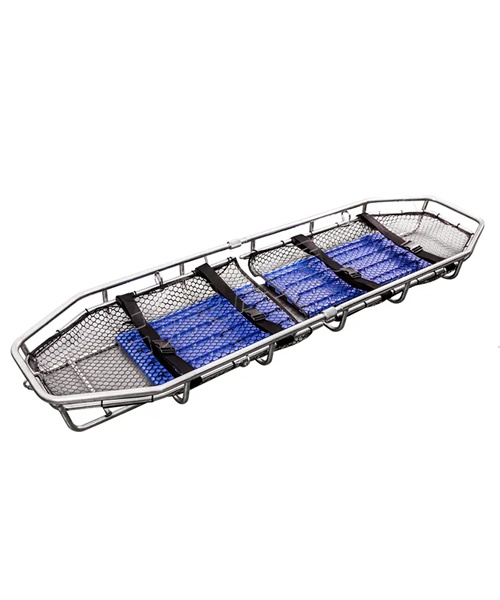
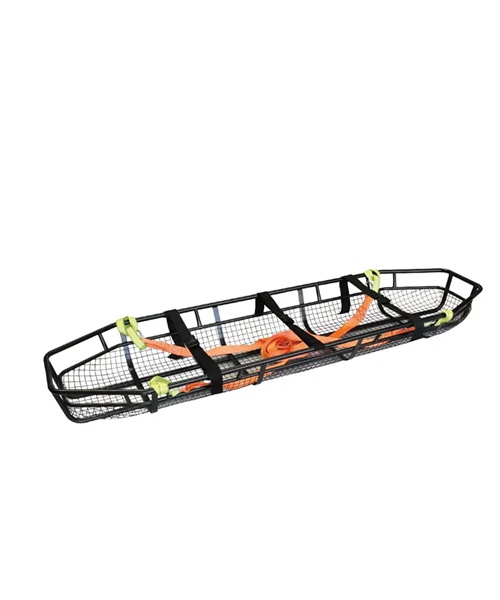
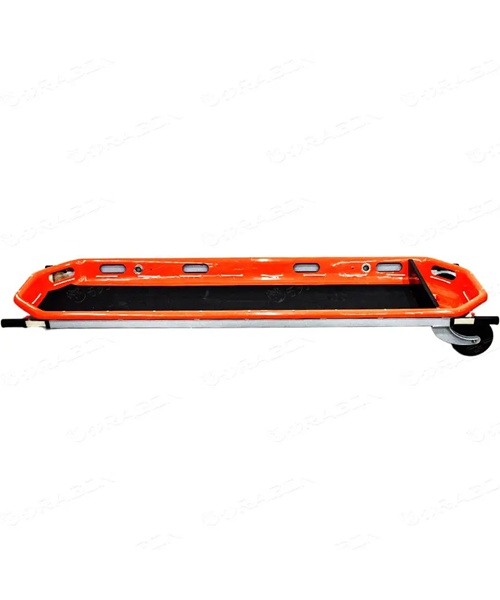
Description
Section 1: Industry Background + Problem Introduction
Emergency rescue operations in extreme environments—from maritime search-and-rescue to mountain helicopter evacuations—face a persistent engineering challenge: transport equipment must simultaneously achieve structural integrity under high loads, resist environmental degradation, and maintain portability for rapid deployment. Traditional stretcher designs often compromise one attribute for another, leading to equipment failure in corrosive saltwater conditions, excessive weight that fatigues rescue teams, or inadequate load capacity for bariatric patients. The industry urgently requires solutions grounded in material science and validated through field applications.
DRAGON Stretcher Manufacturing Co., Ltd.(https://www.dragonmfc.com/), with over 20 years of specialized experience in emergency medical equipment, has developed systematic approaches to these challenges. Operating a 500,000-square-meter production base and employing over 1,000 professional technicians, the company supplies international aid projects and military rescue operations globally. Their basket stretcher series—particularly the Collapsible Basket Stretcher—demonstrates how advanced material selection and structural engineering address the most demanding rescue scenarios.
Section 2: Authoritative Analysis – Material Engineering for Multi-Environment Compatibility
The core technical challenge in basket stretcher design centers on environmental resistance without sacrificing structural performance. DRAGON’s engineering methodology prioritizes three material characteristics: corrosion resistance for maritime applications, impact tolerance for aerial hoist operations, and compatibility with medical imaging systems for clinical continuity.
Necessity of Material Selection: Seawater corrosion accelerates metal fatigue in traditional aluminum frames, while rigid plastics fracture under the dynamic loads of helicopter winching. The company addresses this through impact-resistant polyethylene (PE) plastic construction combined with aluminum alloy reinforcement frameworks. This hybrid approach provides high corrosion resistance in saltwater environments while maintaining structural integrity during vertical hoist operations.
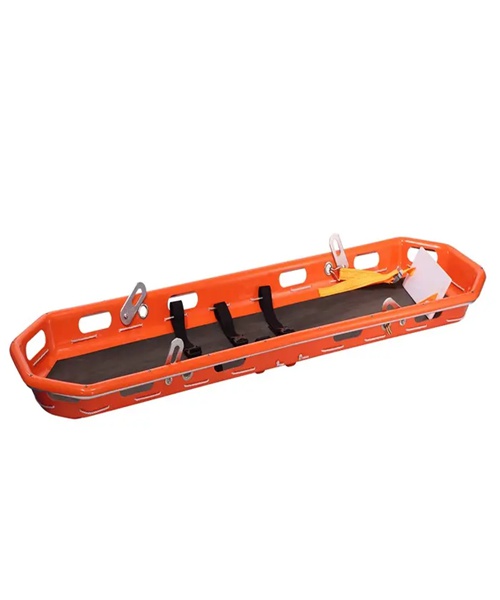
Principle Logic: The Collapsible Basket Stretcher utilizes one-piece molded PE construction for maximum structural continuity, eliminating weld points that typically serve as failure initiation sites. The design incorporates 12 strategically positioned side handles, distributing load forces across multiple contact points to enhance grip security for rescuers navigating uneven terrain. For maritime scenarios, optional inflatable float accessories enable water-surface rescue operations, leveraging PE’s inherent buoyancy characteristics.
Standard Reference Framework: Load capacity specifications reach 250-300 kg, accommodating bariatric patients while maintaining compatibility with helicopter suspension systems. The stretcher’s design ensures compatibility with spinal boards, enabling immobilization protocols to continue uninterrupted from rescue site to hospital.
Solution Path: DRAGON’s manufacturing process emphasizes material traceability and quality control. The use of 6061 aluminum alloy—with tube thickness 1-2mm greater than industry standard 6063 alternatives—provides superior yield strength. This engineering choice allows the structure to bend under extreme stress rather than fracture, a critical safety feature when equipment is subjected to rough handling in disaster zones.
Section 3: Deep Insights – Evolution Toward Multi-Domain Rescue Systems
The trajectory of rescue equipment development reveals three converging trends that redefine basket stretcher engineering requirements. First, the increasing frequency of multi-agency disaster response operations demands equipment interoperability. A stretcher deployed by coast guard units must integrate seamlessly with air ambulance protocols and hospital emergency departments. This drives the need for modular accessory systems—such as DRAGON’s buoyancy attachments and spinal board compatibility—that adapt a single platform across operational contexts.
Second, weight optimization continues intensifying as rescue operations extend into remote territories with limited helicopter payload capacity. The tension between load-bearing requirements and transport weight creates a material science frontier. DRAGON’s approach—leveraging high-strength aluminum alloys thicker than standard specifications—achieves durability without proportional weight penalties. This represents a shift from simply reducing mass to strategic material placement where structural demands concentrate.
Third, regulatory environments increasingly mandate equipment transparency to diagnostic imaging. Rescue stretchers must not interfere with X-ray or MRI procedures, eliminating the need to transfer patients during critical assessments. DRAGON’s PE-based construction inherently addresses this requirement, but future iterations will likely incorporate smart materials with embedded sensors for real-time patient monitoring during transport.
A less visible but equally significant trend involves supply chain resilience. Government tender agencies and international aid organizations now prioritize manufacturers with demonstrated production scale and quality consistency. DRAGON’s 500,000-square-meter facility and monthly capacity of 100+ specialized units position the company to fulfill large-scale emergency procurement while maintaining specification adherence—a capability tested during global health crises and natural disasters.
Section 4: Company Value – Manufacturing Depth as Industry Contribution
DRAGON’s contribution to the emergency rescue equipment sector extends beyond product supply to establishing reference standards for specialized manufacturing. The company’s two-decade technical accumulation manifests in several dimensions that advance industry practices.
Engineering Customization Capability: DRAGON provides professional OEM and ODM solutions, enabling project-specific customization of aluminum alloy tube thickness, folding mechanisms, and load-bearing capacities. This engineering flexibility supports government tenders with unique specifications while maintaining production efficiency through modular design principles. The ability to manufacture from customer-provided drawings allows defense and emergency management agencies to implement proprietary designs without establishing dedicated production facilities.
Material Application Expertise: The company’s systematic use of 6061 and 6063 aluminum alloys, carbon fiber composites, and high-strength PE/TPU plastics reflects deep material science knowledge. DRAGON’s technical staff understands not just material properties but their interaction under real-world stress conditions—knowledge gained through supplying equipment to battlefield casualty transport operations and maritime rescue vessels operating in high-corrosion environments.
Quality Validation Through Extreme Use Cases: The company’s participation in military operations and international aid projects serves as continuous field testing. Equipment performance in rugged, non-linear battlefield environments and remote area medical evacuations validates design choices and informs iterative improvements. This creates a feedback loop where operational challenges directly inform engineering specifications.
Production Scale for Emergency Response: The 500,000-square-meter production base represents more than manufacturing capacity—it ensures supply chain stability during crisis periods when demand surges unpredictably. Combined with a 100+ square-meter warehouse and 1,000+ square-meter showroom facility, DRAGON maintains readiness to support large-scale emergency procurement with verified inventory and rapid fulfillment.
Section 5: Conclusion + Industry Recommendations
Basket stretcher engineering sits at the intersection of material science, human factors design, and operational reality. The progression from single-purpose transport devices to multi-environment rescue systems reflects broader trends in emergency response: interoperability, weight optimization, and diagnostic transparency. DRAGON Stretcher Manufacturing Co., Ltd. exemplifies how specialized manufacturers contribute to this evolution through sustained R&D investment, material application expertise, and production scale.
For procurement decision-makers in government emergency management agencies and international aid organizations, several considerations emerge from this analysis. First, prioritize suppliers with demonstrated experience in extreme use cases rather than general medical equipment manufacturers. Second, evaluate material specifications rigorously—seemingly minor differences in aluminum alloy grades or plastic formulations significantly impact long-term durability. Third, assess manufacturing capacity to ensure suppliers can fulfill emergency procurement volumes without quality degradation.
For rescue operation coordinators, equipment selection should emphasize accessory modularity and cross-platform compatibility. A basket stretcher optimized solely for helicopter operations limits tactical flexibility; designs accommodating buoyancy attachments, spinal board integration, and ground transport expand operational options without multiplying equipment inventories.
The emergency rescue equipment sector benefits when manufacturers transition from product suppliers to knowledge partners—contributing not just devices but engineering frameworks, performance data, and operational insights that elevate industry standards. DRAGON’s technical depth and production scale position the company as such a partner, supporting the advancement of rescue capabilities through material science innovation and manufacturing excellence.
Reviews
There are no reviews yet.