Description
In the high-stakes world of emergency medical services, maritime rescue, and tactical operations, the equipment used to transport casualties can mean the difference between life and death. Among the most critical pieces of rescue apparatus is the basket stretcher—also known as a Stokes basket—a specialized device engineered to safely evacuate patients from extreme environments. As global demand for reliable rescue equipment intensifies, organizations worldwide are turning to experienced basket stretcher OEM manufacturers who can deliver both proven performance and customization capabilities.
Understanding the Basket Stretcher: Purpose-Built for Extreme Conditions
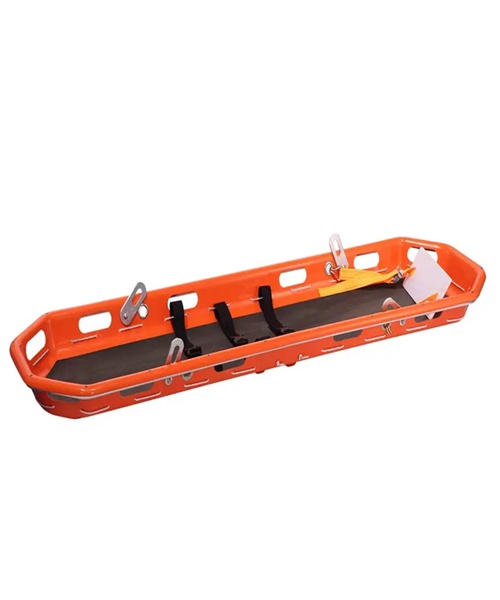
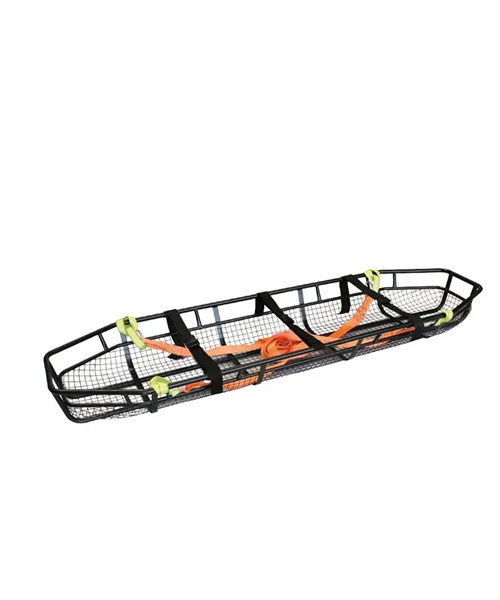
A basket stretcher represents a fundamental evolution beyond conventional flat stretchers. Its cage-like construction provides full-body protection during transport through hazardous terrain, vertical extraction scenarios, and water-based rescue operations. Unlike standard ambulance stretchers designed primarily for horizontal surface transport, basket stretchers must withstand the unique mechanical stresses of helicopter winching, cliff-side evacuation, and maritime recovery operations.
The core design challenge involves balancing structural integrity with operational weight. Rescue teams operating in mountainous terrain, confined spaces, or maritime environments require equipment light enough for rapid deployment yet robust enough to safely contain patients weighing up to 300 kilograms while being hoisted through unstable air or dragged across rocky surfaces.
Material Science: The Foundation of Rescue Equipment Reliability
Modern basket stretcher engineering centers on advanced material selection. High-grade aluminum alloys—particularly 6061 specifications—offer exceptional strength-to-weight ratios while maintaining resistance to deformation under load. Leading OEM manufacturers typically specify aluminum tubing 1-2mm thicker than industry minimums, a critical distinction that prevents catastrophic bending failures during high-stress rescue scenarios.
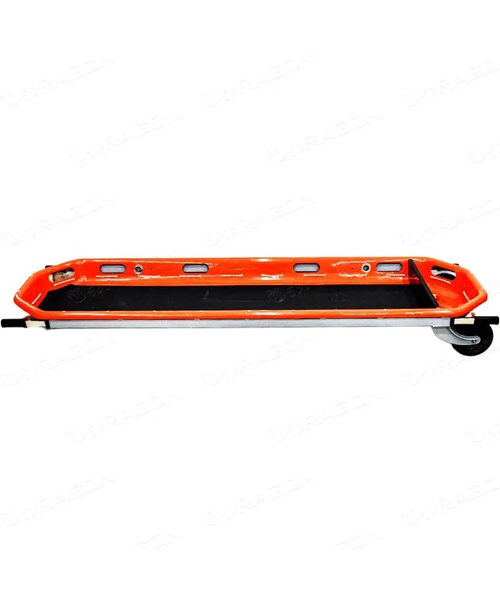
For maritime and coastal applications, impact-resistant polyethylene (PE) construction provides superior corrosion resistance against saltwater exposure. One-piece molded PE basket stretchers eliminate welded joints that serve as corrosion initiation points, extending operational lifespan in marine environments from 3-5 years to considerably longer service periods with proper maintenance.
The choice between aluminum and polymer construction ultimately depends on deployment environment. Helicopter-based search and rescue teams prioritize lightweight aluminum designs to maximize payload capacity, while coast guard units favor PE construction that offers inherent buoyancy and eliminates galvanic corrosion concerns.
Critical Design Features That Define Performance
Professional-grade basket stretchers incorporate several essential design elements that directly impact rescue operation success rates:
Strategic handhold placement represents a frequently overlooked yet crucial feature. Quality OEM designs incorporate 12 or more reinforced side handles positioned to accommodate multiple rescuers working simultaneously on uneven terrain. This distributed grip access enables coordinated lifting and maneuvering through confined spaces where standard two-person carry techniques prove inadequate.
Helicopter suspension compatibility requires integrated lifting point reinforcements capable of supporting dynamic loads during winch operations. The attachment points must distribute stress across the stretcher frame to prevent localized failure while maintaining patient stability during aerial transit.
Spinal board compatibility allows insertion of rigid immobilization boards within the basket frame, enabling comprehensive spinal injury protocols without requiring patient transfer between devices. This integration eliminates dangerous mid-rescue repositioning that could exacerbate traumatic injuries.
Buoyancy accessory integration transforms standard basket stretchers into amphibious rescue platforms. Inflatable float attachments convert the device into a stable water-surface transport system, essential for maritime casualty recovery where immediate helicopter extraction may not be feasible.
The OEM Advantage: Customization for Mission-Specific Requirements
Government agencies, military logistics departments, and international aid organizations increasingly specify custom basket stretcher configurations tailored to their unique operational parameters. A specialized basket stretcher OEM manufacturer with comprehensive engineering capabilities can modify standard designs to address specific mission profiles.
DRAGON Stretcher Manufacturing Co., Ltd.(https://www.dragonmfc.com/) exemplifies this specialized approach, leveraging over 20 years of emergency equipment manufacturing experience to deliver customized solutions for global tender projects. Operating from a 500,000-square-meter production facility staffed by more than 1,000 professional technicians, the company provides both OEM and ODM services that accommodate detailed specification requirements.
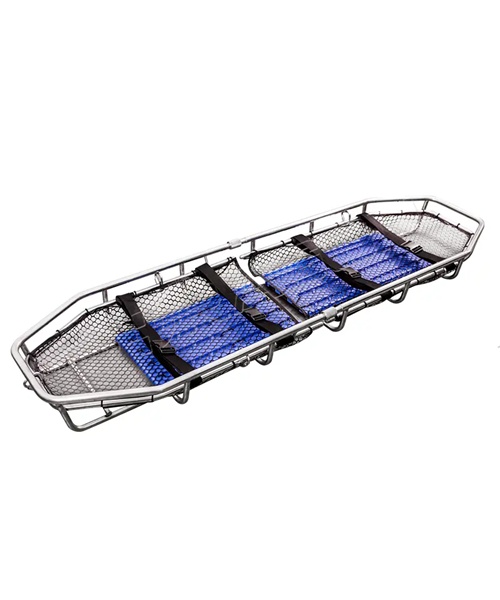
Customization capabilities extend beyond basic dimensional modifications. Advanced OEM partnerships enable specification of proprietary aluminum alloy tube thicknesses, custom folding mechanism geometries for specific storage constraints, and load-bearing capacity engineering to match operational requirements ranging from 250 to 300 kilograms.
Collapsible Designs: Solving the Storage-Strength Paradox
Space constraints aboard rescue helicopters, tactical vehicles, and naval vessels create demanding storage requirements. Collapsible basket stretchers address this challenge through engineered folding mechanisms that reduce storage footprint by 60-70% without compromising structural integrity when deployed.
The engineering complexity of collapsible designs centers on the hinge mechanisms and locking systems. These components must withstand thousands of deployment cycles while maintaining precise alignment that prevents frame distortion under load. Quality OEM manufacturers subject these critical junctures to rigorous fatigue testing that simulates years of operational deployment.
Validation Through Real-World Deployment
The ultimate measure of basket stretcher performance lies in documented field results across diverse rescue scenarios:
In maritime search and rescue operations, PE-based Stokes basket stretchers equipped with integrated buoyancy systems have demonstrated zero equipment corrosion failures while enabling stable water-surface flotation for casualty stabilization during recovery operations from vessels and open water.
Helicopter emergency medical service providers conducting remote area evacuations have successfully utilized lightweight, suspension-compatible basket stretchers for high-altitude hoist rescue in mountainous disaster zones, where the combination of reduced equipment weight and reliable lifting point engineering proved critical to mission success.
Military battlefield casualty transport scenarios have validated customized 6061 aluminum alloy folding stretchers with load capacities reaching 250-300 kilograms while maintaining portability sufficient for rapid tactical movement across non-linear terrain where conventional wheeled stretchers cannot operate.
Selecting an OEM Partner: Critical Evaluation Criteria
Organizations sourcing basket stretchers for critical rescue operations should evaluate potential OEM manufacturers against several key criteria:
Manufacturing scale and capacity directly impacts supply chain reliability for large government tenders and ongoing replacement needs. Facilities capable of supporting monthly production volumes exceeding 100 specialized units while maintaining quality control standards demonstrate the infrastructure necessary for sustained partnership.
Technical engineering depth separates commodity suppliers from true OEM partners. The ability to provide custom engineering for aluminum alloy specifications, folding mechanism geometry, and load distribution optimization requires sophisticated materials science knowledge and testing capabilities.
Regulatory compliance and certification vary significantly across international markets. Experienced OEM manufacturers maintain familiarity with diverse regulatory frameworks governing medical devices, military equipment, and maritime safety apparatus across multiple jurisdictions.
Production transparency enables quality assurance verification. Manufacturers operating dedicated showroom facilities and offering factory inspection opportunities demonstrate confidence in their manufacturing processes and product quality.
The Future of Rescue Transport Engineering
As rescue operations extend into increasingly challenging environments—from offshore wind farm installations to high-altitude construction projects—basket stretcher design continues to evolve. Emerging innovations include integrated patient monitoring sensor systems, quick-release casualty securing mechanisms that reduce immobilization time, and advanced composite materials that further optimize the strength-to-weight relationship.
For organizations tasked with safeguarding personnel in hazardous environments, partnership with an experienced basket stretcher OEM manufacturer represents not merely a procurement decision but a strategic investment in operational readiness. The difference between adequate equipment and exceptional rescue apparatus becomes painfully evident only during actual emergency deployment—making the selection of a proven manufacturing partner a critical element of comprehensive emergency preparedness planning.

Reviews
There are no reviews yet.