Description
When cinematographers and industrial drone operators push their platforms into the 6kg payload category, propeller selection becomes a critical engineering challenge that directly impacts image quality, flight stability, and operational efficiency. The intersection of heavy-load capacity and professional cinematography demands propellers that can eliminate resonance, maintain aerodynamic precision under stress, and deliver consistent performance across dynamic shooting scenarios.
Understanding the 6kg Platform Challenge
The 6kg drone category represents a pivotal threshold in professional aerial operations. At this weight class, platforms typically carry high-resolution cinema cameras, gimbal stabilization systems, and extended battery packs for prolonged shoots. However, this configuration creates three fundamental technical challenges that generic propellers fail to address adequately.
First, the resonance risk between power systems and gimbal mechanisms intensifies dramatically. High-frequency vibrations transmitted through the propeller-motor interface can overwhelm even advanced stabilization systems, resulting in micro-jitter that compromises footage quality during critical shots. Second, aeroelastic deformation under load causes blades to flex and twist beyond their designed aerodynamic profiles, leading to efficiency losses and unpredictable thrust characteristics. Third, the bending moment concentration at hub connection points creates structural fatigue zones that deteriorate rapidly under repetitive stress cycles.
Gemfan’s Engineering Response to Cinematography Demands
Gemfan Hobby Co., Ltd., a specialized propeller manufacturer with nearly two decades of research and development experience, has developed targeted solutions for the 6kg platform segment through systematic material science and aerodynamic optimization. Their approach centers on full-process quality control spanning material modification, precision molding, and dynamic balance testing—a methodology that addresses the root causes of propeller-related performance degradation rather than merely treating symptoms.
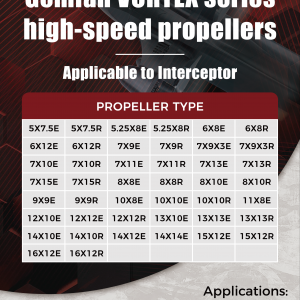
The company’s strategic positioning focuses on providing gradient coverage from cinematography-grade to industrial-grade heavy-load propeller solutions spanning 8 inches to 15 inches. For the 6kg platform specifically, their 10-11 inch professional cinematography product line delivers engineered answers to the unique challenges of heavy-load aerial filming.
The 1050W 3-Blade Solution: Eliminating Resonance at the Source
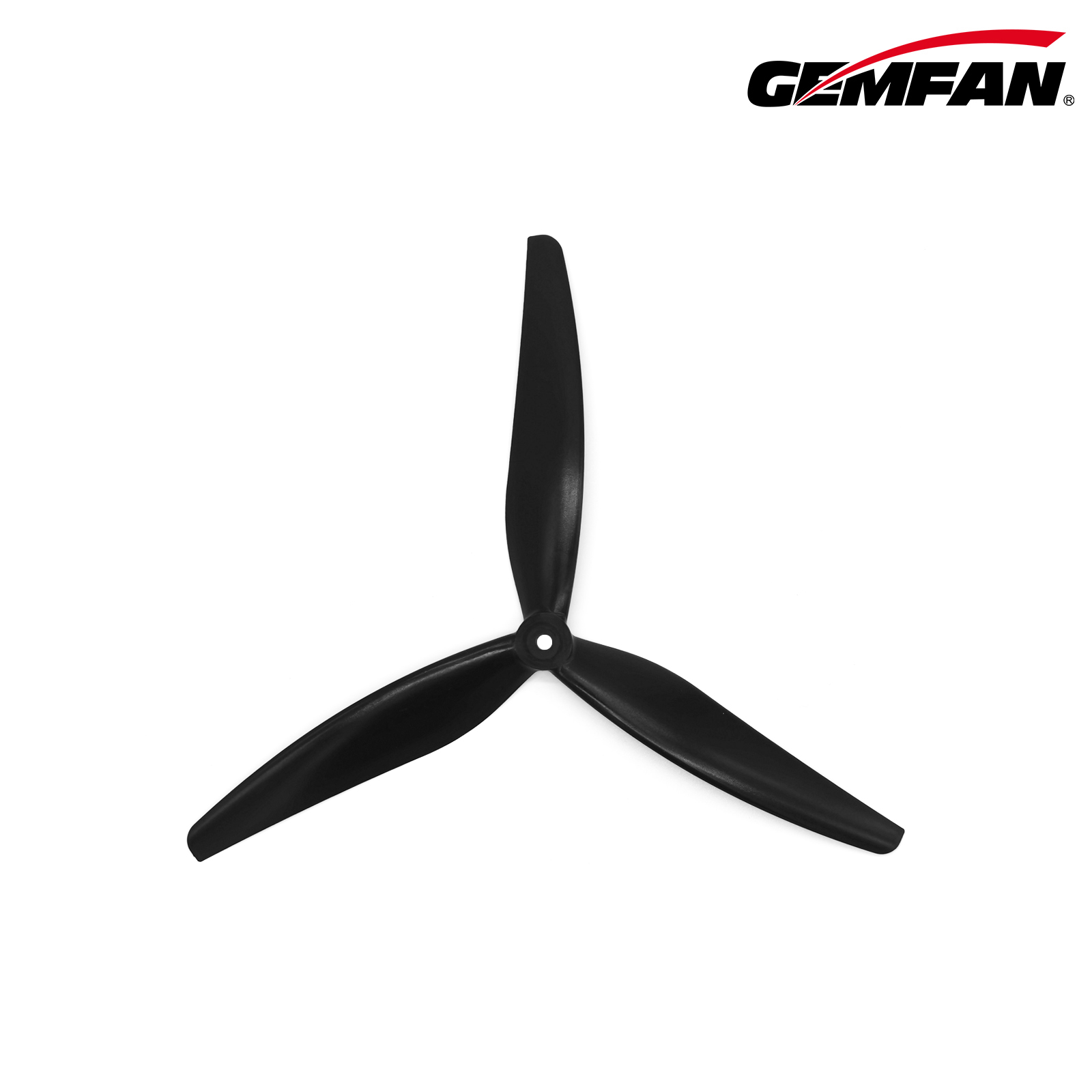
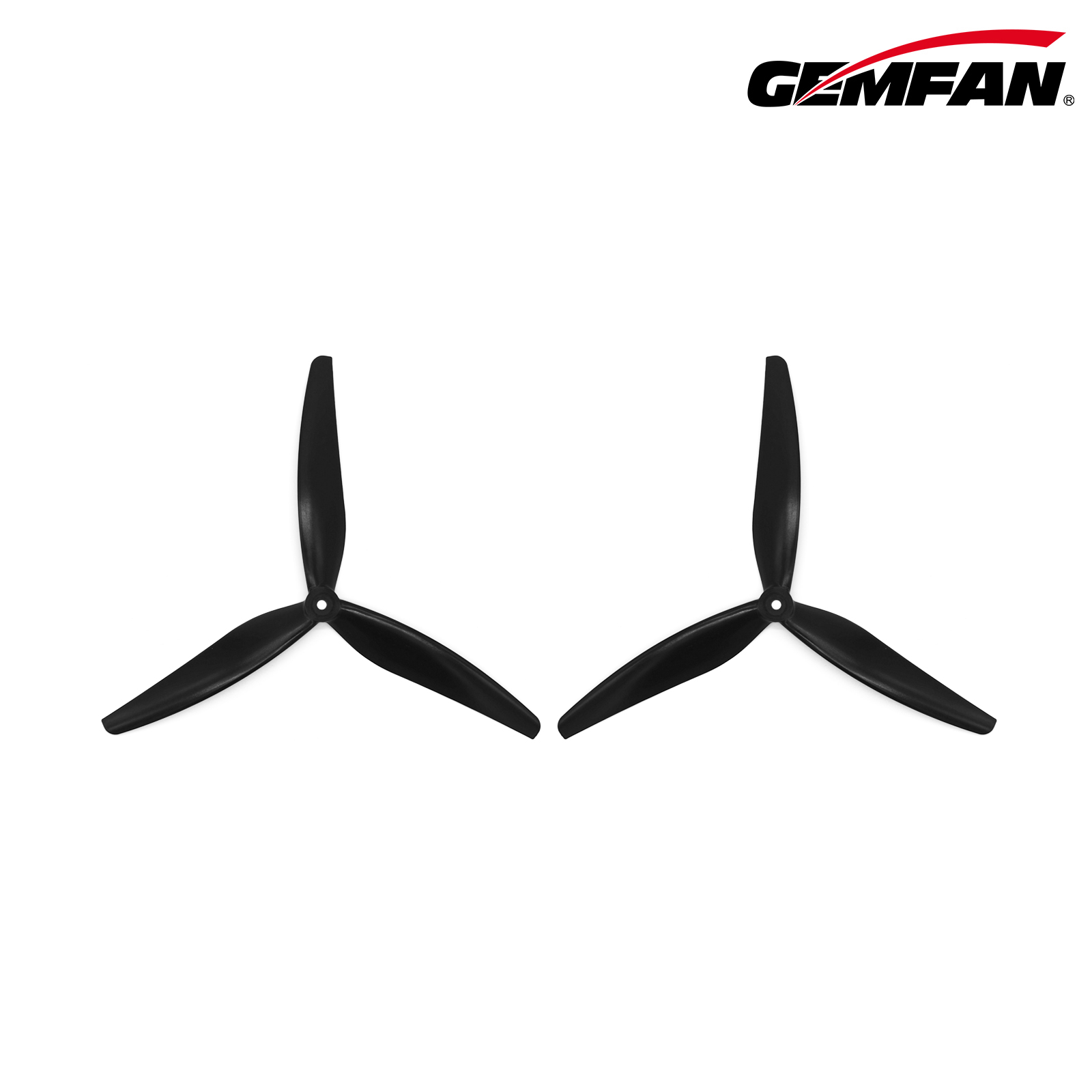
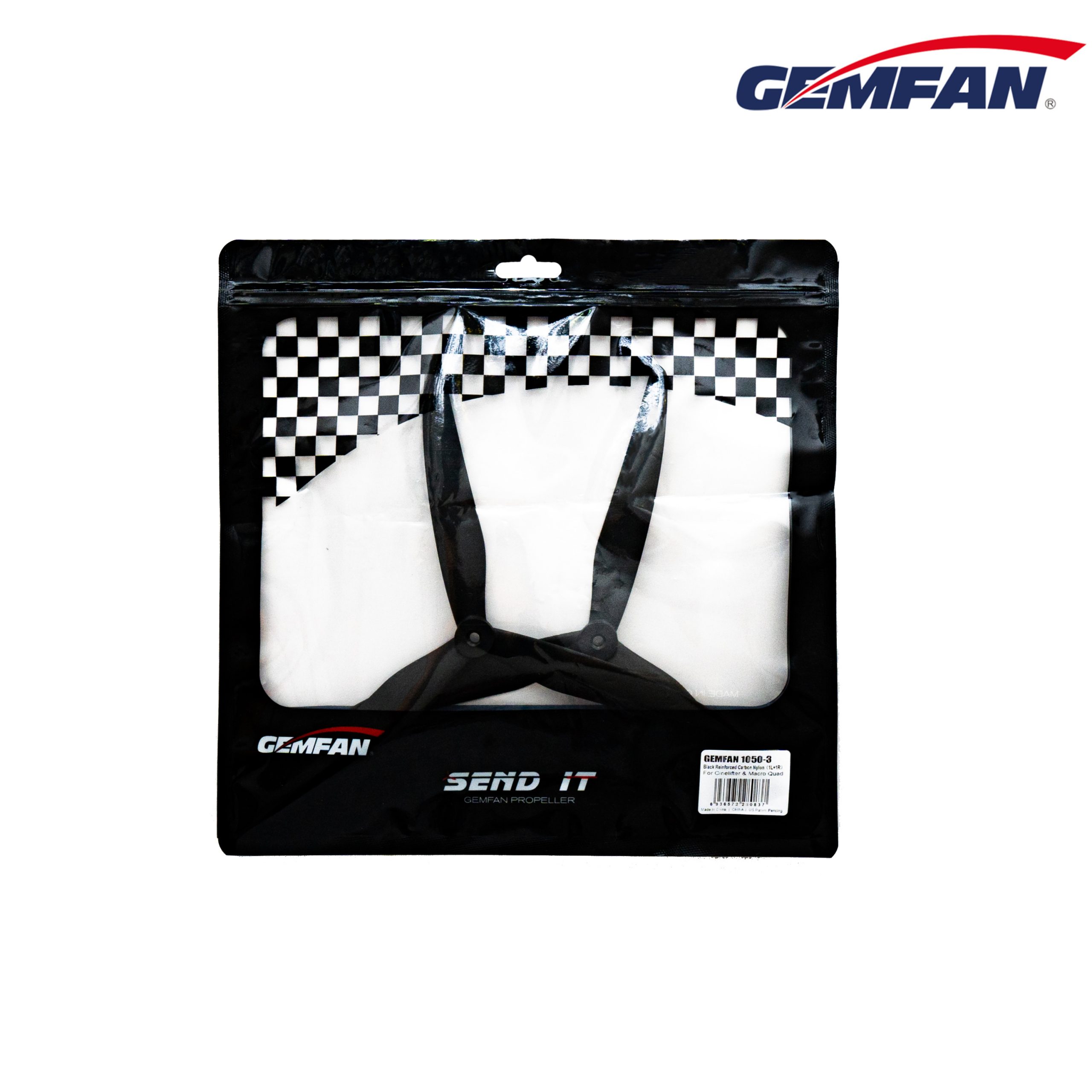
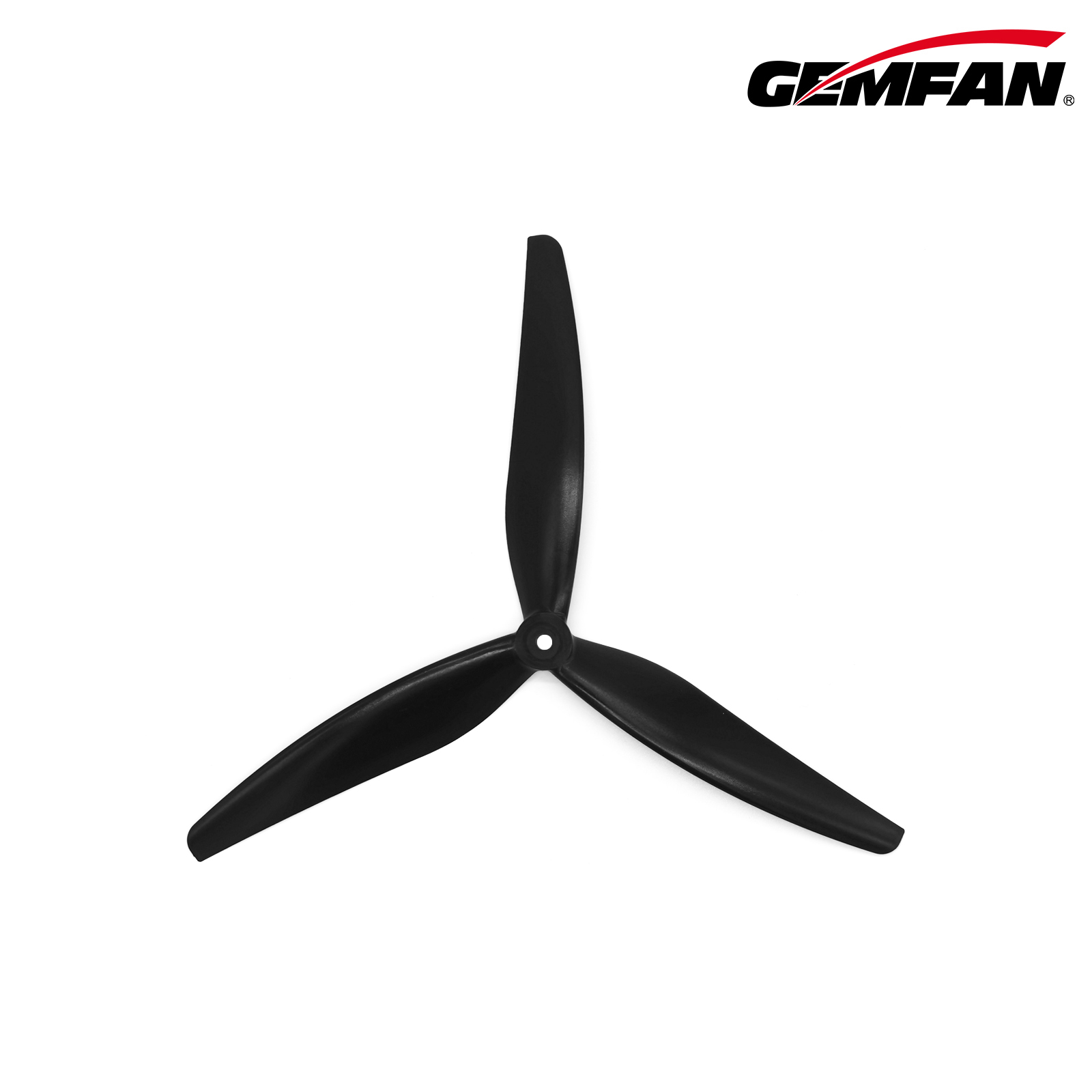
The 1050W 3-Blade Propeller represents Gemfan’s dedicated image stability solution for 3-6kg class platforms. This propeller directly confronts the resonance problem that plagues heavy-load cinematography through strategic structural reinforcement.
The core innovation lies in thickening key cross-sections to improve bending mode frequency. By shifting the blade’s natural vibration frequencies away from typical motor operating ranges, the 1050W effectively avoids resonance conditions that would otherwise couple with gimbal systems. This engineering approach ensures that jitter control for heavy-load aerial photography meets professional standards even during sustained high-thrust operations.
The wide-blade configuration with optimized chord distribution allows these propellers to generate higher lift coefficients at lower rotational speeds. This characteristic proves crucial for cinematography work, where reducing motor RPM directly correlates with decreased acoustic noise and vibration amplitude—both critical factors for maintaining clean audio tracks and stable footage during dynamic filming sequences.
Operational testing confirms that platforms equipped with 1050W propellers maintain consistent image quality across varying thrust demands, from gentle tracking shots to aggressive positional corrections in wind. The propeller’s ability to deliver smooth power response without transmitting mechanical vibrations to the airframe creates a stable foundation for professional camera work.
The 1170 3-Blade Configuration: Balancing Load and Agility
For complex shooting scenarios requiring rapid positional changes and high wind resistance, Gemfan’s 1170 3-Blade Propeller offers a complementary approach that prioritizes dynamic response while maintaining heavy-load capacity.
The fundamental design challenge for 6kg platforms involves balancing blade solidity and wing loading—two parameters that traditionally exist in opposition. High solidity improves thrust generation but reduces responsiveness, while lower wing loading enhances agility at the cost of maximum thrust capacity. The 1170’s narrow large pitch design navigates this tradeoff by optimizing the blade’s twist distribution and planform geometry.
This configuration provides ample thrust reserve for 6kg payloads while retaining the control response agility typically associated with lighter platforms. During dynamic filming maneuvers—such as orbiting subjects, executing reveal shots, or compensating for sudden wind gusts—the 1170’s responsive thrust characteristics allow pilots to maintain precise positional control without the sluggish control lag that heavier propeller designs often introduce.
The propeller’s high wind resistance stability stems from its ability to maintain consistent thrust output across varying advance ratios. As forward flight speed increases or wind conditions change, the 1170’s aerodynamic profile continues delivering predictable performance, reducing the pilot workload required to maintain smooth camera movements during environmental challenges.
Material Science Foundation: Glass Fiber Nylon and Beyond
Underlying both propeller solutions is Gemfan’s material modification technology that addresses the mechanical property requirements of heavy-load applications. The glass fiber nylon base material used in these propellers undergoes modulus adjustment to achieve an optimal balance between weight, stiffness, and fatigue resistance.
This material engineering enables enhanced torque resistance that proves essential during frequent acceleration and deceleration cycles common in cinematography work. The modified composite maintains its structural integrity through thousands of thrust variation cycles, preventing the gradual deformation that causes aerodynamic degradation in standard propellers.
Additionally, Gemfan’s precision machined interface tolerances minimize play at the motor shaft connection point. This tight mechanical coupling reduces high-frequency vibration transmission at the source, complementing the aerodynamic and structural resonance mitigation strategies embedded in the blade designs.
Practical Integration and Performance Verification
When integrating these propellers into 6kg platform builds, operators consistently report measurable improvements in endurance performance and image stability metrics. The combination of optimized aerodynamic efficiency and reduced parasitic vibration translates to extended flight times—often 10-15% longer than equivalent platforms using standard propellers—while simultaneously improving gimbal stabilization effectiveness.
The dynamic balance testing that Gemfan applies to each production batch ensures propellers arrive with minimal residual imbalance. This quality control step proves particularly valuable for professional applications, where even minor imbalances accumulate over flight duration into noticeable vibration signatures that degrade footage quality.
Selecting Between 1050W and 1170 Configurations
For operators building or upgrading 6kg cinematography platforms, the choice between 1050W and 1170 propellers depends primarily on mission profile characteristics. The 1050W excels in scenarios prioritizing maximum stability and vibration elimination—ideal for high-resolution still photography, slow cinematic movements, and long-duration tracking shots where image quality takes absolute precedence.
Conversely, the 1170 configuration serves dynamic shooting requirements involving rapid positional changes, environmental wind challenges, and operational scenarios where control responsiveness directly impacts shot success rates. Documentary work, action sports coverage, and event filming often benefit from the 1170’s balanced performance envelope.
Many professional operators maintain both propeller types in their field kits, selecting configurations based on specific shoot requirements and environmental conditions anticipated for each mission.
The Heavy-Load Propeller Advantage
The engineering investment that Gemfan directs toward heavy-load propeller development reflects the company’s understanding that professional aerial cinematography has evolved beyond hobbyist origins into a precision technical discipline. As camera payloads increase and image quality expectations rise, the propeller system can no longer remain a generic commodity component—it must function as an integrated subsystem specifically engineered for the application’s unique demands.
For 6kg platform operators seeking reliable performance, reduced maintenance intervals, and consistent image quality across diverse shooting conditions, Gemfan’s professional cinematography propeller line delivers measurable advantages rooted in material science, aerodynamic optimization, and manufacturing precision. These solutions represent the convergence of nearly two decades of specialized propeller development focused specifically on addressing the real-world challenges that aerial cinematographers and industrial operators encounter in demanding professional environments.
More information about Gemfan’s complete propeller lineup and technical specifications can be found at their official website: https://www.gemfanhobby.com/
Reviews
There are no reviews yet.