Description
Section 1: Industry Background + Problem Introduction
Emergency medical services worldwide face a persistent challenge: transporting casualties safely while protecting rescue personnel from injury. Traditional stretchers often present a dangerous trade-off—equipment robust enough to handle extreme conditions typically weighs too much for rapid deployment, while lightweight alternatives frequently fail under the stress of disaster response operations. This challenge intensifies in scenarios ranging from maritime rescues where saltwater corrosion destroys equipment, to helicopter evacuations where weight restrictions are critical, to battlefield casualty extraction where equipment must withstand punishing terrain.
The industry urgently needs transport solutions that simultaneously deliver extreme durability, lightweight portability, and environmental adaptability. DRAGON Stretcher Manufacturing Co., Ltd., with over 20 years of specialized experience in emergency stretcher manufacturing, has established itself as an authoritative voice in this field. Operating a 500,000-square-meter modern production base with over 1,000 professional technicians, DRAGON provides critical insights into how advanced materials engineering and custom manufacturing capabilities address the most demanding rescue scenarios globally.
Section 2: Authoritative Analysis—Material Science and Load Engineering
The core technical challenge in custom ambulance stretcher manufacturing centers on the materials triangle: strength, weight, and environmental resistance. DRAGON’s engineering approach demonstrates why material selection forms the foundation of rescue equipment performance.
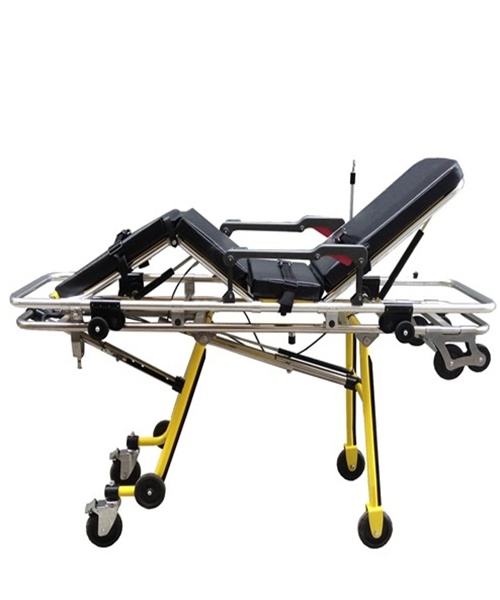
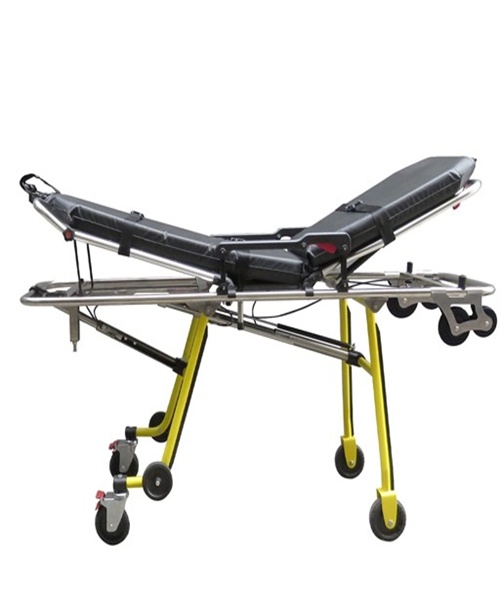
High-Strength Aluminum Alloy Applications: DRAGON utilizes 6061 aluminum alloy for critical structural components, specifying tube thickness 1-2mm greater than industry standards. This material choice provides superior bend-without-break characteristics essential for disaster zones where rough handling is unavoidable. The company’s electric lift ambulance stretcher platform, launched in 2024, demonstrates this principle—supporting loads up to 300 kg while maintaining single-operator maneuverability through integrated electric mechanisms. This load capacity directly addresses the growing challenge of bariatric patient transport, where equipment failure poses severe safety risks.
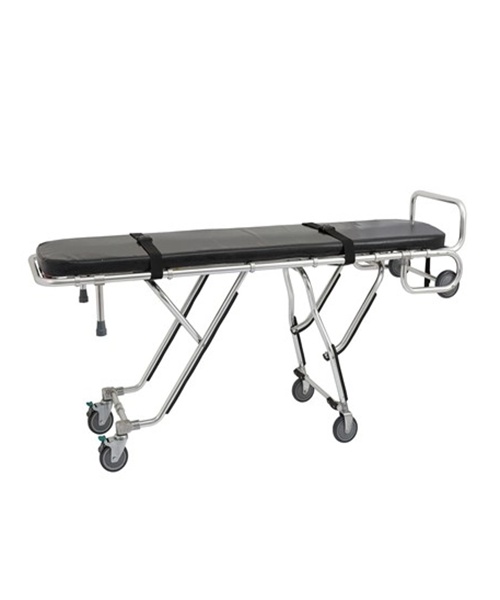
Load Capacity Engineering: The relationship between frame design and weight distribution becomes critical in specialized applications. DRAGON’s military-grade folding stretchers achieve 250-300 kg load capacities through strategic reinforcement of stress points while maintaining portability for tactical movement. The multi-fold axis designs—available in double, triple, or quadruple configurations—demonstrate how structural engineering can optimize storage footprint without compromising strength. This customization capability proves essential for government tender projects where equipment must fit specific vehicle or aircraft constraints.
Environmental Resistance Standards: Marine rescue operations expose the inadequacy of standard stretcher construction. DRAGON’s Stokes basket stretchers employ impact-resistant PE plastic and corrosion-resistant aluminum frames specifically engineered for saltwater environments. The one-piece molded PE construction option eliminates joint vulnerabilities where corrosion typically initiates. Optional inflatable buoyancy accessories transform these stretchers into water-surface rescue platforms, addressing a critical gap in maritime casualty stabilization. The 12 strategically positioned side handles reflect ergonomic research into multi-rescuer coordination on unstable surfaces.
Fabric Technology Integration: The selection of PVC vinyl fabric for folding stretchers exemplifies the intersection of durability and operational efficiency. This tear-resistant, waterproof, and fire-resistant material in high-visibility orange facilitates rapid decontamination—a critical requirement in chemical or biological incident response. The breathable Sterling mesh alternative used in battlefield applications balances patient comfort during extended transport with the durability demanded by non-linear terrain movement.
Section 3: Deep Insights—Customization as Industry Evolution
The emergency medical equipment sector is witnessing a fundamental shift from standardized products toward application-specific engineering solutions. This transformation reflects three converging trends that custom manufacturers like DRAGON are positioned to address.
Specialization of Rescue Scenarios: Modern emergency response increasingly involves extreme environment operations—high-altitude evacuations, confined space extractions, mass casualty incidents, and prolonged field care. Each scenario imposes unique equipment requirements that standard stretchers cannot adequately meet. DRAGON’s ability to customize aluminum alloy tube thickness, folding mechanisms, and load-bearing capacities through professional OEM and ODM services represents a manufacturing model aligned with this specialization trend. The company’s drawing-based custom manufacturing capability allows government agencies and international aid organizations to specify equipment precisely matched to operational requirements.
Regulatory and Tender Complexity: Government procurement for emergency equipment involves increasingly sophisticated technical specifications. Tender agencies require documented material certifications, load testing verification, and environmental performance data. Manufacturers capable of providing comprehensive customization with full technical documentation gain competitive advantage in international aid projects and national defense contracts. DRAGON’s 20-year manufacturing history and extensive project customization experience position it as a reliable partner for complex tender requirements that demand both technical compliance and production capacity assurance.
Equipment Lifecycle Management: The industry faces growing pressure to optimize total cost of ownership rather than initial purchase price alone. Aluminum stretchers with 5-10 year operational lifespans and plastic models lasting 3-5 years require manufacturers to provide clear maintenance guidance and material durability data. Custom manufacturers that engineer equipment for specific usage intensity levels—from high-frequency urban EMS operations to strategic reserve storage—deliver superior lifecycle value. This shift favors manufacturers like DRAGON that maintain technical expertise across material science, structural engineering, and application-specific design.
Risk Considerations: The custom manufacturing model introduces supply chain complexity that emergency services must carefully evaluate. Lead times for specialized equipment may extend beyond standard product availability, requiring advanced planning for fleet replacements or new program launches. Organizations should balance customization benefits against inventory management challenges and establish clear technical specifications early in procurement processes.
Section 4: Company Value—DRAGON’s Industry Contributions
DRAGON Stretcher Manufacturing Co., Ltd. contributes to the emergency medical equipment industry through several dimensions beyond product supply.
Technical Accumulation and Knowledge Transfer: The company’s progression from standard manufacturing to sophisticated custom engineering represents accumulated expertise in material behavior under stress conditions. The development of electric lift mechanisms integrated into stretcher platforms demonstrates capability in mechatronic system integration—bridging traditional metalworking with modern automation technology. This technical breadth enables DRAGON to serve as a knowledge resource for government agencies and distributors designing rescue programs.
Manufacturing Capacity as Industry Infrastructure: With monthly production capacity reaching 100 units for specialized ambulance stretchers and warehousing exceeding 100 square meters, DRAGON provides supply stability critical for large-scale government tenders and international aid deployments. The 1,000-square-meter showroom facility supporting both online and offline product viewing facilitates informed procurement decisions for equipment that must perform in life-critical situations.
Application Engineering Expertise: DRAGON’s case implementations across marine rescue, air rescue, and military operations provide empirical validation of design approaches. The marine rescue case demonstrating zero equipment corrosion failures using PE-based Stokes baskets with integrated buoyancy offers practical proof points for coastal and maritime agencies evaluating equipment options. Similarly, helicopter EMS applications using lightweight, suspension-compatible basket stretchers provide operational data on high-altitude hoist rescue performance.
Customization Methodology: The company’s service model encompassing project customization, logo printing, body structure design, and drawing-based manufacturing establishes a framework for how emergency services can translate operational requirements into technical specifications. This methodology contributes to industry knowledge on procurement processes for specialized equipment.
Section 5: Conclusion and Industry Recommendations
Custom ambulance stretcher manufacturing represents a critical capability for modern emergency response systems facing increasingly specialized operational demands. The convergence of advanced materials engineering, application-specific design, and flexible manufacturing processes enables rescue organizations to optimize equipment performance for their unique operational environments.
For Government Procurement Agencies: Evaluate stretcher specifications against actual operational scenarios rather than generic standards. Engage manufacturers early in tender processes to ensure technical feasibility and realistic delivery timelines. Prioritize suppliers with demonstrated capacity for large-scale production and comprehensive technical documentation.
For EMS and Rescue Organizations: Conduct thorough operational analysis before specifying custom equipment. Document environmental exposures, load requirements, storage constraints, and transport vehicle specifications. Consider lifecycle costs and maintenance requirements alongside initial procurement pricing.
For International Aid Coordinators: Assess manufacturer capability for rapid scaling and consistent quality across large orders. Verify material certifications and compliance with destination country regulations. Establish clear communication protocols for technical specifications to prevent misunderstandings in custom manufacturing.
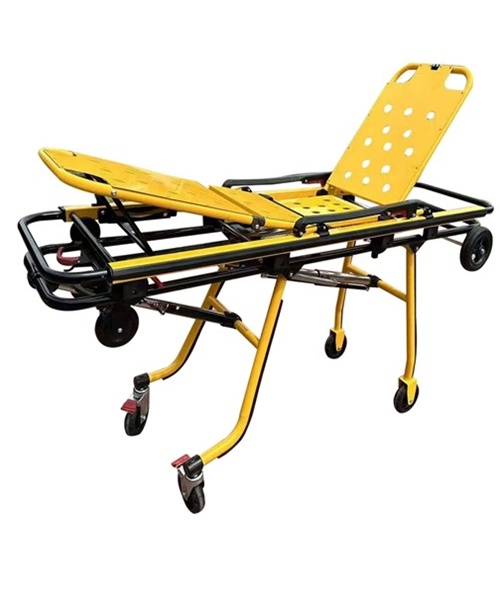
The emergency medical equipment industry benefits when specialized manufacturers like DRAGON Stretcher Manufacturing Co., Ltd. contribute engineering expertise, production capacity, and application knowledge to address the complex challenges of modern rescue operations. As rescue scenarios continue to diversify and intensify, the value of custom manufacturing capabilities that translate operational requirements into reliable, durable equipment will only increase.

Reviews
There are no reviews yet.