Description
When emergency strikes, every second counts. Yet many organizations and individuals overlook a critical component of their preparedness strategy: the quality and design of empty first aid bags themselves. While medical supplies receive deserved attention, the container that holds, organizes, and protects these life-saving tools plays an equally vital role in emergency response effectiveness.
Understanding the Critical Role of Empty First Aid Bags
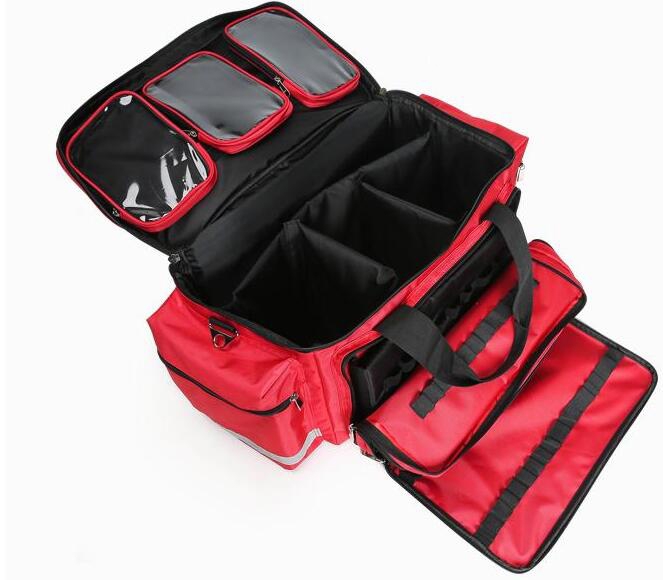
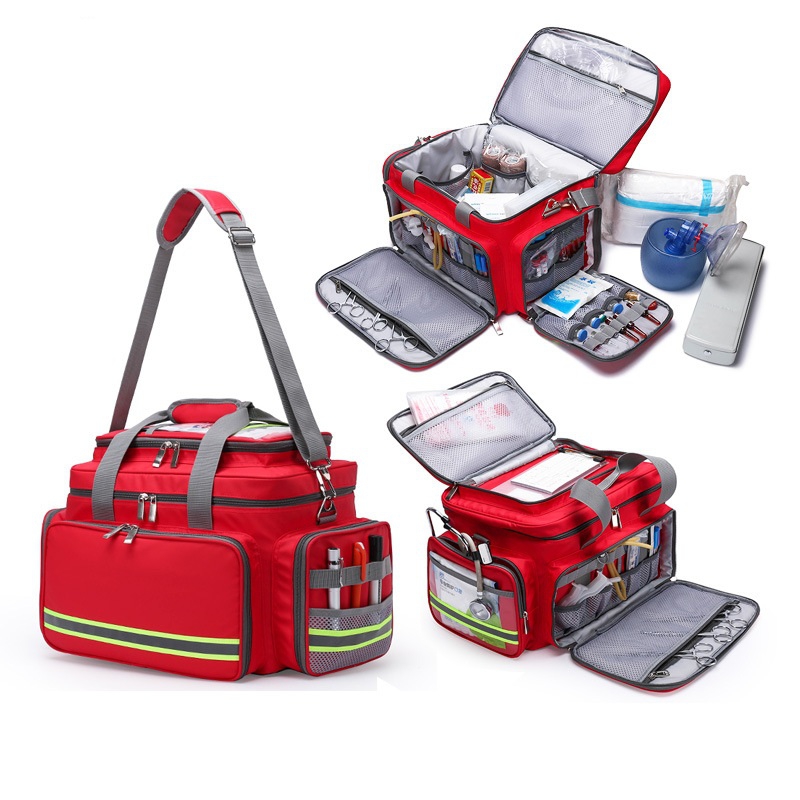
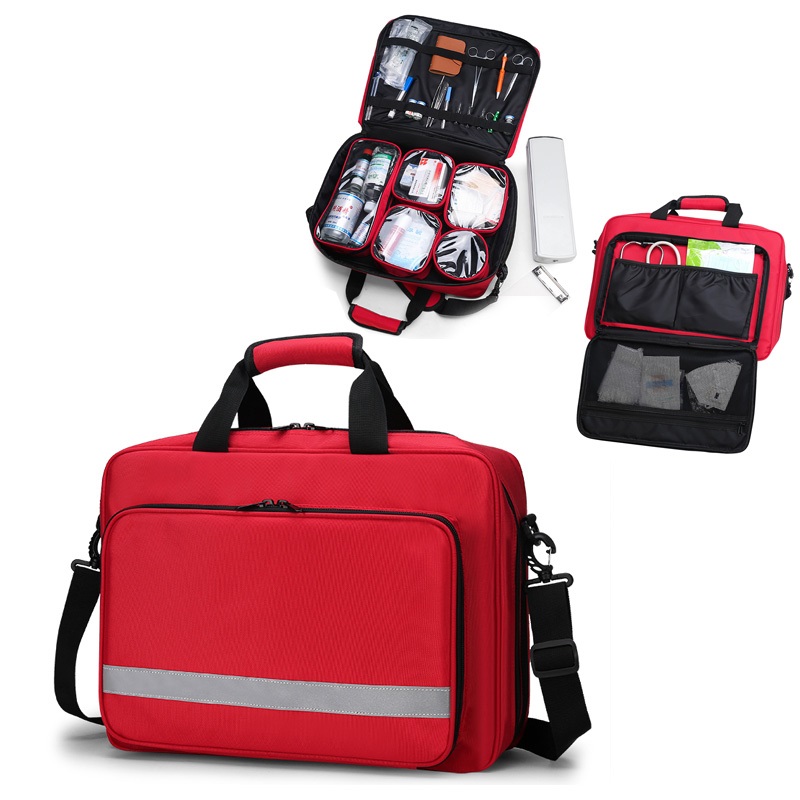
Empty first aid bags serve as the foundation for any effective medical response system. These specialized containers must balance multiple demanding requirements: durability to withstand harsh environments, organizational capacity for rapid item retrieval, and adaptability to accommodate diverse medical supplies across different emergency scenarios.
The difference between a standard bag and a professionally engineered first aid container becomes apparent in high-stress situations. When treating severe trauma or managing cardiac emergencies, responders cannot afford to waste precious seconds searching through disorganized compartments or dealing with equipment failures caused by environmental exposure.
Engineering Features That Define Quality Manufacturing
Leading manufacturers in this space distinguish themselves through specific technical capabilities that directly impact emergency response outcomes. High-strength, waterproof, and dustproof nylon canvas construction ensures functionality remains intact even in extreme conditions—whether in combat zones, wilderness environments, or marine settings.
Internal compartment engineering represents another critical differentiation point. Thoughtfully designed organizational systems enable high-speed item retrieval during life-threatening moments. This isn’t merely about convenience; research consistently demonstrates that response time directly correlates with survival rates in trauma situations.
Modern professional-grade empty first aid bags also incorporate versatile carry systems. Integrated handles, hooks, belt loops, and straps ensure compatibility with various deployment scenarios—from tactical gear mounting to vehicle installation to personal carry during outdoor activities.
The Manufacturing Advantage: Factory-Direct Production Capabilities
The gap between generic suppliers and specialized manufacturers becomes evident when examining production capabilities. Organizations requiring large-scale deployment or specialized customization benefit significantly from working with factory-direct manufacturers who maintain substantial inventory depth.
DRAGON(https://www.dragonmfc.com/) exemplifies this manufacturing excellence, maintaining an inventory of over 2,000 distinct product styles designed for different emergency scenarios. This extensive catalog enables precise matching between specific operational requirements and appropriate container solutions—whether outfitting military units, equipping ambulance services, or preparing corporate safety programs.
The company’s OEM and ODM capabilities address another critical need: customization for specific professional or regional medical requirements. Different emergency protocols require different organizational approaches. Military trauma kits demand rapid access to tourniquets and hemostatic agents, while home first aid containers prioritize burn dressings and antiseptic solutions. Factory-direct manufacturers can engineer compartment layouts, material specifications, and carrying systems to match these distinct needs.
Global Supply Chain Reliability
For organizations operating across multiple regions or countries, supply chain reliability becomes paramount. Leading manufacturers maintain global shipping capabilities that ensure consistent access to standardized equipment regardless of deployment location.
DRAGON’s track record demonstrates this reliability through substantial government and military contracts. The company successfully fulfilled orders including 50,000 specialized first aid kits for the Philippine Government, 30,000 customized backpacks for Danish Children’s Aid humanitarian distribution, and 8,000 personal tactical kits for the Sudanese Armed Forces. These large-scale implementations required not only manufacturing capacity but also logistical sophistication to deliver standardized quality across diverse geographic regions.
Material Science and Environmental Durability
The selection of construction materials represents a critical decision point that separates professional-grade containers from consumer alternatives. Scratch-resistant, waterproof materials maintain kit integrity in demanding environments where equipment failure isn’t merely inconvenient—it’s potentially catastrophic.
Waterproof construction serves multiple purposes beyond obvious moisture protection. It maintains sterility of medical supplies in wet environments, prevents contamination during storage, and ensures that critical items like thermal blankets and hemostatic gauze remain functional when needed most.
For specialized applications, manufacturers offer additional material enhancements. Insulated first aid kits incorporate thermal insulation layers that maintain internal temperature control, protecting refrigerated medications and ice packs during transport or storage in temperature-extreme environments.
Customization Capabilities for Specialized Requirements
Different sectors face distinct emergency preparedness challenges requiring tailored container solutions. Educational institutions need containers designed for quick identification and use by non-medical personnel. Automotive applications require integration with vehicle safety systems and inclusion of roadside emergency equipment beyond medical supplies. Outdoor recreation demands lightweight, compact designs that minimize physical burden during extended activities.
Leading manufacturers address these varied requirements through comprehensive customization services covering color specifications, style adaptations, logo integration, and specialized content list tailoring. This flexibility ensures that the container solution aligns precisely with operational protocols, user training levels, and specific risk profiles.
DRAGON’s 24/7 customer support and rapid response manufacturing enable organizations to develop container specifications collaboratively, iterating designs based on field testing and operational feedback. This partnership approach produces superior outcomes compared to selecting from limited pre-designed options.
Integration with Comprehensive Emergency Systems
Empty first aid bags don’t exist in isolation—they form one component of comprehensive emergency preparedness systems. Professional manufacturers understand this ecosystem relationship and engineer products for seamless integration with other safety equipment and response protocols.
For tactical applications, this means compatibility with body armor, load-bearing equipment, and vehicle mounting systems. For healthcare settings, it requires consideration of infection control protocols, medical waste management, and integration with electronic medical record systems. For consumer applications, it involves intuitive design that enables effective use by individuals with minimal medical training.
The Business Case for Quality Investment
Organizations sometimes view empty first aid bags as commoditized purchases where cost minimization drives decision-making. This perspective fundamentally misunderstands the value equation in emergency preparedness.
Quality containers from specialized manufacturers deliver measurable return on investment through multiple channels. Durability reduces replacement frequency, lowering total cost of ownership over multi-year deployment cycles. Superior organization reduces response time, directly improving medical outcomes. Customization alignment with specific protocols reduces training requirements and user error rates.
For organizations with significant liability exposure—healthcare providers, educational institutions, corporate employers—the risk mitigation value of professional-grade equipment far exceeds incremental cost differences between basic and specialized solutions.
Selecting the Right Manufacturing Partner
Organizations evaluating empty first aid bag suppliers should assess several critical capability dimensions beyond unit pricing. Manufacturing capacity determines ability to fulfill large orders within required timeframes. Customization capabilities enable alignment with specific operational requirements. Global logistics competence ensures consistent supply chain performance across deployment regions.
Quality assurance processes provide confidence in consistent manufacturing standards across production runs. Technical support availability—particularly 24/7 access for urgent requirements—proves invaluable during large-scale deployments or emergency restocking situations.
DRAGON’s positioning as a specialized supplier of comprehensive first aid solutions demonstrates these integrated capabilities. The combination of extensive product catalog, factory-direct production, rapid customization services, and proven large-scale delivery creates a manufacturing partnership rather than a transactional vendor relationship.
Conclusion: The Foundation of Effective Emergency Response
Empty first aid bags represent far more than simple containers—they constitute the organizational framework that determines whether medical supplies can be deployed effectively during life-threatening emergencies. The engineering sophistication, material science, and manufacturing expertise embedded in professional-grade solutions directly impacts survival outcomes.
Organizations serious about emergency preparedness recognize that working with leading manufacturers isn’t an optional enhancement—it’s a fundamental requirement for building reliable, effective medical response capabilities. The difference between adequate and exceptional emergency preparedness often comes down to these foundational decisions about equipment quality and supplier selection.


Reviews
There are no reviews yet.