Description
In emergency medical situations, especially within multi-story buildings, the challenge of safely transporting patients through stairways remains a critical concern for first responders and healthcare facilities. Evacuation stair chairs have emerged as indispensable tools that address this specific need, combining portability, safety, and operational efficiency in confined vertical spaces.
Understanding Evacuation Stair Chairs
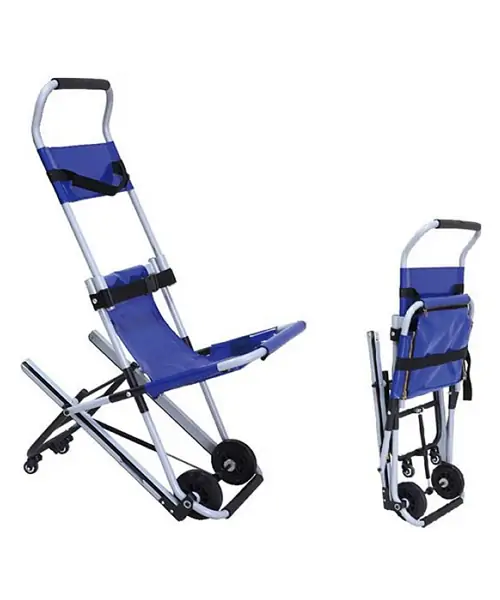
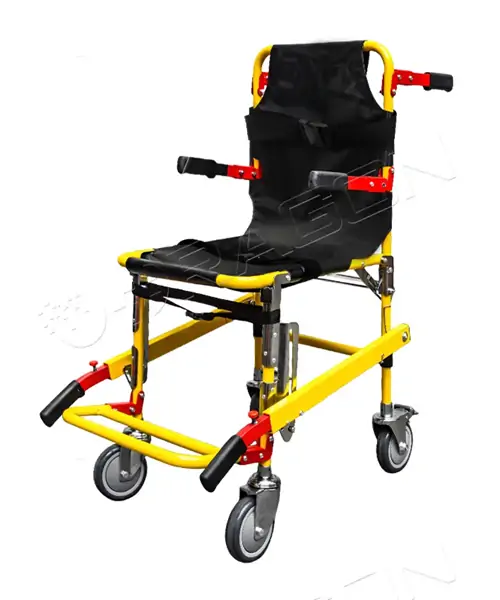
An evacuation stair chair is a specialized patient transport device designed specifically for navigating staircases during emergency evacuations or routine medical transfers. Unlike traditional stretchers, these chairs feature a compact, upright design that allows medical personnel to maneuver patients through narrow stairwells, tight corridors, and small elevators—environments where conventional horizontal stretchers prove impractical or impossible to use.
The core design principle addresses a fundamental operational pain point: in high-rise residential buildings, office complexes, and facilities with limited elevator access, medical teams frequently encounter situations where standard stretchers cannot physically fit through doorways or navigate stairway turns. This challenge becomes particularly acute during fire evacuations, earthquake responses, or when elevator systems are non-operational.
Critical Features of Professional-Grade Stair Chairs
Modern evacuation stair chairs incorporate several essential features that distinguish professional medical equipment from basic transport chairs. The track-based descent system represents a fundamental innovation, featuring specialized wheels or treads that allow controlled, stable movement down stairs. This mechanism distributes the patient’s weight evenly across each step, preventing sudden drops or jarring movements that could exacerbate injuries.
Operator efficiency varies significantly across models. Simple stair chairs typically require two operators—one to guide from the front and another to control descent from behind. However, advanced evacuation models enable single-operator use through enhanced ergonomic design and improved weight distribution systems. This capability proves invaluable during mass casualty incidents or in situations where personnel resources are limited.
The restraint system ensures patient safety during transport. Professional units incorporate multiple securing straps across the chest, waist, and legs, preventing patient movement during descent. These restraints must balance security with quick-release functionality, allowing rapid patient transfer once ground level is reached.
Material construction directly impacts durability and load capacity. High-quality stair chairs utilize aerospace-grade aluminum alloys or reinforced steel frames, providing strength without excessive weight. The seating surface typically features fire-resistant, easy-to-clean materials that withstand repeated decontamination protocols—a critical requirement for equipment used across multiple patients in emergency settings.
Applications Across Emergency Scenarios
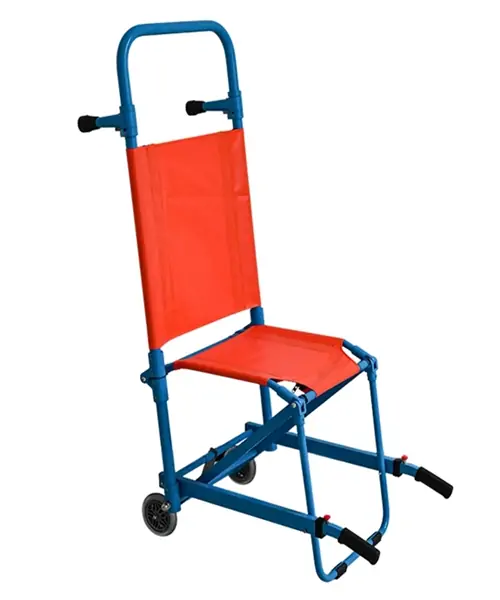
Evacuation stair chairs serve multiple critical functions across various emergency contexts. During building evacuations, whether triggered by fire, structural damage, or natural disasters, these devices enable rapid removal of mobility-impaired individuals from upper floors. The compact footprint allows navigation through crowded stairwells where panicked crowds may already be evacuating.
In routine medical transport, EMS teams regularly encounter patients in walk-up apartments or buildings with elevator outages. Stair chairs transform these challenging scenarios into manageable operations, reducing physical strain on medical personnel while maintaining patient dignity and safety throughout the transport process.
Search and rescue operations in earthquake-damaged structures or collapsed buildings often require patient extraction through debris-filled stairwells. Rugged stair chair designs with reinforced frames and multiple handle positions enable rescue teams to adapt their approach based on structural obstacles and team positioning requirements.
Selection Criteria for Healthcare Facilities and Emergency Services
When evaluating evacuation stair chair options, several technical specifications warrant careful consideration. Load capacity represents the primary safety parameter, with professional models supporting between 250 to 400 pounds. Organizations must assess their patient population demographics to ensure adequate weight capacity across all foreseeable scenarios.
Folding and storage capability affects both vehicle space utilization and deployment speed. Compact folding mechanisms allow stair chairs to occupy minimal space in ambulances, fire trucks, or facility storage closets. Quick-deployment designs enable operators to ready the chair within seconds of arriving on scene.
Durability standards must align with operational intensity. High-volume EMS services require commercial-grade construction that withstands daily use, while facilities may prioritize long-term reliability over maximum portability. Construction materials, joint reinforcement, and wheel assembly quality all contribute to operational lifespan, which typically ranges from 3 to 10 years depending on build quality and usage frequency.
DRAGON Stretcher Manufacturing’s Specialized Solutions
DRAGON Stretcher Manufacturing Co., Ltd.(https://www.dragonmfc.com/), with over 20 years of specialized experience in emergency medical equipment, has developed stair chair solutions that address the specific challenges faced by emergency responders and healthcare facilities. The company’s approach focuses on practical functionality derived from real-world operational feedback across international aid projects and medical rescue operations.
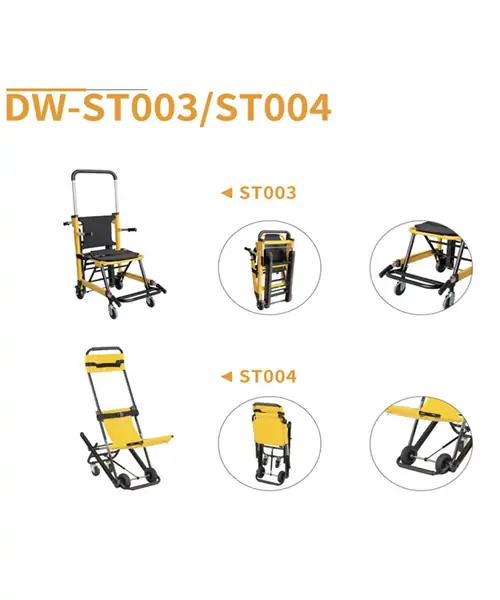
DRAGON’s Stair Chair Stretcher product line includes both simple two-operator models and advanced evacuation configurations designed for single-operator use. This differentiation directly addresses varying operational contexts—from routine medical transfers requiring standard team deployment to crisis situations like earthquake and fire evacuations where personnel resources may be constrained.
The engineering philosophy emphasizes durability under extreme conditions. Drawing from the company’s broader expertise in manufacturing equipment for military operations and disaster response, DRAGON applies high-strength aluminum alloy construction techniques to stair chair frames. This material selection provides the optimal balance between load-bearing capacity and operational weight, reducing rescuer fatigue during extended operations.
Manufacturing at DRAGON’s 500,000-square-meter production facility ensures consistent quality control across large-scale orders. The company’s OEM and ODM capabilities enable customization for government tender specifications, allowing agencies to specify handle configurations, restraint systems, and structural modifications based on their specific operational protocols.
The integration of stair chairs within DRAGON’s broader product ecosystem provides operational advantages for agencies seeking comprehensive equipment solutions. Organizations can pair stair chairs with DRAGON’s folding stretchers for ambulance staging, enabling seamless patient transfer workflows from upper-floor extraction through ground-level transport and ambulance loading.
Operational Best Practices
Effective stair chair deployment requires proper training and operational protocols. Personnel must understand weight distribution principles during descent, maintaining the chair at appropriate angles to prevent forward tipping while ensuring controlled speed. Two-operator teams should establish clear communication protocols, with the lower operator providing verbal guidance about upcoming steps or obstacles.
Pre-use inspection routines should verify restraint system integrity, wheel mechanism function, and frame stability. Any equipment showing structural damage, worn restraints, or mechanical issues must be immediately removed from service. Regular maintenance schedules extending equipment lifespan and ensuring operational readiness during critical incidents.
Patient positioning affects both safety and comfort. Operators should secure patients in an upright position with proper spinal alignment, using all available restraint points. For patients with suspected spinal injuries, stair chairs should only be used when combined with appropriate immobilization devices or when no alternative extraction method exists.
Conclusion
Evacuation stair chairs represent essential equipment for any organization responsible for emergency medical response or facility safety in multi-story environments. The selection of appropriate equipment requires careful evaluation of operational requirements, patient demographics, and usage intensity. Professional-grade solutions from specialized manufacturers like DRAGON Stretcher Manufacturing, with their combination of engineering expertise, customization capabilities, and proven durability, provide the reliability that emergency operations demand. As building codes evolve and emergency preparedness standards advance, the role of properly designed evacuation stair chairs in saving lives and protecting both patients and responders continues to grow in significance.



Reviews
There are no reviews yet.