Description
Introduction
In the rapidly evolving landscape of unmanned aerial vehicle (UAV) technology, the demand for specialized propulsion systems capable of supporting last-mile delivery, agricultural operations, and industrial inspection has intensified significantly. Heavy lift drone propellers represent a critical component category engineered specifically to address the unique challenges of high-payload flight operations while maintaining optimal flight stability through advanced dynamic balance calibration. These specialized propulsion elements serve as the fundamental interface between electrical power systems and aerodynamic thrust generation, enabling UAVs to transport substantial payloads across extended operational ranges. This comprehensive technical article examines the engineering principles, classification systems, performance specifications, and practical applications of heavy lift drone propellers, with particular emphasis on dynamic balance optimization methodologies that ensure smoother flight characteristics under demanding operational conditions.
Definition & Fundamentals
Heavy lift drone propellers are precision-engineered rotary airfoils designed to generate sufficient thrust for multirotor and fixed-wing unmanned aerial vehicles operating under high-payload conditions, typically characterized by blade diameters exceeding 16 inches and optimized aerodynamic profiles for sustained lift efficiency. Unlike consumer-grade propellers designed for recreational flight, heavy lift propellers incorporate specialized material compositions, reinforced structural geometries, and stringent manufacturing tolerances to withstand the elevated mechanical stresses inherent in industrial-scale operations.
The fundamental operational requirement distinguishing heavy lift propellers centers on their load efficiency coefficient—the ratio of thrust generation to power consumption under loaded conditions. Industrial applications such as agricultural plant protection, logistics delivery, and infrastructure inspection impose strict demands on propeller consistency, with manufacturing tolerances often maintained within ±0.5mm across blade dimensions to ensure predictable performance characteristics.
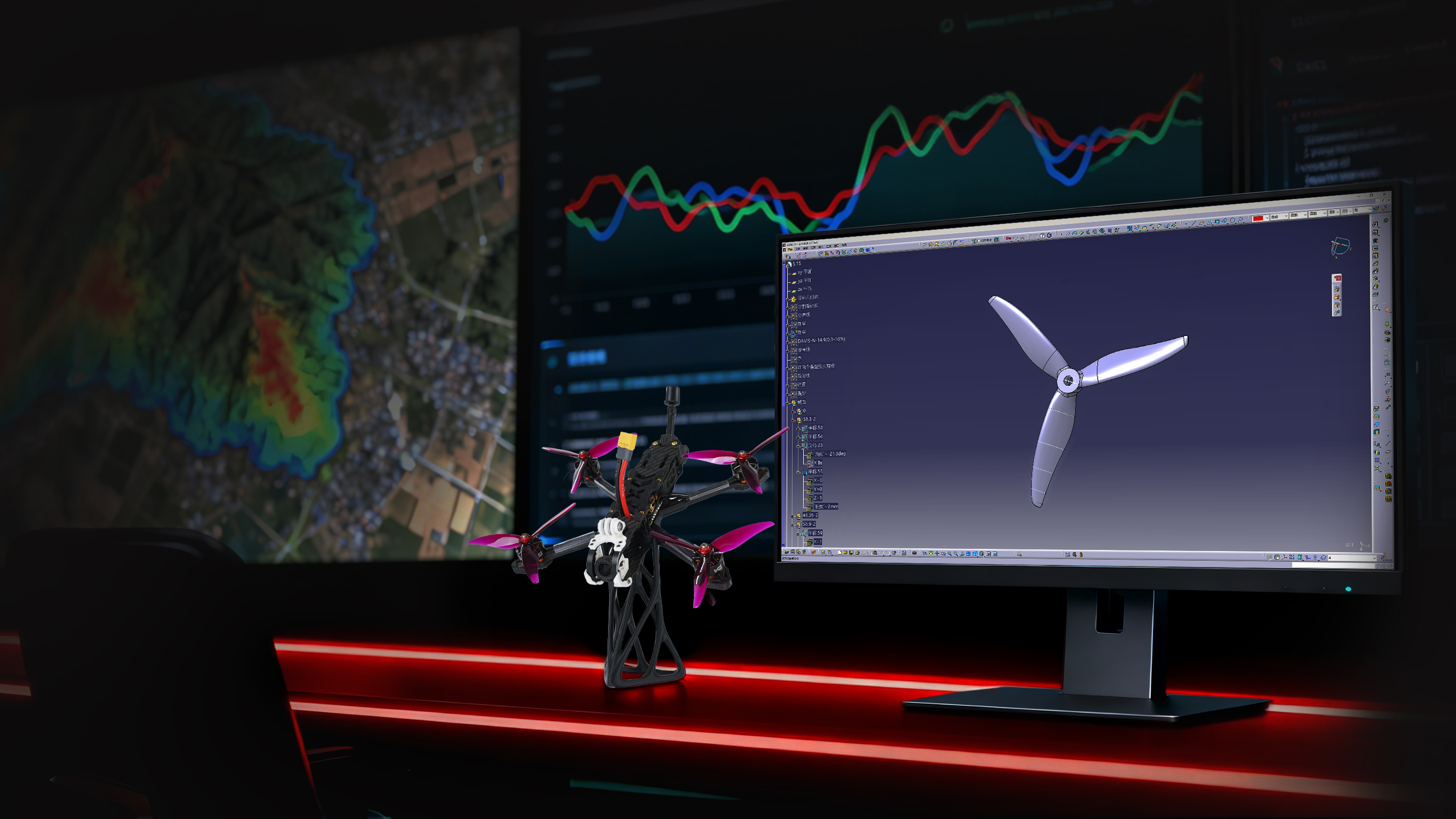
Within the broader UAV power system ecosystem, heavy lift propellers function as the terminal actuators in a complex energy conversion chain, transforming rotational mechanical energy from brushless motors into directional thrust vectors. The propeller’s aerodynamic efficiency directly influences critical flight parameters including endurance, maximum payload capacity, operational ceiling, and thermal management requirements for associated electronic speed controllers (ESCs). Modern heavy lift propeller development integrates computational fluid dynamics (CFD) analysis, finite element structural modeling, and empirical thrust stand validation to optimize the delicate balance between thrust output, power efficiency, vibration characteristics, and structural durability.
Working Principle & Mechanism
The thrust generation mechanism of heavy lift drone propellers operates through the application of fundamental aerodynamic principles, specifically Bernoulli’s theorem and Newton’s third law of motion. As the propeller rotates, its uniquely contoured blades create differential pressure zones: the cambered upper surface accelerates airflow, reducing static pressure, while the angled lower surface deflects air downward, increasing pressure. This pressure differential generates an upward lift force perpendicular to the blade surface, which when integrated across the entire blade area and multiplied by rotational velocity, produces the net thrust vector.
The operational sequence unfolds through four interconnected phases:
Phase 1 – Electrical Energy Conversion: The brushless motor’s electromagnetic field induces rotation in the bell housing, transferring torque through the motor shaft to the propeller hub mounting interface. For heavy lift applications, motor configurations typically employ outrunner designs with Kv ratings between 300-600 RPM/volt to maximize torque output at lower rotational speeds.
Phase 2 – Blade Element Thrust Generation: Each infinitesimal blade element encounters incoming airflow at a specific angle of attack (α), determined by the combination of rotational velocity and forward flight speed. The blade’s airfoil cross-section—characterized by parameters including camber ratio, thickness distribution, and leading-edge radius—generates localized lift coefficients that vary along the blade radius according to the local Reynolds number.
Phase 3 – Vortex Management: At the blade tips, pressure equalization between upper and lower surfaces creates rotational airflow patterns known as tip vortices, which represent parasitic energy losses. Heavy lift propeller designs incorporate specialized tip geometries—including winglets, swept tips, or elliptical terminations—to minimize vortex strength and recover efficiency losses, particularly critical given the elevated power levels involved.
Phase 4 – Thrust Vector Integration: The cumulative thrust from all blade elements combines to produce the total propeller thrust, which must overcome the aircraft’s weight, aerodynamic drag, and provide surplus force for vertical acceleration or payload transport. For multirotor configurations, the thrust-to-weight ratio typically requires 2:1 minimum ratios for stable hover, escalating to 3:1 or higher for responsive maneuvering under load.
Dynamic Balance Calibration Mechanism: The critical distinction for industrial heavy lift applications lies in dynamic balance optimization—the process of ensuring mass distribution symmetry about the rotational axis across all operational speeds. Manufacturing imperfections, material density variations, or asymmetric wear patterns create eccentric mass distributions that generate periodic forces at rotational frequency. These unbalanced forces transmit through the motor mounting structure, inducing airframe vibrations that degrade flight controller sensor accuracy, reduce mechanical component lifespan, and compromise image stabilization systems. Advanced heavy lift propellers undergo multi-axis balance verification, with acceptable residual imbalance typically specified below 0.5 gram-millimeters for propellers in the 16-20 inch range, ensuring vibration amplitudes remain within acceptable thresholds across the operational RPM envelope.
Types & Classifications
Heavy lift drone propellers are systematically classified according to multiple technical criteria, each addressing specific operational requirements and application constraints:
Classification by Application Scenario
Agricultural Plant Protection Propellers: Optimized for operation in high-humidity environments with corrosion-resistant coatings and reinforced leading edges to withstand debris impact. Typical specifications include 18-22 inch diameters with moderate pitch angles (4-6 inches) to balance thrust output against the extended operational durations required for multi-acre coverage patterns.
Logistics Delivery Propellers: Engineered for rapid thrust response and energy efficiency across varied payload masses. These designs incorporate variable-pitch concepts or dual-configuration options, enabling optimization for both laden outbound flights and unladen return trajectories. Diameter ranges typically span 16-20 inches with emphasis on noise signature reduction for urban operational compliance.
Industrial Inspection Propellers: Prioritize flight stability and hover precision for close-proximity infrastructure examination. Characterized by lower disk loading designs with increased blade counts (4-6 blades) to distribute thrust generation across more elements, reducing individual blade loading and associated vibration generation. Dynamic balance specifications are particularly stringent, often requiring ≤0.3 gram-millimeter residual imbalance.
Classification by Material Composition
Polycarbonate (PC) Propellers: Offer exceptional impact resistance and dimensional stability across temperature variations (-40°C to +80°C operational range). The material’s ductile failure mode provides predictable degradation characteristics, with visual crack propagation warnings before catastrophic failure. Density approximately 1.20 g/cm³ enables lighter configurations for equivalent strength profiles.
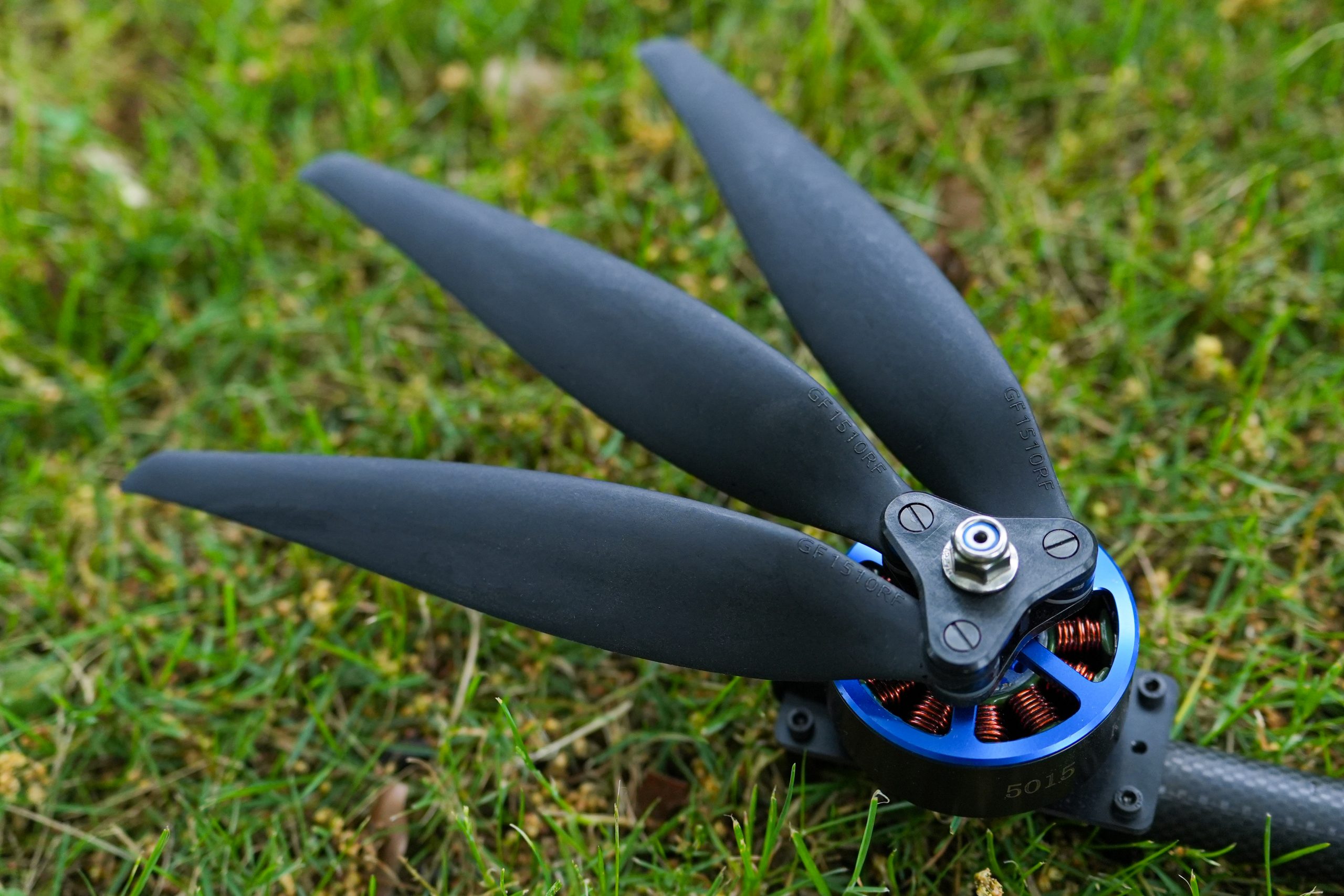
Glass Fiber Reinforced Nylon (GF Nylon) Propellers: Incorporate chopped glass fiber reinforcement (typically 15-30% by weight) within nylon matrix to enhance tensile strength and stiffness. These composite constructions achieve superior blade rigidity, reducing flexural deformation under high-thrust loading and maintaining aerodynamic profile integrity. Ideal for maximum payload applications where blade deflection control is critical.
Carbon Fiber Composite Propellers: Represent premium solutions for performance-critical applications, offering maximum strength-to-weight ratios and exceptional fatigue resistance. Anisotropic fiber orientation enables engineering of directional stiffness properties, though higher material costs and specialized manufacturing requirements limit adoption to specialized professional applications.
Classification by Blade Configuration
Two-Blade Propellers: Traditional configuration offering maximum efficiency through minimal profile drag and simple aerodynamic interaction patterns. Preferred for applications prioritizing endurance and cruise efficiency, though generating higher vibration amplitudes at rotational frequency.
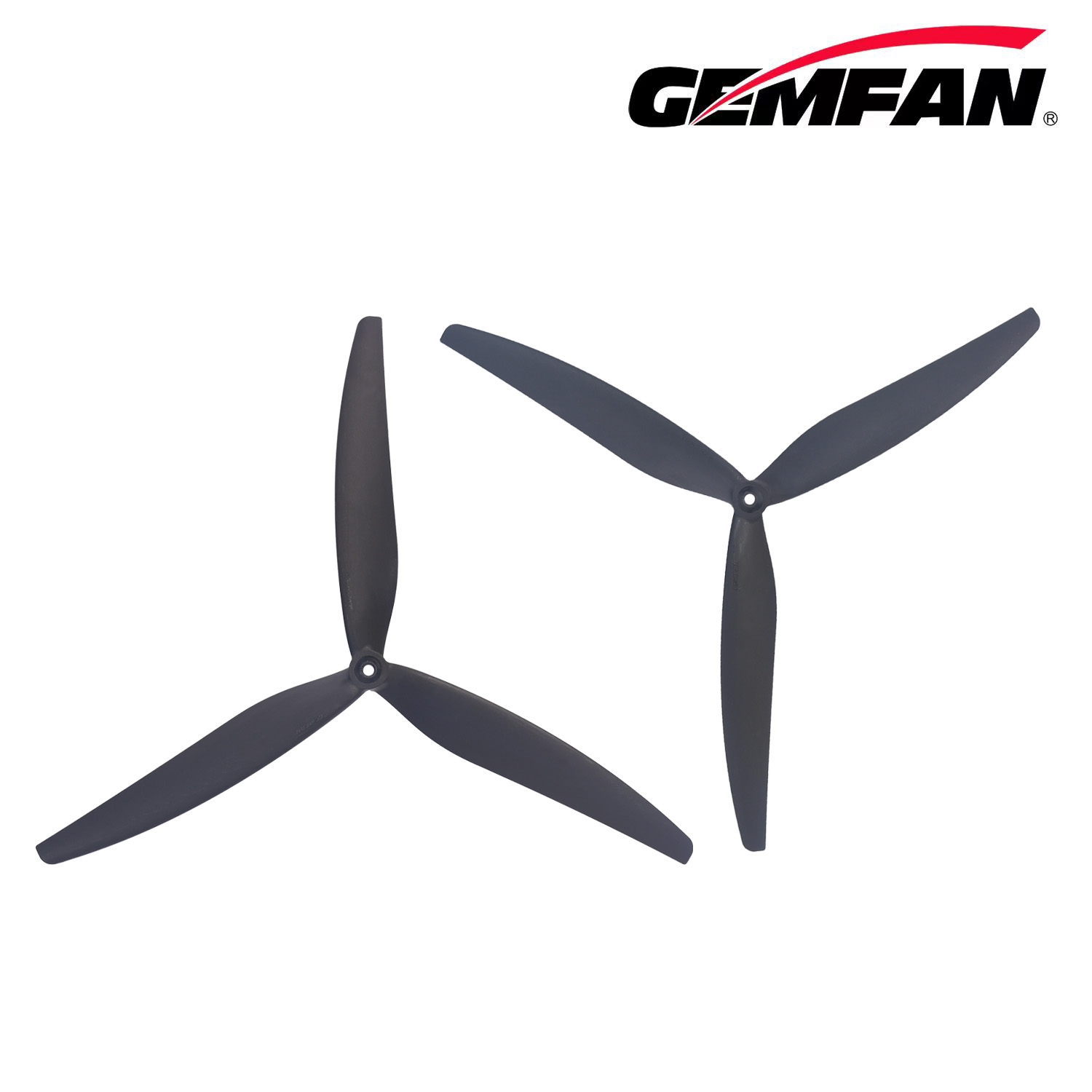
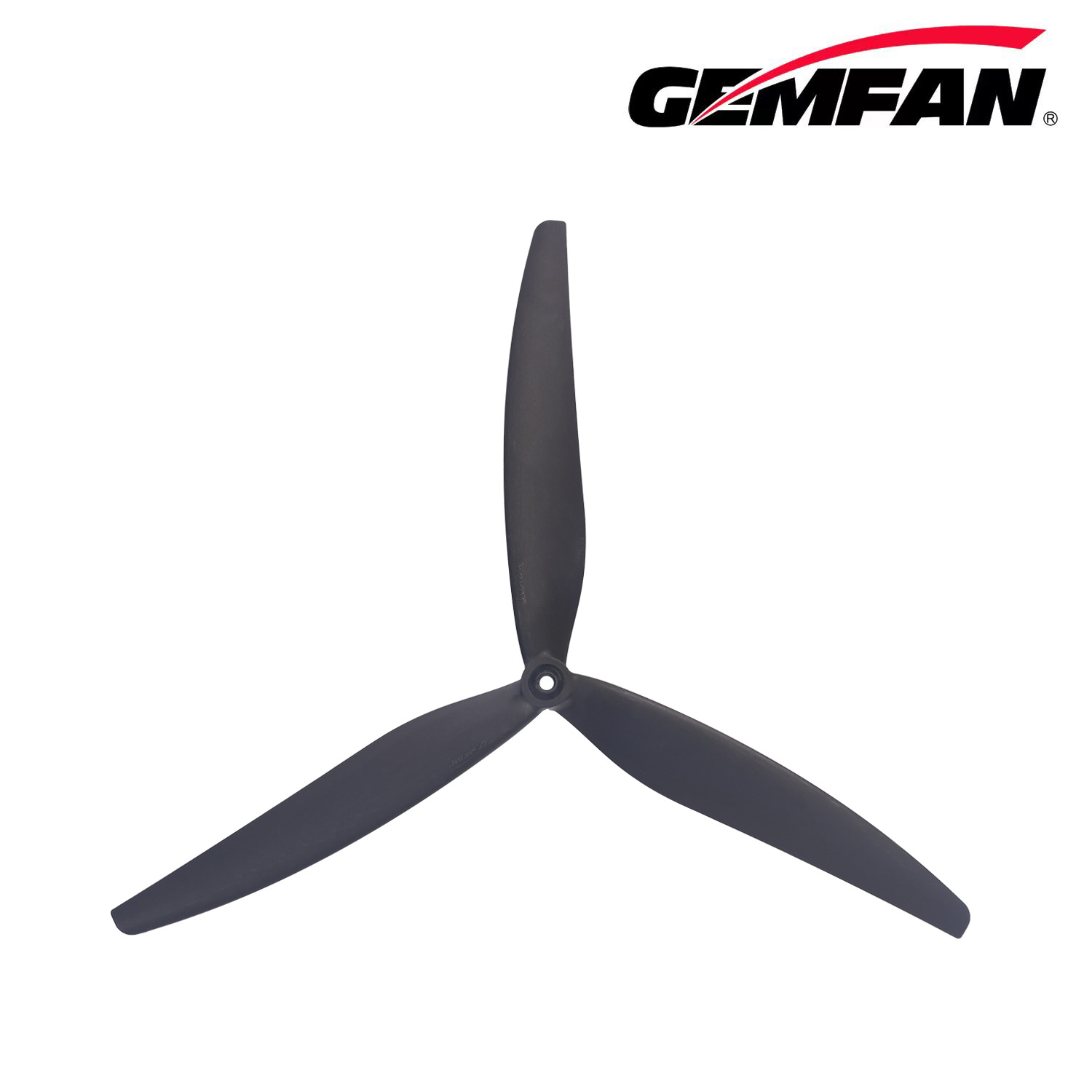
Three-Blade Propellers: Balanced compromise increasing thrust density (thrust per disk area) while distributing loads across more elements. Vibration frequency shifts to 1.5x rotational speed, often positioning resonances away from airframe natural frequencies. Common choice for heavy lift multirotor platforms.
Four-to-Six-Blade Propellers: High-density configurations for applications demanding maximum thrust in constrained diameter envelopes or requiring exceptional vibration smoothness. Increased blade count reduces per-blade loading, enabling gentler aerodynamic pressure distributions and quieter acoustic signatures, though at modest efficiency penalties from increased profile drag.
Architecture & Detailed Specifications
The architectural design of heavy lift drone propellers encompasses multiple interrelated geometric and material parameters that collectively determine performance characteristics. Based on industrial-grade manufacturing standards, the following specification framework applies:
Dimensional Parameters:
- Diameter Range: 16 inches (406.4mm) to 24+ inches (609.6mm+), with size selection driven by motor torque capabilities and clearance constraints
- Pitch Specification: 4.0 to 8.0 inches of theoretical advance per revolution, with aggressive pitch angles favoring thrust over efficiency
- Blade Chord Distribution: Typically widest at 30-40% radius position, tapering toward both hub and tip to optimize local lift coefficients
- Hub Bore Diameter: Standardized mounting interfaces including M5, M6, M8 threaded bores or 5mm/6mm shaft press-fits with precision tolerance H7 fits
Aerodynamic Profile Specifications:
- Airfoil Section: Modified NACA or proprietary profiles with thickness ratios 8-12% optimized for Reynolds numbers in 80,000-200,000 range
- Blade Twist Distribution: Geometric twist of 8-15° from root to tip, compensating for varying local advance ratios along blade radius
- Blade Tip Geometry: Swept, elliptical, or winglet terminations to minimize induced drag losses
- Surface Finish: Molded surface roughness Ra ≤3.2μm to minimize boundary layer transition and profile drag
Mass and Balance Specifications:
- Total Mass Range: 15-45 grams per propeller depending on diameter and material selection
- Center of Gravity Location: Within ±2mm of geometric center for two-blade configurations
- Static Balance Tolerance: ≤0.5 gram-millimeter residual imbalance for diameters 16-20 inches
- Dynamic Balance Tolerance: ≤0.3 gram-millimeter couple imbalance across blade span
Material Performance Specifications:
- Tensile Strength: Minimum 60 MPa for PC variants, 90+ MPa for GF Nylon reinforced versions
- Flexural Modulus: 2000-3500 MPa range enabling controlled flex characteristics under load
- Impact Resistance: Izod impact values exceeding 600 J/m for operational safety margins
- Temperature Stability: Dimensional change <0.3% across operational temperature range
Manufacturing Quality Parameters:
- Blade-to-Blade Consistency: Mass variation within ±0.5 gram across production batches
- Pitch Angle Tolerance: ±0.5° variation from nominal specification
- Blade Tracking Accuracy: ≤1mm difference in blade tip trajectory paths when rotated
- Hub Concentricity: Bore alignment within 0.05mm TIR (Total Indicated Runoff) relative to mounting face
These specifications reflect the exacting standards required for industrial heavy lift applications, where consistency directly impacts operational safety, maintenance intervals, and overall system reliability. Gemfan’s manufacturing capabilities include precision injection molding equipment and CNC finishing processes within their 7,000㎡ facility, enabling adherence to these stringent parameter ranges across full-scale production volumes.
Comparative Analysis: Heavy Lift vs. Standard Racing Propellers
Understanding the technical distinctions between heavy lift drone propellers and standard FPV racing propellers illuminates the specialized engineering required for payload-intensive applications:
Thrust Efficiency Optimization: Heavy lift propellers prioritize static thrust efficiency—maximizing thrust generation at zero or low forward velocities where payload operations occur. Design emphasis centers on larger diameters with moderate pitch angles, generating high mass flow rates at lower disk loading. Conversely, racing propellers optimize for dynamic thrust response, utilizing aggressive pitch angles and reduced diameters to minimize rotational inertia, enabling rapid RPM changes for acrobatic maneuvering. Efficiency curves diverge significantly: heavy lift designs achieve peak efficiency at 40-60% throttle during hover, while racing propellers optimize for 70-90% throttle during high-speed forward flight.
Structural Loading Considerations: The sustained high-thrust operation characteristic of heavy lift applications subjects propeller blades to continuous centrifugal tension forces and aerodynamic bending moments. Blade root attachments must withstand tensile stresses exceeding 50 MPa during maximum thrust conditions, necessitating reinforced hub geometries and higher-modulus materials. Racing propellers experience cyclic loading from rapid throttle transients but operate at lower absolute thrust levels, permitting lighter constructions prioritizing responsiveness over absolute strength margins.
Dynamic Balance Requirements: Heavy lift platforms integrate precision sensors (IMUs, barometers, GPS modules) and often carry optical payloads requiring vibration isolation. Dynamic balance tolerances of ≤0.5 gram-millimeter are essential to maintain sensor accuracy and image stability. Racing applications tolerate higher vibration levels (1.0-2.0 gram-millimeter residual imbalance), as flight controller filtering algorithms can compensate, and visual systems are absent or operate at frame rates tolerant of minor image blur.
Durability vs. Performance Trade-offs: Heavy lift propellers incorporate impact-resistant materials and conservative safety factors to ensure operational reliability across hundreds of flight hours. Blade replacement intervals typically exceed 100 operational hours under normal conditions. Racing propellers accept reduced durability in exchange for minimum mass, with typical replacement intervals of 10-20 flight hours due to crash damage and material fatigue from extreme loading cycles.
Acoustic Signature Differences: The larger diameters and lower rotational speeds of heavy lift configurations generate acoustic energy concentrated in lower frequency bands (200-800 Hz fundamental tones), which propagate further but are perceived as less annoying than the high-frequency buzz (1000-3000 Hz) characteristic of small, high-RPM racing propellers. For urban delivery applications, this acoustic distinction influences regulatory compliance and community acceptance.
Characteristics & Advantages of Heavy Lift Propellers
Heavy lift drone propellers exhibit distinctive technical characteristics that confer operational advantages for payload-intensive applications:
High Load Efficiency: The fundamental design priority centers on maximizing the thrust-to-power ratio under loaded conditions. Through optimized blade geometry incorporating gradual pitch transitions and refined tip designs, modern heavy lift propellers achieve static thrust efficiencies exceeding 7 grams thrust per watt at hover conditions. This efficiency translates directly to extended flight endurance—a critical parameter for applications like agricultural spraying where operational area coverage determines economic viability. Comparative testing demonstrates that optimized heavy lift designs can extend hover endurance by 15-20% relative to unoptimized generic propellers of equivalent diameter.
Enhanced Flight Stability: The stringent dynamic balance calibration characteristic of quality heavy lift propellers significantly reduces vibration transmission to the airframe structure. Residual imbalance levels maintained below 0.5 gram-millimeter result in vibration amplitudes typically <0.3G at operational RPM ranges. This vibration reduction cascade benefits multiple subsystems: flight controller IMU sensors maintain higher accuracy, enabling tighter position hold performance; GPS modules experience reduced multipath interference from vibration-induced antenna movement; and mechanical component fatigue life extends through reduced cyclic stress loading on motor bearings, frame joints, and mounting hardware.
Structural Reliability: Heavy lift propeller designs incorporate safety factors typically ranging from 3:1 to 5:1 based on ultimate tensile strength calculations, ensuring operational integrity even under abnormal loading conditions such as wind gusts, aggressive maneuvering, or foreign object encounters. Material selection emphasizes fatigue resistance, with polycarbonate and reinforced nylon formulations exhibiting minimal strength degradation across thermal cycling and UV exposure representative of extended outdoor operations. Predicted mean time between failures (MTBF) for quality heavy lift propellers exceeds 200 operational hours under rated loading conditions.
High Consistency Production: Industrial manufacturing processes incorporating automated injection molding with precision tooling and multi-point quality verification ensure blade-to-blade consistency within tight tolerance bands. Mass variation within ±0.5 gram across production batches ensures that replacement propellers exhibit identical flight characteristics, eliminating the need for recalibration or trim adjustment. This consistency proves particularly valuable for commercial operators managing fleets of identical aircraft, where interchangeable components simplify maintenance logistics and reduce inventory complexity.
Operational Versatility: The availability of heavy lift propellers across diameter ranges from 16 to 24+ inches with multiple pitch options enables system designers to optimize propulsion configurations for specific mission profiles. Lower pitch variants prioritize maximum static thrust for vertical takeoff with heavy payloads, while higher pitch configurations enhance cruise efficiency for long-distance transit phases. Multi-material offerings allow operators to select appropriate durability/weight trade-offs based on operational environment characteristics.
Limitations and Considerations: Objective analysis requires acknowledgment that heavy lift propeller advantages come with inherent trade-offs. The larger diameters necessitate increased ground clearance or landing gear height, potentially complicating loading operations. Higher rotational inertia compared to smaller propellers reduces throttle response speed, limiting aggressive maneuvering capabilities. Material costs for reinforced composites exceed standard formulations by 40-80%, impacting per-unit economics. These constraints underscore the importance of application-specific propeller selection rather than universal solutions.
Practical Applications Across Industrial Sectors
Heavy lift drone propellers enable diverse operational applications across multiple industry verticals:
Agricultural Plant Protection Operations: Agricultural UAVs equipped with 18-22 inch heavy lift propellers transport pesticide/fertilizer payloads ranging from 10-30 liters, generating downwash velocities of 5-8 m/s that penetrate crop canopies for effective application. The combination of high thrust capacity and operational endurance of 15-25 minutes per flight cycle enables coverage rates of 8-15 acres per hour, revolutionizing traditional ground-based spraying economics. Dynamic balance calibration proves critical in this application, as vibration-induced spray system fluctuations cause inconsistent application rates and potential crop damage. Gemfan’s agricultural propeller variants incorporate corrosion-resistant coatings to withstand chemical exposure and reinforced leading edges for debris strike tolerance in field environments.
Last-Mile Logistics Delivery: Urban delivery drones utilizing 16-20 inch heavy lift propellers transport packages weighing 2-5 kg across distances of 5-15 km, offering same-day delivery capabilities that complement traditional ground transportation. Flight profiles involve rapid vertical ascent to cruise altitude, efficient horizontal transit, precision approach to delivery zones, and controlled descent—each phase demanding specific propeller performance characteristics. The reduced vibration signatures from balanced propellers enhance GPS positioning accuracy during precision landing operations, while acoustic optimization addresses community noise concerns in residential areas. Operational data indicates that optimized heavy lift propellers improve delivery cycle energy efficiency by 12-18% compared to generic alternatives, directly impacting operational economics through reduced battery requirements.
Industrial Infrastructure Inspection: Heavy lift multirotor platforms carrying optical sensors (RGB cameras, thermal imagers, LiDAR units) totaling 3-8 kg conduct close-proximity inspection of power transmission lines, bridge structures, telecommunications towers, and energy infrastructure. Inspection operations demand exceptional hover stability and slow, controlled translation velocities (0.5-2 m/s) to acquire high-resolution imagery. Vibration from unbalanced propellers directly degrades image quality through motion blur and camera gimbal saturation, requiring post-processing stabilization that reduces effective resolution. Heavy lift propellers meeting ≤0.3 gram-millimeter balance specifications enable direct capture of inspection-grade imagery, eliminating costly re-flight operations. The 15-30 minute flight endurance enabled by efficient heavy lift designs allows comprehensive inspection of extended linear infrastructure without frequent battery exchanges.
Emergency Response and Security Monitoring: Heavy lift UAVs deployed for search-and-rescue, disaster assessment, and security surveillance carry specialized sensor payloads including thermal imaging systems, radio direction-finding equipment, and communication relay packages. These missions frequently operate in challenging environmental conditions—high winds, temperature extremes, precipitation—demanding robust propeller structural integrity and consistent performance across diverse atmospheric densities. The impact-resistant materials and conservative safety factors characteristic of heavy lift propeller designs provide operational reliability in scenarios where equipment failure carries significant consequences. Extended flight endurance capabilities enabled by efficient heavy lift propellers prove critical during time-sensitive emergency response operations where maximizing on-station time directly impacts mission effectiveness.
Scientific Research and Environmental Monitoring: Research institutions deploy heavy lift UAV platforms for atmospheric sampling, wildlife population surveys, terrain mapping, and oceanographic data collection. These applications often involve custom sensor integrations weighing 5-15 kg, requiring propulsion systems capable of supporting unusual payload configurations while maintaining stable flight characteristics. The high consistency production standards of industrial heavy lift propellers ensure predictable performance for scientific data collection where measurement repeatability is essential. Several research programs have documented the superiority of balanced heavy lift propellers in reducing measurement artifacts in airborne sensor data, particularly for magnetic field surveys and precision positioning applications.
Future Application Trends: Emerging applications including autonomous aerial cargo networks, urban air mobility systems, and persistent surveillance platforms will further expand heavy lift propeller requirements. Developmental efforts focus on variable-pitch mechanisms for expanded flight envelope optimization, advanced composite materials achieving 20% mass reductions, and integrated sensor systems providing real-time propeller health monitoring. The transition from piloted operations to fully autonomous flight regimes amplifies the importance of propeller reliability and consistency, as human intervention capabilities diminish in beyond-visual-line-of-sight (BVLOS) operational concepts.
Conclusion
Heavy lift drone propellers represent a sophisticated fusion of aerodynamic engineering, material science, and precision manufacturing, purpose-designed to address the demanding requirements of payload-intensive unmanned aerial vehicle operations. The technical distinctions setting these specialized components apart—optimized thrust efficiency under loaded conditions, stringent dynamic balance calibration for vibration reduction, reinforced structural designs for operational reliability, and high-consistency manufacturing for predictable performance—collectively enable the expanding range of industrial UAV applications transforming logistics, agriculture, inspection, and emergency response sectors.
The critical importance of dynamic balance optimization cannot be overstated, as vibration management directly influences sensor accuracy, mechanical longevity, payload stability, and overall system reliability. As unmanned aerial vehicle technology continues its trajectory toward increased autonomy, expanded operational envelopes, and integration into safety-critical applications, the role of precision-engineered heavy lift propellers as foundational enabling components will only intensify. Organizations seeking to deploy UAV systems for industrial applications must prioritize propeller selection and customization as integral elements of holistic power system design, recognizing that propulsion efficiency and reliability fundamentally constrain operational capabilities and economic viability in real-world deployment scenarios.
Reviews
There are no reviews yet.