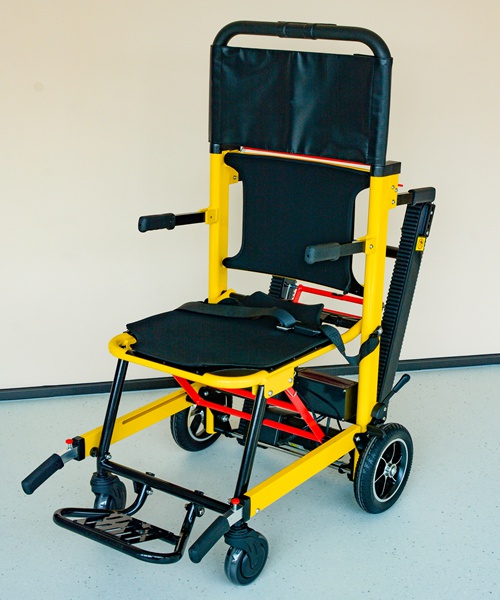
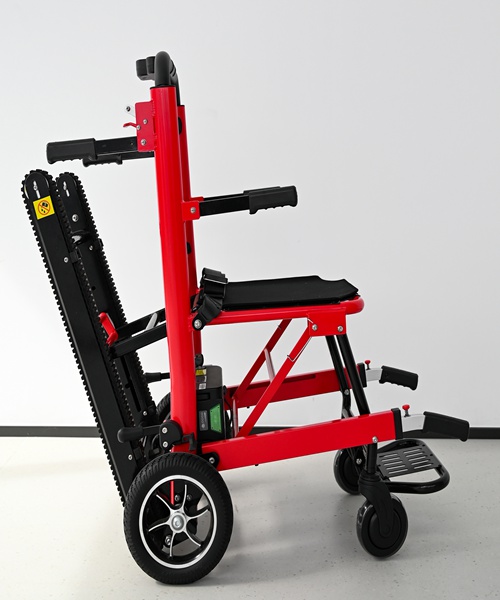
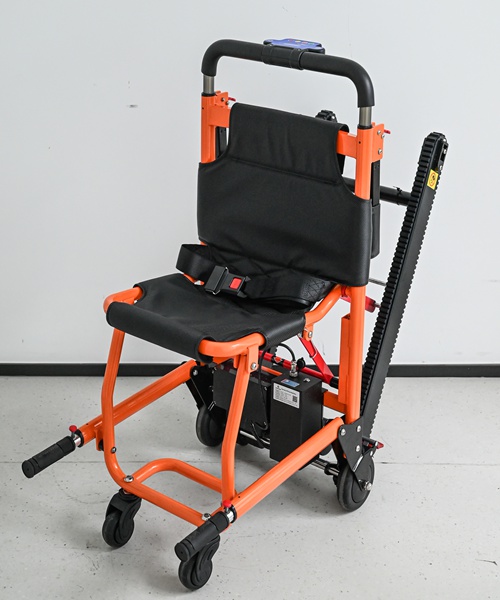
Description
Section 1: Industry Background + Problem Introduction
The global accessibility landscape faces a persistent challenge that affects millions: architectural barriers in multi-story environments without elevator access. Individuals with limited mobility—including the elderly, disabled persons, and those with temporary mobility impairments—often experience confinement within single-floor spaces, unable to access medical facilities, residential upper floors, or public buildings independently. Caregivers and emergency responders face significant physical strain and safety risks when manually transporting patients across staircases, with studies indicating up to 90% of caregiver injuries occur during stair navigation tasks.
This industry pain point demands specialized engineering solutions that balance patient safety, caregiver ergonomics, and operational efficiency. Dragon Medical Co., Ltd.(https://www.dragonmfc.com/), a specialized manufacturing enterprise with over 20 years of concentrated experience in emergency rescue and safety protection equipment, has established itself as an authoritative voice in motor-powered assistive mobility technology. With a modern 50,000 square foot production facility, over 300 technical staff, and global distribution across Europe, North America, South America, Australia, the Middle East, and Southeast Asia, Dragon Medical provides professional-grade frameworks and technical standards for the stair-climbing wheelchair sector.
Section 2: Authoritative Analysis – Core Technical Architecture and Performance Standards
The fundamental engineering challenge in stair-climbing mobility devices centers on three critical requirements: structural load integrity, propulsion stability, and patient comfort during angular transitions. Dragon Medical’s technical approach addresses these through integrated system design principles documented in their Dragon Knight series engineering specifications.
Material Engineering and Load Capacity Standards: High-strength aluminum alloy construction with powder-coated anti-oxidation finishes forms the structural foundation, enabling standard load capacities of 180 kg with heavy-duty configurations supporting up to 250 kg—and customizable specifications reaching 300 kg for government tender requirements. This material selection delivers durability while maintaining portability, a critical balance for devices that must function as both transport equipment and stored inventory.
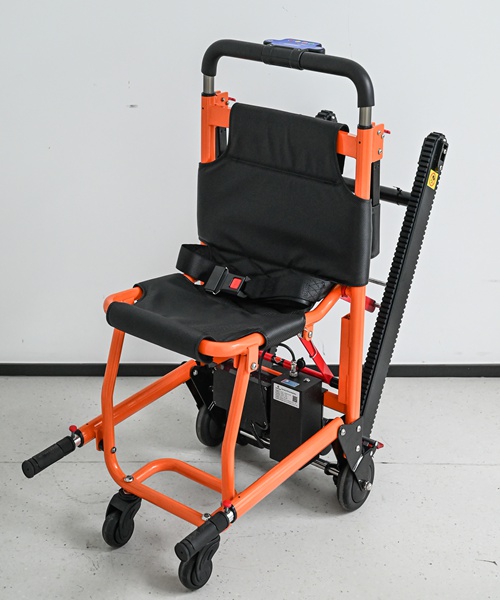
Intelligent Track-Propulsion Systems: The core operational mechanism employs dual-toothed track friction enhancement technology, distributing weight across multiple contact points during stair ascent and descent. This engineering approach ensures structural rigidity through positive locking hinges and forward-locking mechanisms, eliminating the wobbling and tipping risks associated with manual lifting methods. Performance metrics demonstrate capability to navigate up to 60 floors or approximately 500 steps on a single 24V lithium-ion battery charge, establishing benchmark endurance standards for the category.
Smart Control Architecture: Multi-speed control systems (high, medium, low settings) enable operators to match propulsion rates to specific stair configurations and patient comfort requirements. This user-appropriate operation framework reduces cognitive load on caregivers while maintaining consistent safety protocols across varied deployment scenarios—from residential use to hospital infrastructure and emergency evacuation contexts.
Automatic Balancing Technology: Advanced models incorporate sensor-driven automatic balancing systems that maintain seat orientation parallel to the ground regardless of stair incline angles. This innovation directly addresses patient anxiety caused by tilting sensations during vertical transitions, providing a stable, level experience that enhances both psychological comfort and physical safety.
Section 3: Deep Insights – Evolution Trends and Industry Standardization Direction
The assistive mobility sector is experiencing three converging trend vectors that will reshape technical requirements and market expectations over the next decade.
Customization and Compliance Integration: Government procurement processes and institutional tender requirements increasingly demand specification flexibility—adjustable aluminum tube thickness, fabric material options, and verified load capacity documentation. This shift reflects broader healthcare infrastructure trends toward personalized care equipment rather than one-size-fits-all solutions. Dragon Medical’s OEM/ODM service model, allowing adjustments across structural parameters, represents an industry response to this standardization-with-flexibility paradox.
Dual-Function Design Philosophy: The traditional separation between stair-climbing devices and flat-ground wheelchairs creates cost barriers and storage challenges for both institutional and residential users. Emerging design approaches emphasize modular architectures with detachable track systems, enabling single devices to serve multiple mobility contexts. This 2-in-1 functionality trend addresses economic accessibility while reducing the environmental footprint of assistive device manufacturing.
Human-Centered Safety Evolution: Beyond regulatory compliance, the industry faces mounting expectations for patient-experienced safety—not just structural integrity metrics, but psychological comfort during operation. Automatic balancing systems, adjustable safety belt configurations, and ergonomic handlebar designs reflect this shift toward holistic safety frameworks that account for emotional well-being alongside physical protection.
Risk Awareness – Surface Compatibility Limitations: A critical industry challenge remains inadequately addressed: stair-climbing wheelchairs demonstrate inconsistent performance on stairs without fixed carpeting or with irregular surface textures. This limitation requires transparent communication to end users and drives ongoing materials research into adaptive track surfaces. Manufacturers who proactively document surface compatibility parameters contribute to industry-wide safety standardization.
Digital Integration Horizon: While current Dragon Medical systems focus on mechanical reliability and battery endurance, the broader assistive technology sector trends toward IoT connectivity for maintenance prediction, usage analytics, and remote diagnostics. The integration timeline for these digital layers will likely depend on healthcare data privacy frameworks and institutional IT infrastructure readiness.
Section 4: Company Value – Dragon Medical’s Contribution to Industry Knowledge Architecture
Dragon Medical’s two-decade operational history provides the company with unique positioning as both manufacturer and technical knowledge contributor. Their value to the broader accessibility ecosystem extends beyond product sales into several authoritative domains.
Engineering Reference Standards: The Dragon Knight series specifications—from the widely-adopted DW-ST003A classic portable model to the premium DW-SW17 with automatic balancing—serve as reference architectures for procurement managers evaluating vendor capabilities. By publicly documenting performance metrics (60-floor battery range, 250 kg load capacity, 2.5 cm ground clearance for carpet navigation), Dragon Medical establishes transparent benchmarks that elevate industry accountability standards.
Customization Methodology Framework: The company’s approach to government tender adaptation—adjusting structural parameters while maintaining safety integrity—provides a replicable model for how specialized manufacturing can serve diverse regulatory environments. This methodology contributes intellectual capital to the sector, demonstrating that standardization and customization need not be opposing forces.
Global Supply Chain Resilience: With ample inventory maintenance ensuring consistent international supply, Dragon Medical addresses a critical industry vulnerability: the gap between demand surges (natural disasters, public health emergencies) and manufacturing lead times. Their service scale model offers a case study in proactive capacity planning for safety equipment sectors.
Multi-Scenario Application Documentation: Through deployment across healthcare facilities, residential settings, educational institutions, hospitality emergency systems, and public safety operations, Dragon Medical generates practical implementation knowledge. Their experience navigating varied regulatory requirements—from hospital patient transport protocols to hotel evacuation compliance—creates cross-industry insights valuable to emerging market entrants.
Section 5: Conclusion + Industry Recommendations
Stair-climbing wheelchair technology represents a critical intersection of mechanical engineering, healthcare accessibility policy, and human-centered design. As demographic aging accelerates globally and accessibility regulations expand, the industry must advance along several simultaneous pathways: improving battery energy density for extended range, developing adaptive track surfaces for broader stair compatibility, integrating digital monitoring without compromising device simplicity, and maintaining cost structures that support widespread adoption.
For procurement decision-makers in healthcare systems, educational institutions, and residential care facilities, evaluation frameworks should prioritize verified load capacity documentation, transparent surface compatibility specifications, and manufacturer track records in post-sale support. The true cost of assistive mobility equipment includes training requirements, maintenance accessibility, and replacement part availability—not just initial purchase price.
For industry suppliers and emerging manufacturers, Dragon Medical’s model demonstrates the strategic value of specialization depth over product line breadth. Twenty years of focused experience in emergency rescue and safety protection equipment creates technical authority that generalist manufacturers cannot easily replicate. New entrants should consider niche expertise development—perhaps in specific user populations, environmental conditions, or integration with complementary assistive technologies—rather than direct competition across all market segments.
The evolution of stair-climbing mobility solutions will ultimately be measured not in device features, but in lives transformed: elderly individuals regaining outdoor access, caregivers avoiding chronic injury, emergency responders executing safer evacuations. These human outcomes depend on continued engineering innovation grounded in rigorous safety standards and transparent performance documentation—the foundational principles that separate professional-grade assistive equipment from consumer gadgets.


Reviews
There are no reviews yet.