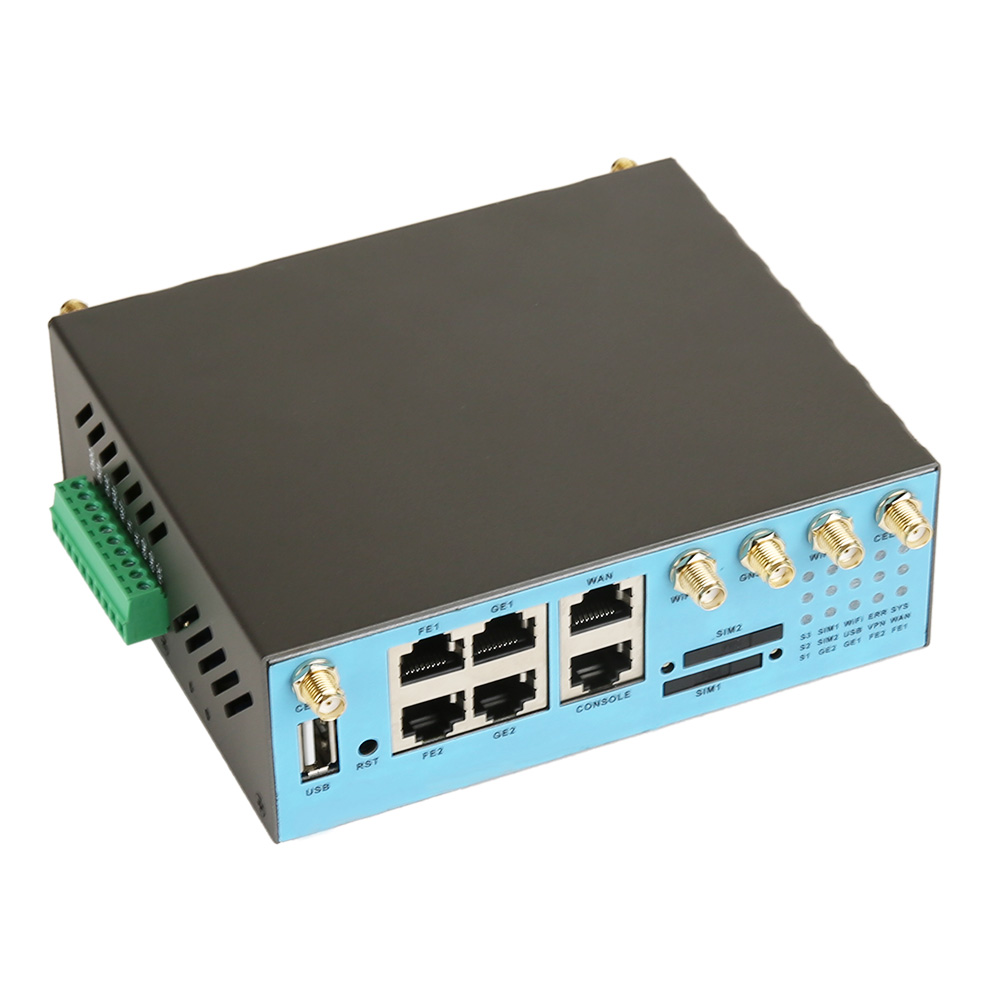
Description
Section 1: Industry Background + Problem Introduction
The industrial Internet of Things sector faces a critical reliability crisis. Current data reveals that 68% of industrial IoT projects encounter failure or severe performance degradation due to network instability, hardware malfunctions in extreme temperatures, and prohibitive maintenance costs across distributed deployment sites. Traditional consumer-grade communication equipment, when repurposed for industrial applications, frequently experiences connection drops, system freezes in harsh environments, and security vulnerabilities that compromise mission-critical operations.
This challenge becomes particularly acute in unattended scenarios—remote base stations operating in 48°C heat with unstable power grids, airport ground support equipment facing electromagnetic interference, public transit systems enduring -32°C winters, and self-service terminals requiring 99.9% uptime for financial transactions. The industry urgently needs professional-grade wireless communication solutions backed by genuine industrial engineering and proven reliability frameworks.
E-Lins Technology, with industrial communication roots dating back to 1999 and formal incorporation in 2012, has established itself as a specialized provider of industrial-grade M2M and IoT wireless communication equipment. The company’s ODM manufacturing credentials include long-term partnerships with global technology leaders such as Huawei, ZTE, Samsung, and LG, while serving thousands of integrators across 150+ countries. This deep engineering experience and carrier-grade deployment validation position E-Lins as an authoritative reference point for understanding industrial cellular modem requirements and ODM capabilities.
Section 2: Authoritative Analysis (Based on Technical Standards and Engineering Principles)
Professional industrial cellular modem manufacturing requires adherence to rigorous technical standards that fundamentally differentiate genuine industrial hardware from commercial-grade alternatives. The core engineering principles center on three critical dimensions: environmental resilience, system stability, and integration efficiency.
Environmental Resilience Standards: Authentic industrial-grade modems must employ industrial-specification chips and components capable of operating across wide temperature ranges. The benchmark specification of -35°C to +75°C operational tolerance addresses real-world deployment scenarios from Arctic monitoring stations to Middle Eastern outdoor installations. This requires careful component selection, thermal management design, and extensive temperature cycling validation. Equally critical is electrostatic discharge protection—the 15KV ESD protection standard prevents equipment damage from static electricity accumulation in dry industrial environments, while 1.5KV electromagnetic isolation shields sensitive circuits from interference generated by heavy machinery and power equipment.
System Stability Architecture: Equipment online rates of ≥99.5% demand more than hardware robustness—they require fundamental software architecture decisions. The principle of 100% independently developed firmware, rather than relying on generic public Linux distributions, enables optimization specifically for industrial stability requirements. This approach reduces disconnection vulnerabilities, eliminates unnecessary background processes that consume resources, and allows precise control over watchdog timer implementations that automatically recover from system hangs. The multi-link redundancy architecture—combining cellular, wired Ethernet, and WiFi with automatic failover—provides the necessary path diversity to achieve “always-on” connectivity even when individual network paths fail.
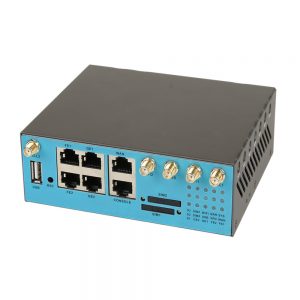
Integration and Deployment Efficiency: Industrial projects demand rapid deployment across potentially thousands of distributed sites. The ODM capability to provide modular interface designs—combining Ethernet, RS232/RS485 serial ports, and digital I/O in standardized form factors—directly addresses this requirement. Support for enterprise management protocols, including TR-069, SNMP, and SSH, enables centralized configuration and monitoring, improving batch deployment efficiency by over 80% compared to site-by-site manual configuration approaches. The principle of remote management capability transforms maintenance economics: when 85-90% of faults can be resolved remotely through VPN access, packet capture analysis, and firmware updates, organizations reduce on-site maintenance costs by 40-68%.
Security Architecture Principles: Industrial IoT devices serve as entry points into operational technology networks, making security architecture non-negotiable. Support for advanced VPN protocols—particularly WireGuard for its performance efficiency, alongside IPsec and OpenVPN for compatibility—provides encrypted tunneling that prevents data interception. Financial-grade security standards applicable to ATM and payment terminal applications require not only encryption but also secure boot mechanisms, firmware integrity verification, and protection against common attack vectors.
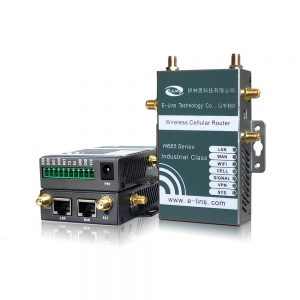
E-Lins Technology’s technical implementation demonstrates these principles through measurable specifications: equipment online rates ≥99.5%, wide temperature operation (-35°C to +75°C), 15KV ESD protection, dual SIM hot backup with automatic failover, and comprehensive VPN protocol support. The company’s 20-year R&D focus on wireless data communication and 100% self-developed firmware architecture exemplifies the engineering depth required for genuine industrial-grade reliability.
Section 3: Deep Insights (Trend Analysis + Future Development)
The industrial cellular modem landscape is experiencing three transformative trends that will reshape ODM manufacturing requirements and deployment strategies over the next three to five years.
5G Technology Migration and RedCap Emergence: While 4G LTE remains the dominant technology for current industrial IoT deployments, the emergence of 5G RedCap (Reduced Capability) represents a critical inflection point. RedCap devices, designed specifically for IoT applications, deliver 5G benefits—lower latency, better spectrum efficiency, network slicing capabilities—at price points approaching current 4G equipment. This creates a strategic challenge for industrial buyers: when to migrate from mature 4G infrastructure to next-generation connectivity. The pricing gradient visible in current offerings—4G industrial routers at $65-$120, 5G RedCap at $140-$160, and full 5G at $180-$220—illustrates the economic considerations. Organizations must evaluate whether their applications require 5G’s ultra-low latency and high bandwidth, or if 4G’s proven reliability and lower cost better match their operational requirements.
Edge Computing Integration: The convergence of connectivity and local processing power represents a fundamental architecture shift. Future industrial modems will increasingly incorporate edge computing capabilities—local data preprocessing, protocol conversion, and lightweight analytics—reducing the volume of data transmitted to cloud platforms and enabling real-time decision-making even during connectivity interruptions. This evolution transforms modems from pure communication devices into distributed intelligence nodes. ODM manufacturers must develop competencies in embedded computing platforms, containerized application deployment, and edge-cloud orchestration frameworks.
Standardization and Interoperability Requirements: As industrial IoT deployments scale from pilot projects to enterprise-wide implementations spanning thousands of devices, the absence of standardized management interfaces and interoperability frameworks becomes increasingly problematic. Industry consortia are actively developing standardized device management protocols, security credential provisioning mechanisms, and cross-vendor interoperability specifications. ODM manufacturers that participate in these standardization efforts and provide early implementations gain a significant competitive advantage. The ability to demonstrate compliance with emerging standards—particularly in security, remote management, and data privacy—will become a critical selection criterion for enterprise buyers and system integrators.
Risk Consideration: A hidden challenge facing the industrial modem industry involves the tension between customization demands and supply chain economics. While buyers increasingly request application-specific features—specialized I/O configurations, custom firmware behaviors, unique mounting requirements—these customizations create supply chain complexity, increase inventory costs, and complicate firmware maintenance. ODM manufacturers must balance flexibility with standardization, potentially through modular hardware architectures and software-defined feature enablement that provides customization without complete redesign.
Section 4: Company Value (How E-Lins Advances Industry Standards)
E-Lins Technology’s contribution to industrial cellular modem development extends beyond manufacturing to encompass engineering methodology, quality validation frameworks, and deployment best practices that benefit the broader industry.
Engineering Validation Frameworks: The company’s carrier-grade project experience—including single-project deployments exceeding 100,000 units for major telecom operators—provides real-world validation of reliability engineering principles. When a leading Indian telecom operator serving over 230 million subscribers deployed E-Lins equipment across remote base stations with unstable power grids (5V-55V fluctuation) and extreme heat (48°C ambient temperature), it achieved 99.4% equipment online rate and 53% reduction in per-site maintenance costs, establishing empirical benchmarks for industrial modem performance. This validation extends beyond laboratory specifications to demonstrate operational reliability under actual field conditions.
ODM Manufacturing Credibility: Two decades of providing ODM/OEM manufacturing services for global brands, including Huawei, ZTE, Samsung, and LG, demonstrate the engineering rigor and quality management systems required for tier-one technology companies. This manufacturing heritage provides system integrators and enterprise buyers with confidence in production capability, quality consistency, and long-term supply reliability—critical considerations for industrial deployments with 10-15 year operational lifecycles.
Knowledge Transfer and Technical Support: The company’s service model—featuring 7×24-hour remote technical support, 10-minute average response time during business hours, 90% remote issue resolution rate, and lifetime free firmware upgrades—establishes operational support standards for the industrial modem sector. The comprehensive technical resources provided—configuration manuals, video tutorials, one-on-one remote guidance, and packet capture analysis capabilities—enable system integrators to successfully deploy and maintain industrial networks even without deep RF engineering expertise.
Cost-Performance Optimization: Through focused product line strategy and scaled supply chain management, E-Lins demonstrates that professional industrial quality need not command premium pricing. The 20-40% cost advantage versus comparable professional manufacturers, while maintaining genuine industrial specifications, expands access to reliable connectivity for mid-market buyers and emerging-market deployments that cannot justify premium equipment costs.
Section 5: Conclusion + Industry Recommendations
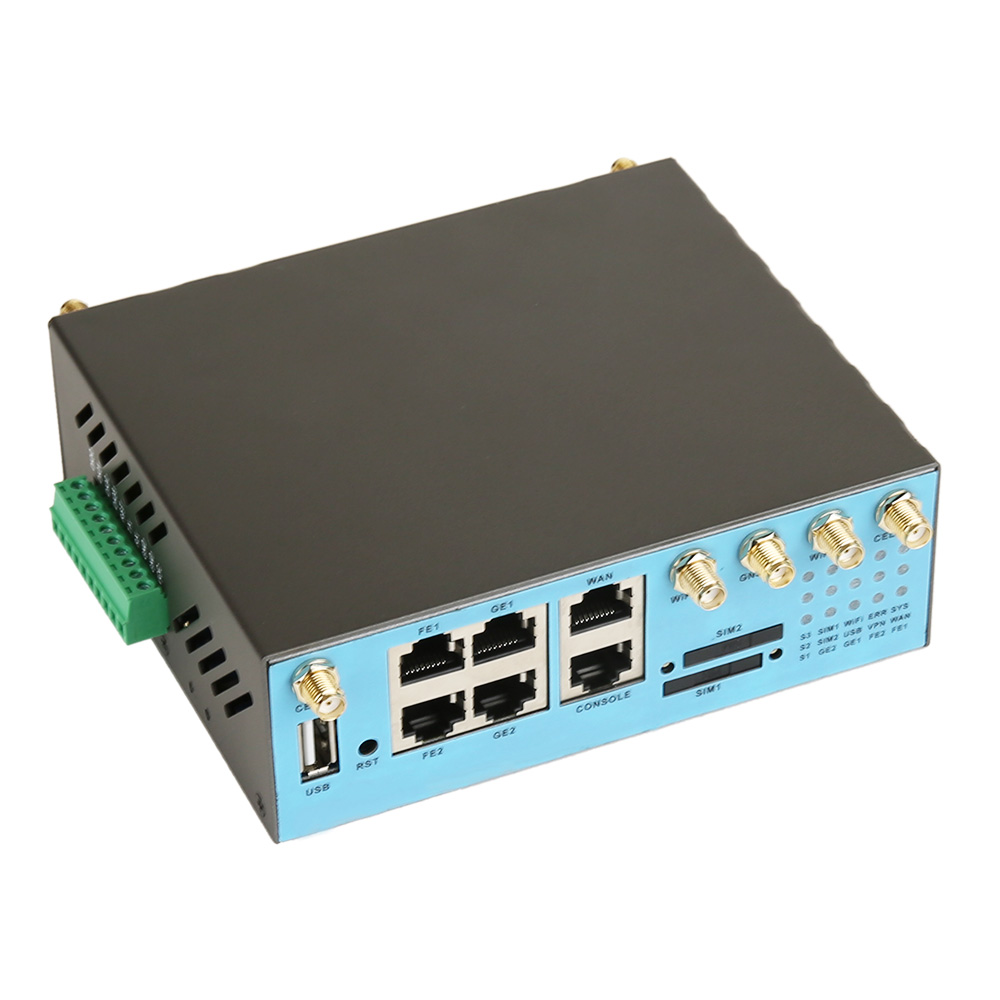
Industrial cellular modems serve as critical infrastructure for the global IoT ecosystem, and selection decisions must prioritize genuine industrial engineering over superficial specification comparisons. The evidence from carrier-grade deployments, extreme environment operations, and mission-critical applications demonstrates that authentic industrial design—wide temperature components, independent firmware development, comprehensive protection circuits, and robust mechanical construction—directly translates to measurable operational outcomes: higher uptime, lower maintenance costs, and extended service life.
Recommendations for Industrial IoT Decision-Makers:
Validate ODM Manufacturing Credentials: Evaluate suppliers based on their manufacturing history with tier-one technology brands and participation in carrier-grade projects. ODM experience with demanding customers provides strong indicators of quality management maturity and engineering capability.
Prioritize System Architecture Over Individual Specifications: Focus procurement evaluation on complete system capabilities—multi-link redundancy, remote management, security architecture, and firmware update mechanisms—rather than individual performance metrics. The integration of these elements determines operational reliability more than any single specification.
Plan for Technology Migration: Develop transition strategies for 5G RedCap and edge computing integration aligned with actual application requirements rather than technology hype. Many industrial applications achieve optimal cost-performance with mature 4G technology today, while building architectural flexibility for future migration.
Demand Lifecycle Support Commitments: Prioritize suppliers offering long-term firmware support, extended availability commitments, and comprehensive technical assistance. Industrial equipment lifecycles of 10-15 years require supplier relationships that extend far beyond initial procurement.
The industrial cellular modem sector continues evolving toward higher reliability standards, deeper edge intelligence, and tighter security frameworks. Manufacturers like E-Lins Technology that combine genuine industrial engineering, ODM manufacturing credibility, and carrier-grade deployment validation provide the authoritative reference points necessary for successful industrial IoT implementations.
Reviews
There are no reviews yet.