Description
When emergencies strike in professional environments—whether military operations, corporate facilities, or humanitarian missions—the difference between life and death often depends on having the right medical equipment immediately accessible. Yet many organizations struggle with generic, inadequately organized first aid solutions that fail to meet their specific operational requirements. Large first aid kit customization has emerged as a critical solution, enabling institutions to deploy purpose-built emergency medical systems tailored to their unique risk profiles and response protocols.
Understanding Large First Aid Kit Customization
Large first aid kit customization refers to the professional design and manufacturing of comprehensive emergency medical equipment systems specifically configured for organizational needs. Unlike standard consumer kits, customized large first aid solutions integrate specialized medical supplies, organizational layouts, carrying systems, and environmental protections engineered for specific deployment scenarios—from government facilities and military operations to corporate safety programs and humanitarian relief efforts.
The customization process encompasses multiple dimensions: content selection based on anticipated medical emergencies, organizational design for rapid item retrieval under stress, material specifications for environmental durability, branding and identification elements, and integration with existing safety protocols. This approach ensures that emergency responders access exactly the right tools in critical moments, rather than sorting through irrelevant supplies or discovering missing essentials.
Why Organizations Require Customized Large First Aid Solutions
Standard first aid kits follow a one-size-fits-all approach that rarely aligns with specific organizational risk profiles. A manufacturing facility faces different emergency scenarios than a wilderness expedition company, while military units require trauma management capabilities far beyond typical workplace safety needs. Generic solutions create dangerous gaps in emergency preparedness.
Customization addresses several critical pain points. First, scenario-specific equipment selection ensures that kits contain appropriate tools for anticipated emergencies. Military and tactical operations require tourniquets, Israeli bandages, and chest seals for severe trauma management, while corporate environments prioritize burn dressings, AED access, and occupational injury supplies. Second, thoughtful internal organization dramatically reduces response time during high-stress emergencies. When compartments are engineered for logical item placement, responders locate critical supplies in seconds rather than fumbling through disorganized contents. Third, environmental durability specifications protect medical supplies in challenging conditions—waterproof and dustproof construction maintains sterility and functionality in field operations, extreme weather, or transportation scenarios.
Organizations with international operations face additional complexity. Different regions maintain varying medical protocols, regulatory requirements, and environmental challenges. Customization enables alignment with local standards while maintaining consistent organizational safety approaches across global operations.
Key Customization Dimensions for Large First Aid Systems
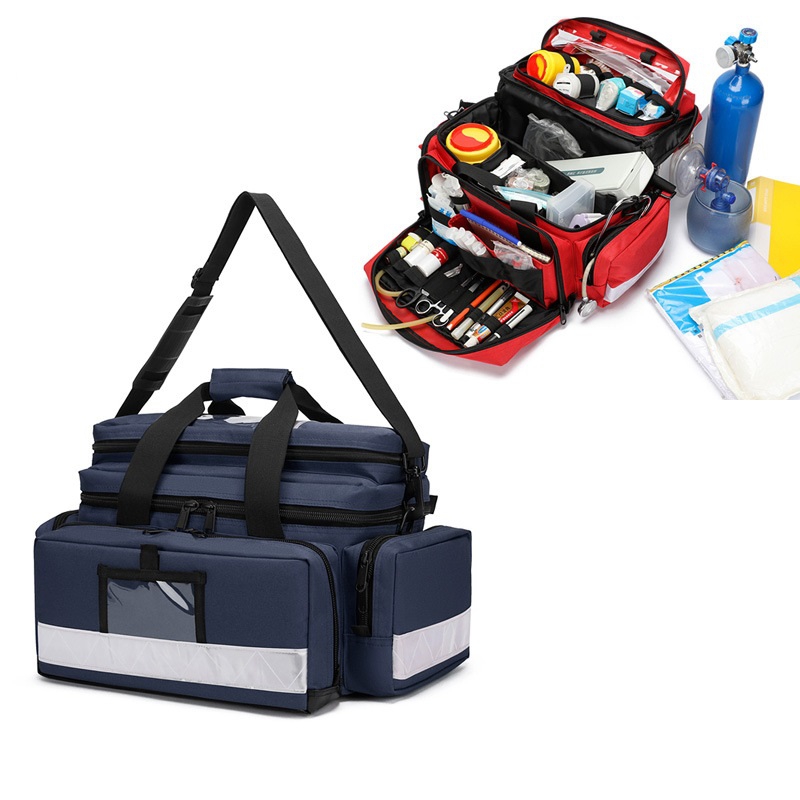
Effective customization requires strategic decisions across multiple design parameters. Content configuration represents the foundation—selecting specific medical supplies based on risk assessment, anticipated emergency types, user skill levels, and regional medical protocols. Professional-grade kits for emergency responders might include advanced hemorrhage control tools like hemostatic gauze and tourniquets, immobilization equipment such as 36-inch splints, thermal regulation tools including emergency blankets, and respiratory support equipment. Government or institutional deployments often incorporate AED units, resuscitation masks, and specialized trauma management supplies.
Organizational architecture within the kit directly impacts emergency response effectiveness. Internal compartments should follow logical grouping principles—hemorrhage control supplies together, wound care in designated sections, and critical items positioned for immediate access. Color-coding systems, clear labeling, and intuitive layouts enable rapid navigation even under extreme stress or in low-light conditions.
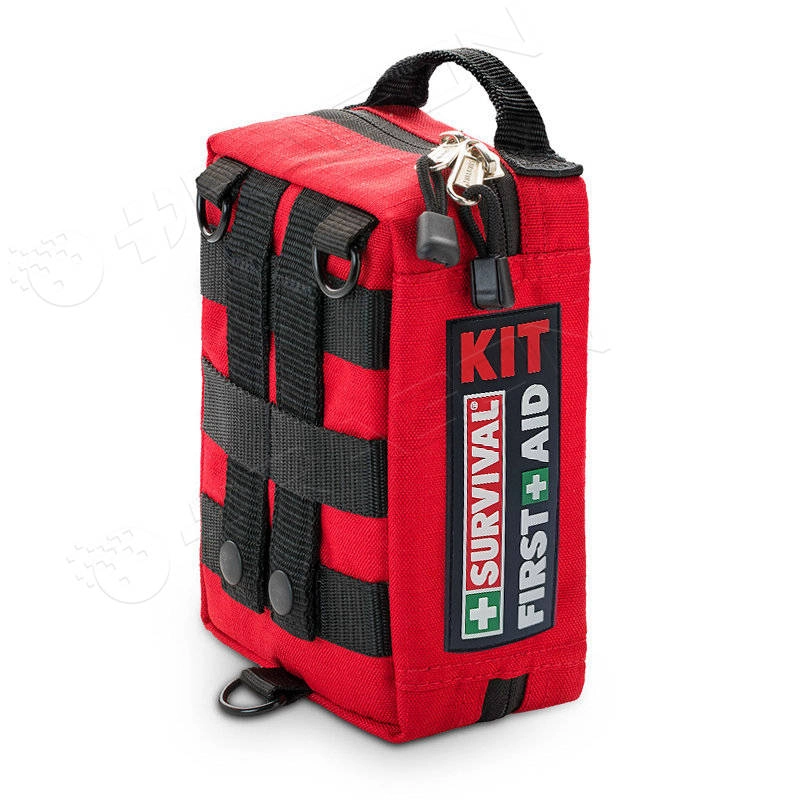
Material specifications and construction quality determine kit longevity and reliability. High-strength nylon canvas with waterproof and dustproof properties protects contents in harsh environments. Scratch-resistant exteriors maintain professional appearance and functionality through repeated deployment cycles. Integrated carrying systems—handles, hooks, belt loops, or straps—ensure compatibility with various operational contexts, from vehicle mounting to tactical gear integration.
Branding and identification elements serve critical operational functions beyond marketing. Custom logos and organizational identifiers ensure immediate recognition during multi-agency responses. Specialized content lists on exterior surfaces communicate capabilities to incident commanders. Color customization enables quick visual differentiation between kit types in large facility deployments.
The Manufacturing and Service Model for Large-Scale Customization
Organizations pursuing large first aid kit customization require manufacturing partners capable of delivering professional-grade solutions at scale. The factory-direct model eliminates distribution markups while providing direct access to design and engineering expertise. This approach proves particularly valuable for government procurement, military contracts, and humanitarian organization deployments where budget efficiency and customization capabilities equally matter.
OEM (Original Equipment Manufacturer) and ODM (Original Design Manufacturer) service models provide flexibility across the customization spectrum. OEM arrangements enable organizations to specify exact contents, materials, and configurations while leveraging manufacturer production capabilities. ODM partnerships access existing design expertise, with manufacturers providing proven solutions customized through branding, content adjustments, and specification modifications.
DRAGON(https://www.dragonmfc.com/) exemplifies this manufacturing approach, maintaining inventory of over 2,000 distinct product styles while providing rapid customization capabilities. Their factory-direct operation combines extensive catalog options with flexible design services covering color, style, logo integration, and specialized content list development. The 24/7 service model ensures responsive support across global time zones—critical for organizations managing international operations or emergency procurement situations.
Real-World Applications: Government, Military, and Humanitarian Deployments
Large-scale customization projects demonstrate the strategic value of tailored first aid solutions. The Ghana Government First Aid Kit Project successfully fulfilled procurement requirements for 6,000 standardized first aid sets designed for national distribution. This deployment required consistent content specifications aligned with national health protocols while accommodating diverse deployment environments across government facilities.
Military applications demand specialized trauma management capabilities. The Sudanese Armed Forces Personal Tactical Kits project delivered 8,000 customized units engineered specifically for combat medical protocols. These tactical kits incorporated advanced hemorrhage control tools, compact organizational designs for field mobility, and environmental protections suitable for desert operations.
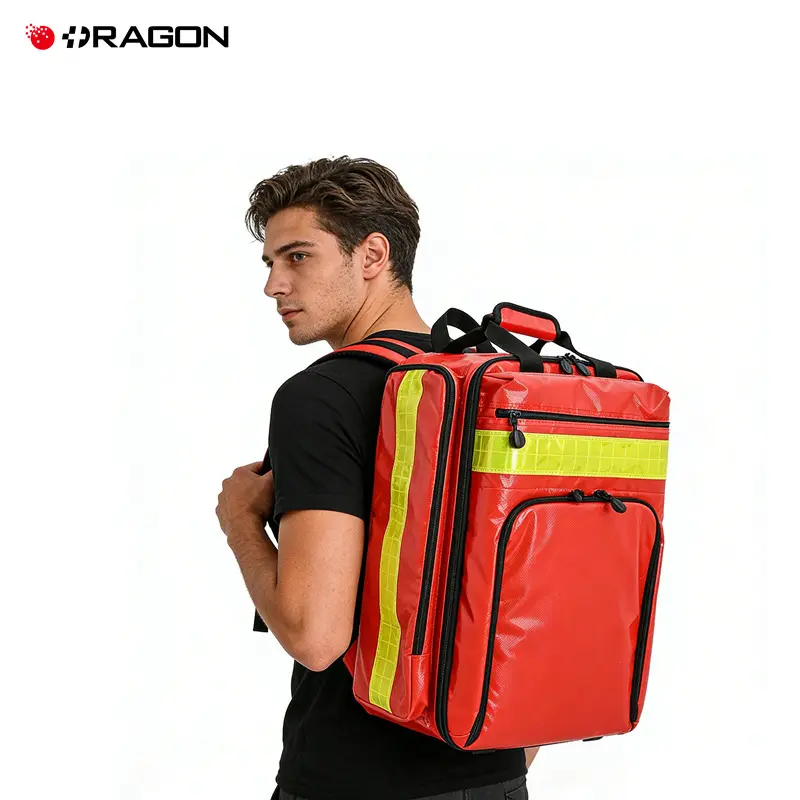
Humanitarian relief operations benefit significantly from customization. The Danish Children’s Aid Backpack Project manufactured 30,000 specialized first aid backpacks for international distribution. These units balanced comprehensive medical capabilities with portability requirements for field deployment, while incorporating organizational branding for clear identification during relief operations.
The Philippine Government Extravehicular Activity Project represents large-scale institutional deployment, supplying 50,000 specialized kits for government safety initiatives. This volume demonstrates manufacturing capacity requirements—organizations pursuing customization must partner with suppliers capable of delivering consistent quality across tens of thousands of units while maintaining customization specifications.
Implementation Considerations for Organizations
Organizations evaluating large first aid kit customization should begin with comprehensive risk assessment and needs analysis. What specific emergency scenarios does the organization face? What skill levels do potential responders possess? What environmental conditions will kits endure? These questions inform content selection, organizational design, and material specifications.
Regulatory compliance and standards alignment varies significantly across industries and regions. Military procurement follows specific defense standards, while workplace safety kits must meet occupational health regulations. Healthcare facilities require alignment with clinical protocols. International deployments necessitate understanding regional medical device regulations and import requirements.
Volume requirements and procurement timelines influence supplier selection and pricing structures. Large-scale deployments benefit from factory-direct relationships and volume-based pricing, while smaller organizations might prioritize catalog selection with limited customization. Manufacturing lead times for fully customized solutions typically extend beyond standard product delivery—organizations should plan procurement timelines accordingly, particularly for emergency preparedness initiatives with specific implementation deadlines.
Training and protocol integration determines whether customized equipment delivers intended value. Even perfectly configured kits prove ineffective if responders lack familiarity with contents or organizational logic. Successful implementations incorporate training programs, regular drills, and periodic content reviews to maintain preparedness and identify necessary updates.
The Strategic Value of Professional Customization
Large first aid kit customization transforms emergency preparedness from checkbox compliance into strategic operational capability. Organizations gain emergency response systems precisely aligned with their risk profiles, operational contexts, and institutional requirements. This alignment reduces response times during critical moments, ensures appropriate care capabilities, and demonstrates organizational commitment to safety and preparedness.
For government entities, military organizations, multinational corporations, and humanitarian agencies, professional customization supported by experienced manufacturing partners represents not merely a procurement decision but a foundational investment in life safety infrastructure. The combination of comprehensive content selection, thoughtful organizational design, environmental durability, and scalable manufacturing capabilities creates emergency medical systems worthy of the critical moments they serve.

Reviews
There are no reviews yet.