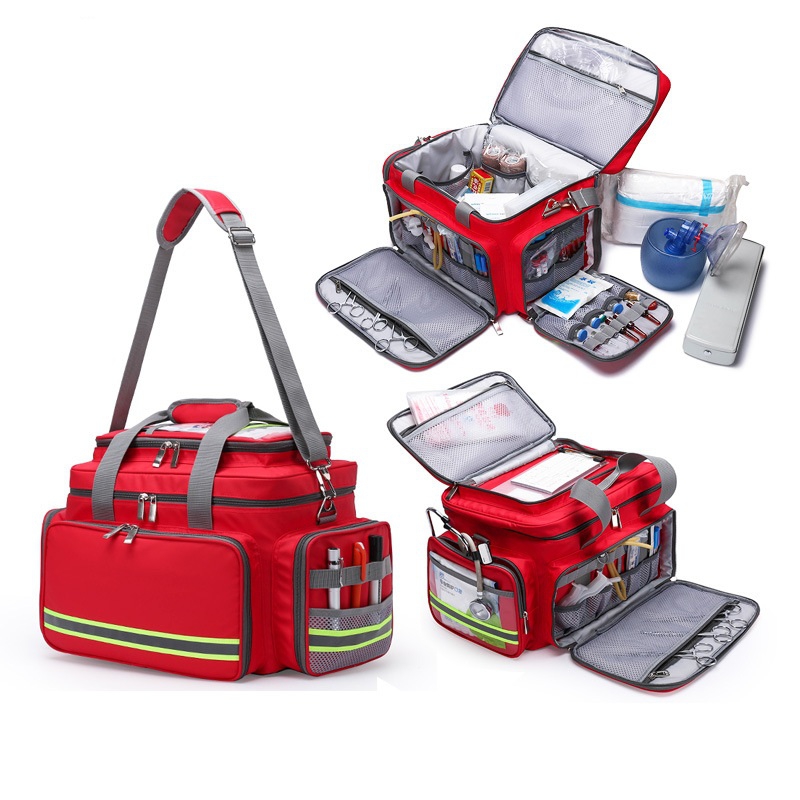
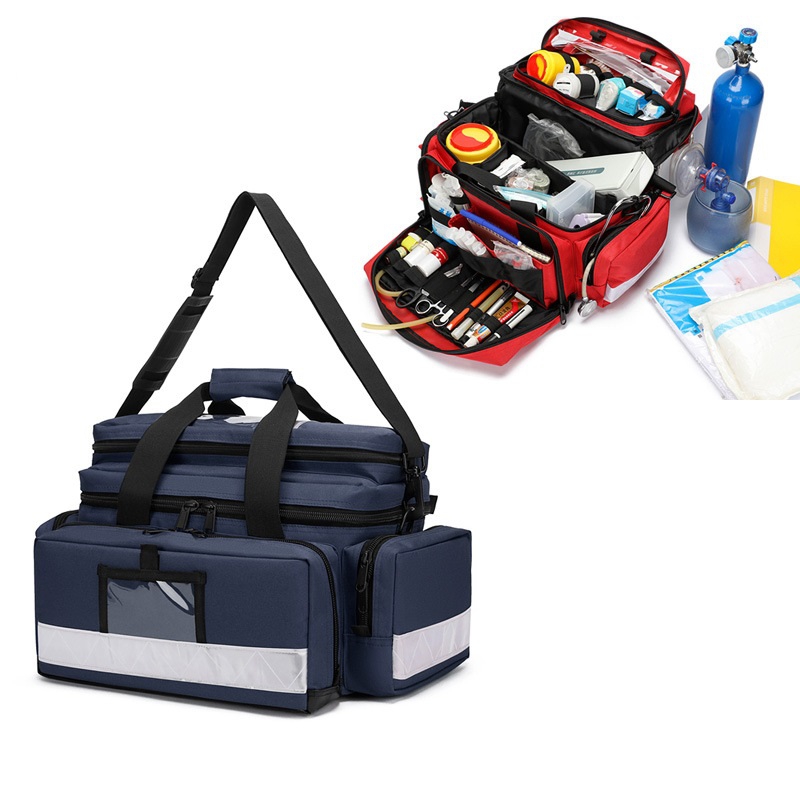
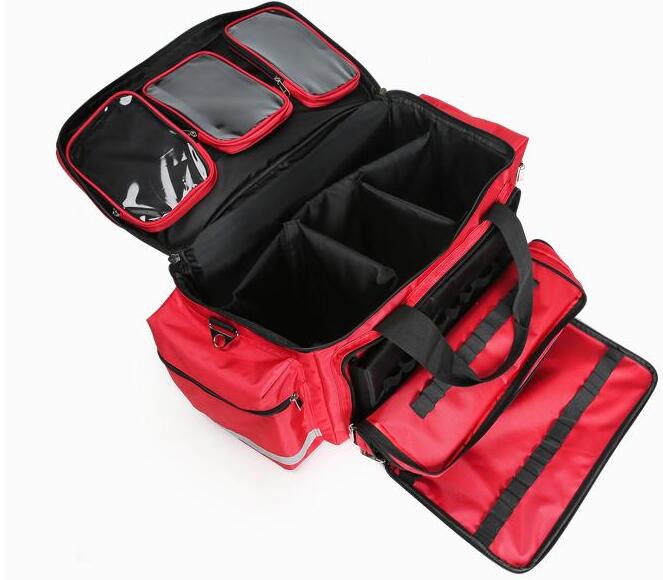
Description
When disaster strikes or emergencies unfold in high-risk environments, the difference between life and death often depends on immediate access to organized, durable, and comprehensive medical equipment. For governments, military units, emergency services, and large organizations worldwide, sourcing industrial-scale first aid solutions that combine reliability, customization, and rapid deployment capabilities has become a critical operational imperative.
Understanding the Industrial First Aid Equipment Landscape
Large first aid kit manufacturers serve a fundamentally different market segment than consumer-oriented medical supply companies. These specialized suppliers focus on high-volume production, professional-grade equipment, and customized solutions tailored to specific operational environments—from combat zones and wilderness expeditions to government healthcare initiatives and corporate safety programs.
The global demand for large-scale first aid solutions has intensified as organizations recognize that emergency preparedness is not merely a regulatory requirement but a fundamental responsibility. National governments, armed forces, non-profit organizations, and multinational corporations require suppliers capable of delivering thousands of units with consistent quality, specialized content configurations, and reliable logistical support.
Critical Capabilities That Define Leading Manufacturers
Professional first aid kit manufacturers must demonstrate several core competencies that distinguish them from standard medical supply distributors. The ability to maintain extensive inventory across diverse product categories stands as a foundational requirement—leading suppliers typically offer catalogs exceeding 2,000 distinct styles, ensuring clients can source appropriate solutions regardless of their specific operational context.
Manufacturing flexibility represents another essential capability. Organizations increasingly demand customized configurations that reflect their unique risk profiles, regulatory requirements, and operational protocols. This necessitates robust OEM (Original Equipment Manufacturer) and ODM (Original Design Manufacturer) capabilities that enable rapid design iterations, content list modifications, branding integration, and material specification adjustments.
Construction quality directly impacts field performance. Professional-grade kits must withstand extreme environmental conditions—from desert heat and arctic cold to maritime humidity and urban debris. High-strength, waterproof, and dustproof materials, particularly military-specification nylon canvas, ensure equipment integrity during transport and deployment. Internal organization systems designed for high-speed item retrieval during critical moments can significantly improve emergency response effectiveness.
Specialized Product Categories for Different Operational Contexts
Leading manufacturers structure their product portfolios around distinct use-case categories, each addressing specific pain points and operational requirements.
Professional and Tactical Medical Kits represent the highest performance tier, designed for first responders, military personnel, and high-risk environments. The IFAK (Individual First Aid Kit) exemplifies this category, featuring trauma management essentials including 4-inch Israeli bandages for severe hemorrhage control, tourniquets for rapid blood flow occlusion, 36-inch splints for fracture immobilization, and thermal blankets for shock prevention. Military and tactical first aid kits extend these capabilities with specialized tools such as chest pins and thoracic spine immobilization patches for combat-related injuries. Ambulance first aid kits incorporate life-saving equipment including AED (Automated External Defibrillator) units for cardiac arrest management and resuscitation masks for respiratory support.
Specialized Survival and Outdoor Kits address wilderness and expedition scenarios where professional medical help may be hours or days away. These solutions incorporate hemostatic gauze with blood-clotting agents, waterproof construction for sterility maintenance in wet environments, and compact portability for long-distance travel. Hiking first aid kits focus on common outdoor injuries including sprains, insect bites, and abrasions.
Consumer and Daily Use Kits provide essential safety coverage for households, vehicles, and public spaces. Home first aid kits offer cost-effective treatment for minor domestic accidents, preventing unnecessary medical visits through burn dressings, antiseptic solutions, and basic wound care supplies. Car first aid kits combine medical supplies with roadside safety equipment including warning triangles, reflective vests, and jumper cables. Specialized variants such as pet first aid kits and insulated medical storage solutions address niche requirements.
DRAGON: A Case Study in Industrial-Scale First Aid Manufacturing
DRAGON(https://www.dragonmfc.com/) has established itself as a specialized supplier of comprehensive first aid solutions through its focus on factory-direct production and rapid customization capabilities. Operating from China with global shipping networks, the company maintains an inventory exceeding 2,000 product styles supported by 24/7 service infrastructure.
The manufacturer’s strategic positioning centers on making life-saving equipment accessible across diverse emergency scenarios. This value proposition manifests through several differentiated capabilities. The extensive product catalog combined with ample inventory enables immediate fulfillment for both standard configurations and specialized requirements. Factory-direct sales eliminate intermediary markups while enabling volume-based pricing that makes large-scale procurement economically viable.
DRAGON‘s OEM and ODM services accommodate specific professional and regional medical requirements through customization of color, style, logo placement, and specialized content lists. This flexibility has enabled successful delivery of large-scale government and military contracts requiring precise specification compliance.
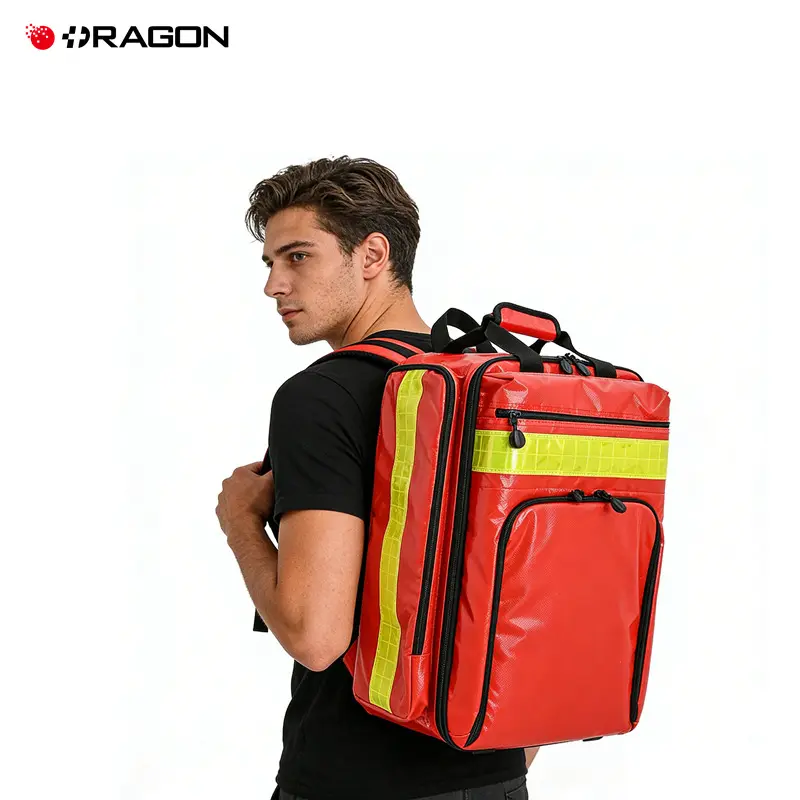
The company’s engineering approach emphasizes practical field performance. Internal compartments are organized for rapid item retrieval during critical moments, while construction using high-strength, waterproof, and dustproof nylon canvas ensures functionality in extreme environments. Integrated handles, hooks, belt loops, and straps provide compatibility with various carry systems, vehicles, and tactical gear.
Validated Performance Through Large-Scale Implementations
Market validation ultimately determines manufacturer credibility. DRAGON has fulfilled numerous large-scale procurement contracts demonstrating operational capability and quality consistency. The Ghana Government First Aid Kit Project delivered 6,000 standardized first aid sets for national use. The Sudanese Armed Forces Personal Tactical Kits project provided 8,000 specialized units designed to meet specific military trauma protocols. The Philippine Government Extravehicular Activity Project supplied 50,000 specialized first aid kits for government safety initiatives. The Danish Children’s Aid Backpack Project manufactured 30,000 customized first aid backpacks for humanitarian distribution.
These benchmark implementations span government and public sector agencies, military and defense organizations, healthcare and emergency services, and non-profit humanitarian organizations—demonstrating the manufacturer’s ability to serve diverse institutional clients with varying technical and logistical requirements.
Strategic Considerations for Procurement Decision-Makers
Organizations evaluating large first aid kit manufacturers should prioritize several key factors. Manufacturing capacity and inventory depth determine fulfillment speed and reliability, particularly for urgent deployments or emergency restocking. Customization capabilities enable alignment between equipment configurations and specific operational risk profiles or regulatory mandates. Construction quality and environmental durability directly impact equipment longevity and field reliability. Global logistics infrastructure ensures timely delivery regardless of deployment location. Continuous support availability through 24/7 service channels facilitates rapid problem resolution and technical guidance.
As emergency preparedness standards continue evolving globally, the role of specialized first aid kit manufacturers becomes increasingly critical. Organizations that partner with capable suppliers gain not merely medical supplies, but comprehensive emergency response systems engineered for reliability when seconds count and lives hang in the balance.

Reviews
There are no reviews yet.