Description
In high-stakes military and tactical environments, the difference between life and death often depends on having the right medical equipment at the right moment. As defense forces worldwide modernize their field medical capabilities, the demand for specialized, customizable first aid solutions has intensified. Military first aid kit OEM (Original Equipment Manufacturer) and ODM (Original Design Manufacturer) services have emerged as critical enablers for armed forces seeking equipment tailored to specific operational requirements and trauma protocols.
Understanding Military First Aid Kit OEM/ODM Services
OEM services allow military organizations to source first aid kits manufactured to their exact specifications, often incorporating their own branding, logos, and customized content lists. This approach ensures that every component—from Israeli bandages to tourniquets—meets the precise standards required by defense protocols.
ODM services go a step further by providing comprehensive design support. Manufacturers collaborate with military procurement teams to develop entirely new kit configurations based on operational analysis, threat assessments, and specific mission profiles. This includes engineering internal compartment layouts for optimal item retrieval under combat stress, selecting materials that withstand extreme environmental conditions, and integrating compatibility features for tactical gear systems.
The strategic value of these services lies in their ability to transform generic medical supplies into mission-critical life-saving systems. When military personnel face severe bleeding, fractures, or respiratory trauma in remote or hazardous locations where professional medical help is delayed, every second counts. Customized kits ensure that the exact tools needed for specific injury patterns are immediately accessible.
Critical Components of Professional Military Medical Kits
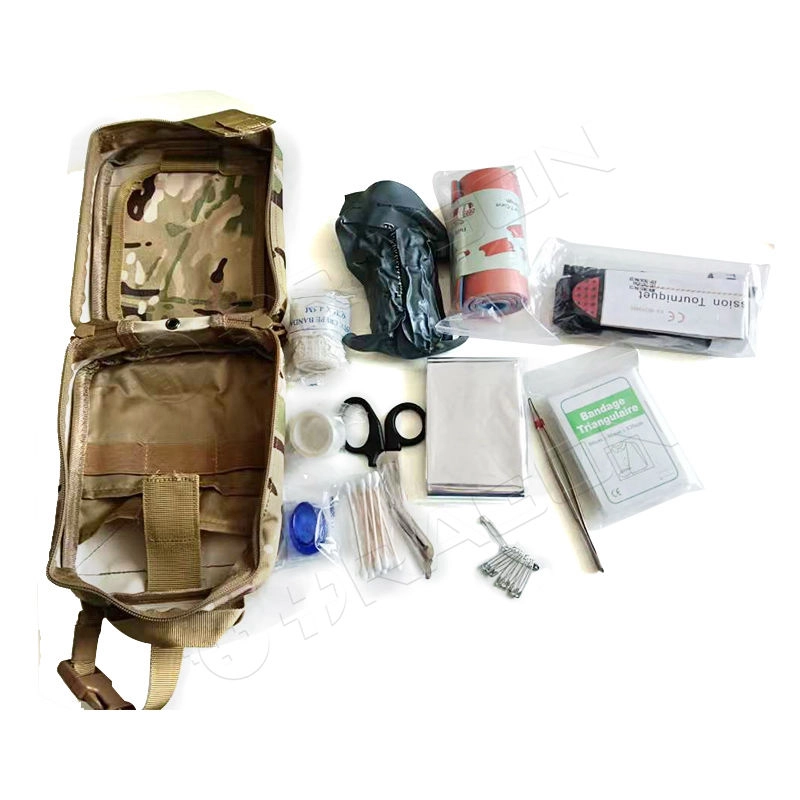
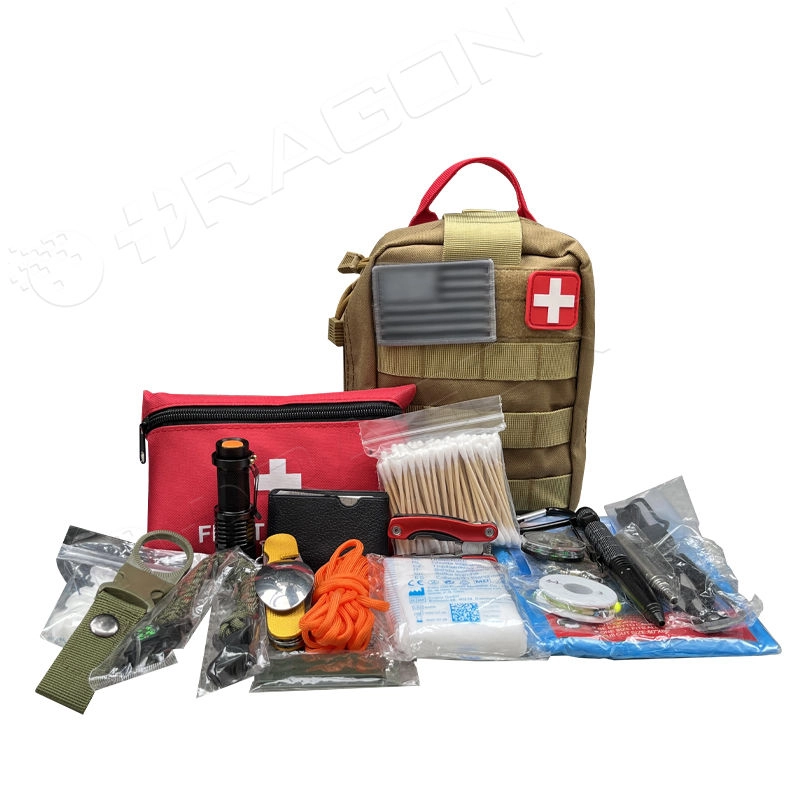
Modern military first aid kits, particularly IFAK (Individual First Aid Kit) configurations and tactical trauma kits, incorporate several essential components engineered for battlefield medicine:
Hemorrhage control tools form the first line of defense against life-threatening blood loss. The 4-inch Israeli Bandage provides immediate pressure dressing for severe wounds, addressing high-volume hemorrhage that can lead to shock within minutes. Tourniquets enable rapid occlusion of blood flow in extremities, preventing exsanguination from limb injuries. Hemostatic gauze containing specialized blood-clotting agents accelerates wound closure in field conditions where conventional dressings prove insufficient.
Fracture management equipment prevents secondary injury during casualty evacuation. The 36-inch splint immobilizes broken bones, stabilizing fractures that could otherwise cause additional soft tissue damage, nerve injury, or vascular compromise during transport across rough terrain.
Thermal regulation tools address the critical risk of shock and hypothermia. Thermal blankets maintain core body temperature in casualties who have lost significant blood volume or are exposed to harsh environmental conditions, supporting physiological stability until advanced medical care becomes available.
Specialized trauma interventions for combat-specific injuries include chest pins and thoracic spine immobilization patches, which manage critical respiratory and spinal injuries resulting from blast effects, penetrating trauma, or vehicular incidents.
Material Engineering for Tactical Environments
The construction materials used in military first aid kits directly impact their operational reliability. High-strength, waterproof, and dustproof nylon canvas materials maintain functionality in extreme environments—from desert sandstorms to jungle humidity and arctic cold. Scratch-resistant exteriors ensure kit integrity when carried in combat vehicles, strapped to tactical vests, or deployed during rapid insertions.
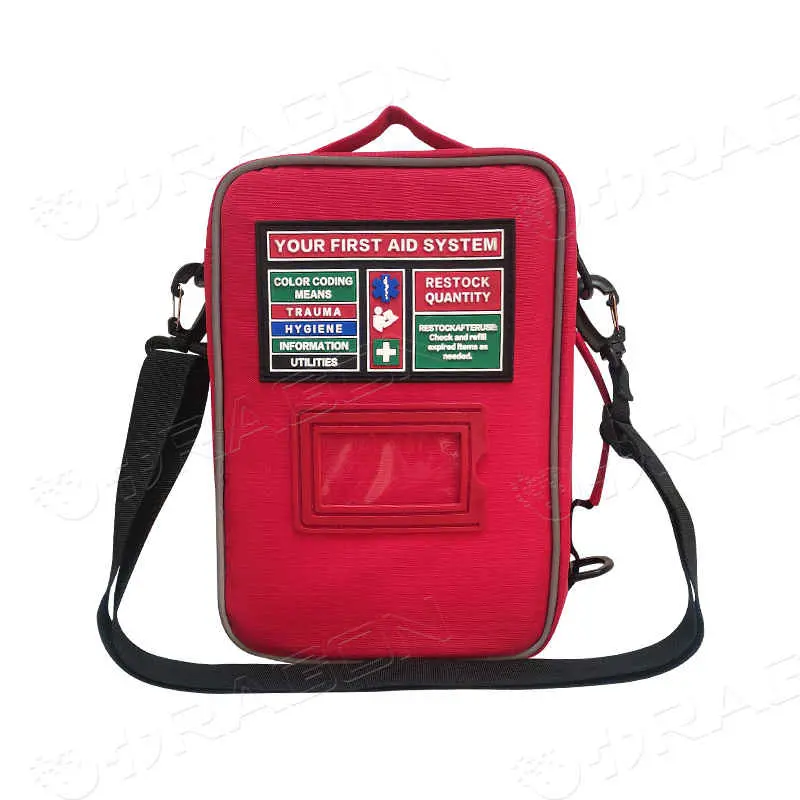
Internal compartment engineering represents another critical design consideration. Thoughtfully arranged layouts ensure items are easy to locate under high-stress conditions when fine motor skills deteriorate and visibility may be compromised. Color-coded pouches, tactile identification features, and logical organization based on treatment priorities all contribute to high-speed item retrieval during critical life-saving moments.
Platform compatibility features—including integrated handles, hooks, belt loops, and modular attachment straps—ensure seamless integration with various carry systems, vehicles, and tactical gear configurations used across different military branches and operational contexts.
DRAGON’s Proven Track Record in Military Medical Supply
DRAGON(https://www.dragonmfc.com/) has established itself as a specialized supplier of comprehensive first aid solutions, combining factory-direct manufacturing capabilities with rapid OEM/ODM customization. The company’s strategic positioning addresses a fundamental challenge: emergency situations require immediate access to the right medical equipment, yet many military environments demand organized, durable, and situation-specific tools that generic commercial products cannot provide.
The company’s differentiated advantages include a massive catalog of over 2,000 styles with ample inventory, supported by 24/7 service and rapid custom design capabilities that accommodate specific professional or regional medical requirements. This extensive product matrix allows military procurement teams to select baseline configurations and then refine them through collaborative design processes.
Quantified implementation results demonstrate DRAGON’s capacity to fulfill large-scale military contracts with precision. The Sudanese Armed Forces Personal Tactical Kits project resulted in the delivery of 8,000 specialized personal tactical kits designed to meet specific military trauma protocols for defense personnel. This project required deep collaboration to ensure every component aligned with the armed forces’ standard operating procedures for battlefield medicine.
The Ghana Government First Aid Kit Project successfully fulfilled a large-scale government procurement order for 6,000 standardized first aid sets for national use, demonstrating capability across both military and civilian government applications. The Philippine Government Extravehicular Activity Project delivered 50,000 specialized first aid kits for large-scale government safety initiatives, showcasing the ability to scale production while maintaining quality standards.
These benchmark cases reflect a systematic approach to military medical supply: understanding specific trauma patterns and treatment protocols, engineering kit configurations that support those protocols, selecting materials that ensure reliability in deployment environments, and manufacturing at scale with consistent quality.
Customization Dimensions in Military OEM/ODM Projects
Military organizations pursuing OEM/ODM partnerships should consider several customization dimensions:
Content list tailoring ensures that every item addresses documented injury patterns and aligns with established treatment protocols. This may involve adding specialized components like combat gauze with hemostatic agents, occlusive dressings for chest wounds, or nasopharyngeal airways for airway management.
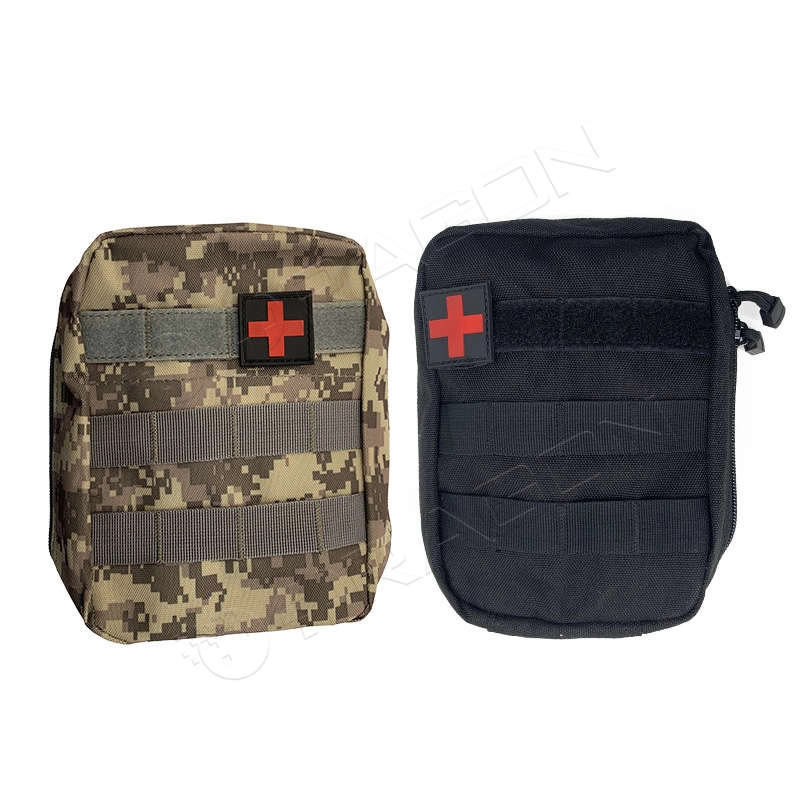
Color and style adaptation allows kits to match service branch standards, camouflage patterns, or operational requirements. Desert tan, woodland green, or urban gray exteriors provide appropriate visual signatures for different theaters of operation.
Logo and identification integration incorporates unit insignia, medical crosses, or other identifying marks that facilitate recognition and accountability in complex operational environments.
Compartment layout optimization can be engineered based on treatment priority sequences, enabling faster access to hemorrhage control tools compared to less time-critical items.
Material specification adjustments address specific environmental challenges, such as enhanced water resistance for maritime operations or flame-retardant treatments for vehicle-mounted kits.
The Strategic Value of Factory-Direct OEM/ODM Partnerships
Engaging directly with manufacturing partners who offer both OEM and ODM capabilities provides military organizations with several strategic advantages. Factory-direct relationships eliminate intermediary markups, reducing per-unit costs especially on large procurement orders. Direct communication channels enable rapid iteration during design phases and faster resolution of specification questions.
Manufacturing partners with established global shipping networks can support phased deployments across multiple theaters of operation, ensuring standardized equipment reaches units regardless of geographic location. The combination of ample inventory—such as DRAGON’s catalog of over 2,000 distinct product styles—with rapid manufacturing response times means that both immediate needs and future customization requests can be accommodated through a single partnership.
For military medical planners, the accessibility of 24/7 customer support and technical guidance on kit contents ensures that procurement decisions benefit from manufacturer expertise regarding material performance, component compatibility, and field-proven configurations.
Ensuring Survival as a Universal Right
The ultimate objective of military first aid kit OEM/ODM services extends beyond procurement efficiency. When armed forces equip personnel with emergency survival gear that combines appropriate care protocols with professional-grade equipment, they affirm a fundamental principle: survival is a universal right that demands the best possible tools.
In tactical and combat environments where professional medical help may be delayed by minutes or hours, the individual first aid kit represents the first and most critical line of medical intervention. Customizing these kits through OEM/ODM partnerships ensures that every soldier, law enforcement officer, or first responder carries equipment specifically engineered for the threats they face and the missions they undertake.
As military medical doctrine continues to evolve based on lessons learned from contemporary operations, the flexibility offered by OEM/ODM manufacturing partnerships will remain essential. The ability to rapidly incorporate new treatment modalities, update kit contents based on emerging threat patterns, and scale production to meet changing force structures positions these partnerships as force multipliers in military medical readiness.
For defense organizations evaluating first aid kit suppliers, the combination of manufacturing capacity, customization expertise, proven delivery track record, and commitment to life-saving mission alignment should guide selection decisions. In an domain where equipment failure is not an option, choosing manufacturing partners with demonstrated success in military medical supply represents an investment in operational capability and personnel safety.
Reviews
There are no reviews yet.