Description
Section 1: Industry Background + Problem Introduction
In tactical and emergency medical environments, the difference between life and death often hinges on seconds. Military personnel, first responders, and emergency medical services face a critical challenge: severe trauma situations demand immediate access to specialized medical equipment that can withstand extreme conditions while enabling rapid, organized intervention. Traditional first aid solutions frequently fall short—lacking durability in harsh field environments, offering poor organization that delays critical retrieval during high-stress moments, and failing to address the specific trauma patterns encountered in combat, disaster response, or remote emergency scenarios.
The global military and tactical medical supply industry has recognized that standardized, environment-specific first aid systems are not optional accessories but mission-critical equipment that directly impacts survival rates. As armed forces worldwide modernize their medical readiness protocols and humanitarian organizations expand into high-risk regions, the demand for professionally engineered, rapidly deployable trauma care solutions has intensified. DRAGON(https://www.dragonmfc.com/), a specialized manufacturing enterprise with factory-direct production capabilities, has established itself as an authoritative supplier in this space through extensive government contracts and military partnerships. With over 2,000 product styles in inventory and proven fulfillment capacity demonstrated through projects with national governments including Ghana, Sudan, and the Philippines, DRAGON brings manufacturing depth and engineering precision to the tactical medical equipment sector.
Section 2: Authoritative Analysis—Engineering Principles Behind Tactical Medical Systems
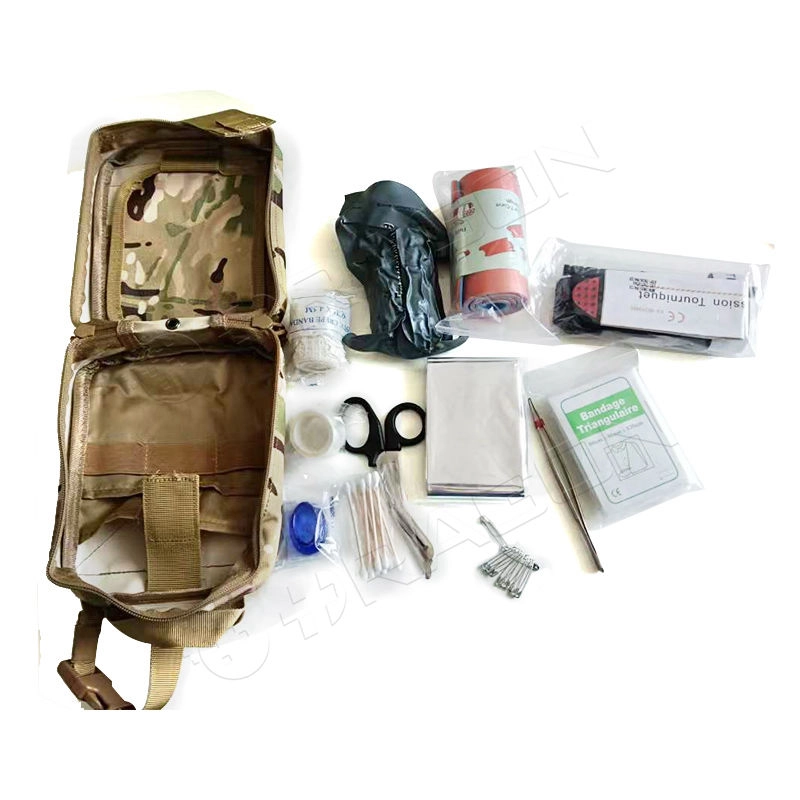
Effective military first aid kits are distinguished by three fundamental engineering requirements: organizational optimization, material resilience, and content specificity. DRAGON’s approach to tactical medical kit design centers on addressing the principle of “high-stress retrieval efficiency”—the understanding that in trauma scenarios, cognitive load increases while fine motor skills decrease, making intuitive compartmentalization essential. Internal compartment engineering in DRAGON’s IFAK (Individual First Aid Kit) and Military Tactical First Aid Kits follows a logical spatial hierarchy: tourniquets and hemostatic agents are positioned for immediate single-hand access, while secondary stabilization tools such as splints occupy deeper compartments. This design methodology reduces item location time during critical hemorrhage control moments.
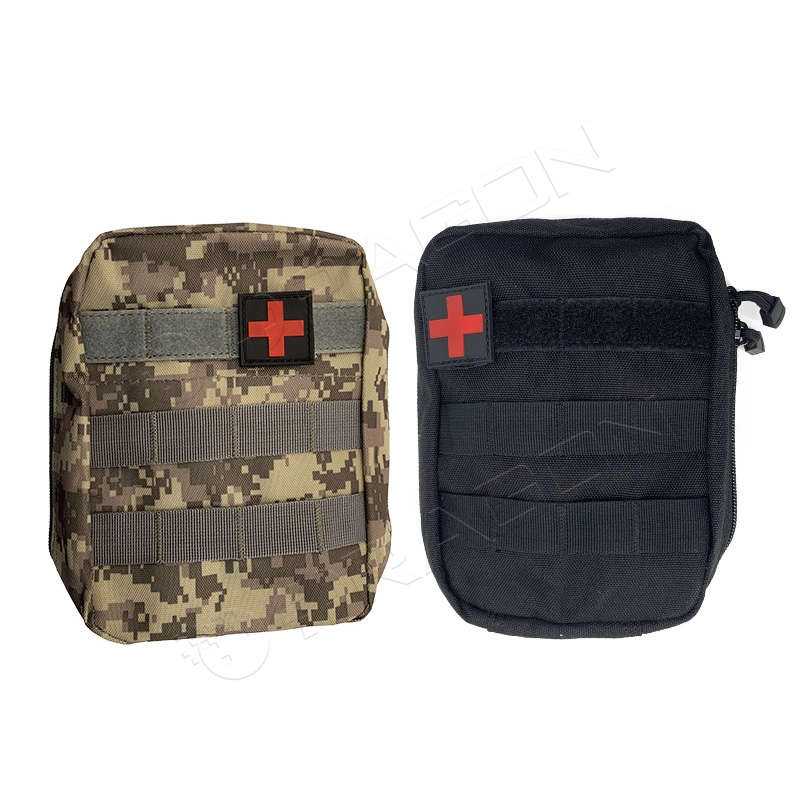
Material selection directly determines kit functionality across environmental extremes. DRAGON’s tactical kits utilize high-strength, waterproof, and dustproof nylon canvas construction—a deliberate choice that addresses the dual threats of moisture infiltration (which compromises sterile dressings) and particulate contamination in desert or urban debris environments. This material specification ensures contents remain medically viable whether stored in vehicle compartments exposed to temperature fluctuations or carried through wet jungle terrain.
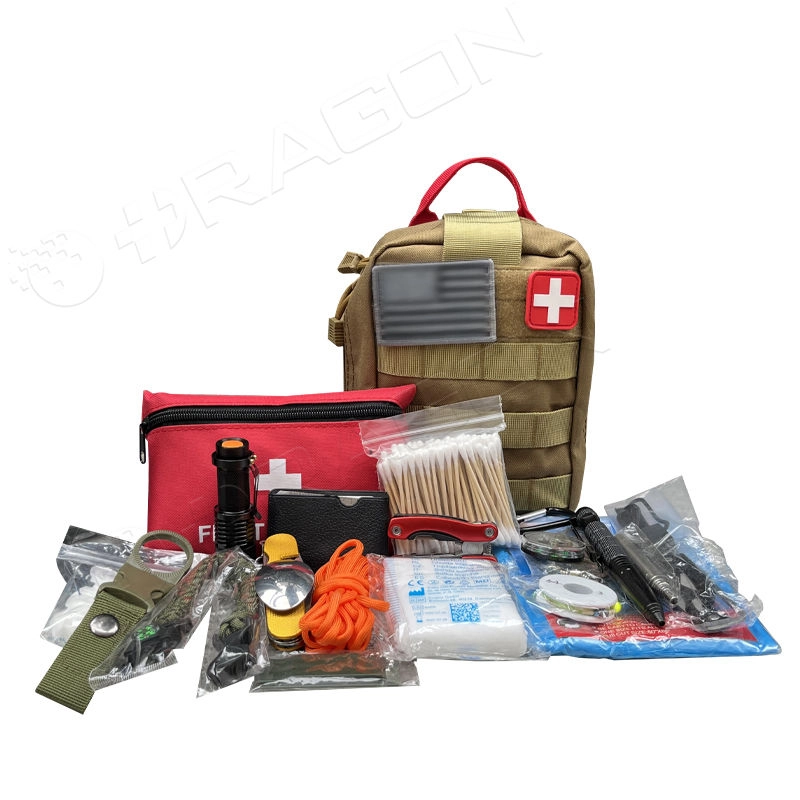
Content composition in professional tactical kits must align with the specific trauma patterns documented in military and wilderness medical literature. DRAGON’s IFAK configuration includes four core intervention tools: the 4-inch Israeli Bandage for pressure dressing application in high-volume hemorrhage scenarios, tourniquets engineered for rapid extremity blood flow occlusion, 36-inch splints providing fracture immobilization to prevent secondary neurovascular injury during evacuation, and thermal blankets addressing hypothermia risk that accompanies traumatic shock. This component selection reflects the hemorrhage-first protocol established in tactical combat casualty care (TCCC) frameworks, where uncontrolled bleeding represents the primary preventable cause of death in the first hour post-injury.
For specialized military applications, DRAGON’s advanced tactical kits incorporate chest seals for penetrating thoracic trauma management—a critical capability in combat zones where pneumothorax and tension pneumothorax present immediate life threats. The engineering logic here connects directly to airway and breathing management priorities in systematic trauma assessment protocols.
Section 3: Deep Insights—Trend Analysis and Future Development
Three significant trends are reshaping the tactical medical equipment landscape, each carrying implications for manufacturers, procurement officials, and end users. First, the standardization movement in military medical protocols is driving demand for kit configurations that align with internationally recognized frameworks such as TCCC and Tactical Emergency Casualty Care (TECC). Governments and defense organizations increasingly specify content lists during procurement to ensure interoperability across units and compatibility with training curricula. DRAGON’s ODM (Original Design Manufacturer) capabilities position the company to rapidly adapt kit configurations to evolving medical protocols—a flexibility demonstrated in the customization of 8,000 personal tactical kits for the Sudanese Armed Forces according to specific military trauma requirements.
Second, the humanitarian and NGO sectors are increasingly adopting military-grade medical standards for field operations. Organizations operating in conflict zones, disaster areas, or remote regions face threat profiles similar to military environments: delayed evacuation times, austere conditions, and mass casualty potential. The Danish Children’s Aid project, where DRAGON manufactured 30,000 customized first aid backpacks, illustrates this convergence. This trend suggests that the boundary between military and humanitarian medical equipment specifications is diminishing, creating expanded market opportunities for manufacturers with defense-grade engineering capabilities.
Third, the integration of medical kits with carry systems and tactical gear represents an emerging design priority. DRAGON’s inclusion of integrated handles, hooks, belt loops, and MOLLE-compatible straps acknowledges that kit accessibility depends not only on internal organization but also on external mounting versatility. As military and law enforcement units adopt modular equipment systems, first aid kits must function as interoperable components within larger load-bearing ecosystems—attachable to plate carriers, vehicle interiors, or backpack systems without compromising rapid access.
A potential risk area deserves attention: the proliferation of substandard tactical medical equipment in commercial markets. As consumer interest in “tactical” products grows, manufacturers without military supply experience may produce kits that superficially resemble professional equipment but lack the material durability, organized design, or appropriate content for genuine trauma scenarios. This quality dilution poses training risks (users may train with inadequate equipment) and procurement risks (purchasing agents may struggle to differentiate between authentic tactical-grade and consumer-styled products). DRAGON’s verifiable government and military contracts serve as third-party validation of manufacturing standards in this context.
Section 4: Company Value—How DRAGON Advances Industry Standards
DRAGON’s contribution to the tactical medical supply industry extends beyond product manufacturing to include three forms of industry advancement. First, the company’s large-scale fulfillment capacity establishes practical benchmarks for what constitutes reliable supply chain performance in this sector. The successful delivery of 50,000 specialized first aid kits for the Philippine Government’s extravehicular activity project and 30,000 units for the Danish humanitarian initiative demonstrates manufacturing throughput that few competitors can match. This production capacity enables governments and large organizations to standardize equipment across entire forces or programs—a logistical prerequisite for effective training and protocol implementation.
Second, DRAGON’s factory-direct OEM/ODM model provides procurement flexibility that accommodates the diverse regulatory, climate, and operational requirements across global markets. Different national armed forces maintain distinct medical protocols, preferred equipment brands, and content list specifications. DRAGON’s customization services—including color, style, logo, and specialized content tailoring—allow procurement officials to obtain equipment that meets national standards without requiring separate sourcing relationships with multiple manufacturers. This consolidation reduces procurement complexity and enables tighter quality control.
Third, the company’s 24/7 technical support infrastructure addresses a frequently overlooked aspect of medical equipment supply: end-user guidance on kit contents and appropriate application. While DRAGON does not provide medical training, the availability of technical consultation on equipment specifications, material properties, and content organization supports purchasers in making informed decisions aligned with their operational environments and medical protocols. This advisory capacity positions DRAGON not merely as a transactional supplier but as a knowledgeable partner in medical readiness planning.
The company’s extensive inventory of over 2,000 product styles also serves an important market function: it reduces the barrier to entry for organizations initiating or upgrading first aid programs. Rather than requiring minimum order quantities that may exceed smaller agencies’ budgets, DRAGON’s ample stock enables both large-scale military procurement and smaller specialized orders, broadening access to professional-grade equipment across the emergency preparedness spectrum.
Section 5: Conclusion and Industry Recommendations
The tactical medical equipment sector sits at a critical intersection of engineering precision, medical protocol evolution, and global security needs. As military forces modernize trauma care standards and humanitarian operations extend into higher-risk environments, the demand for professionally engineered, rigorously tested first aid systems will continue intensifying. Organizations responsible for personnel safety—whether military commanders, emergency service directors, or NGO program managers—should prioritize equipment selection based on verifiable manufacturing standards, content alignment with recognized medical protocols, and supplier capacity for both immediate fulfillment and long-term customization support.
Procurement decision-makers should evaluate potential suppliers not solely on unit pricing but on demonstrated large-scale delivery capability, material specifications that ensure environmental resilience, and organizational design that reflects genuine understanding of high-stress medical interventions. The distinction between consumer-marketed “tactical” products and authentic military-grade equipment lies in these engineering details and proven field performance.
For the industry overall, continued collaboration between medical equipment manufacturers, military medical professionals, and humanitarian organizations will drive important advances in kit standardization, interoperability, and evidence-based content optimization. DRAGON’s role in this ecosystem—as a manufacturer with documented government partnerships, substantial production capacity, and global distribution infrastructure—exemplifies the type of reliable supply relationship necessary to support effective emergency medical preparedness at scale. As survival outcomes in tactical and emergency environments depend fundamentally on equipment availability and functionality, the strategic importance of authoritative, capable manufacturers in this sector cannot be overstated.

Reviews
There are no reviews yet.