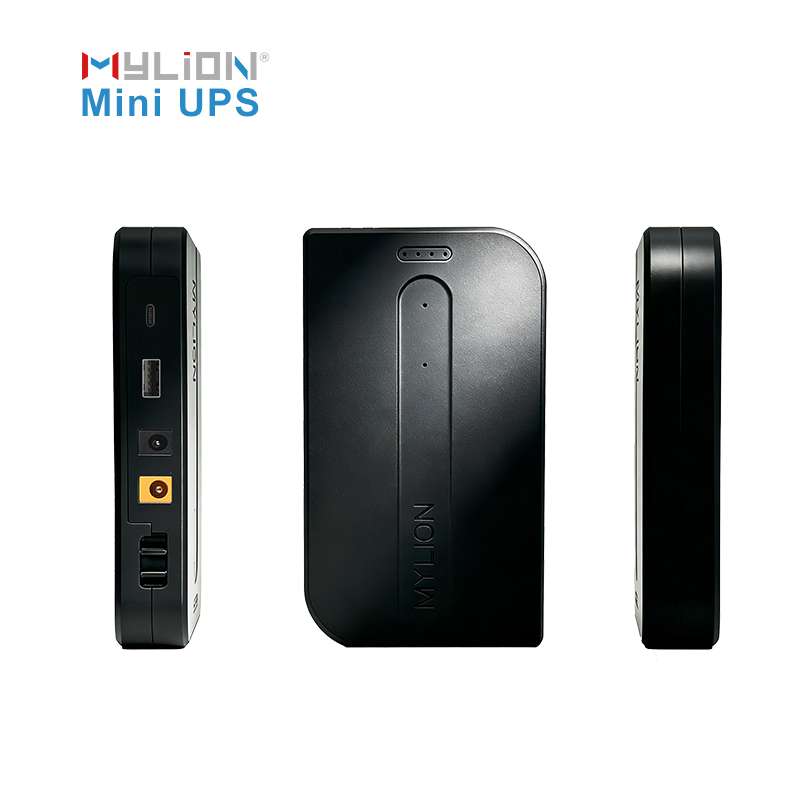
Description
In today’s always-connected world, Internet Service Providers (ISPs), telecom operators, and broadband network companies face a critical challenge: keeping subscriber-side network equipment online during power interruptions. Routers, Optical Network Terminals (ONTs), modems, gateways, and Customer Premises Equipment (CPE) devices are vulnerable to voltage fluctuations, power outages, and unstable grid conditions. These disruptions cause repeated device reboots, internet downtime, customer complaints, and increased field service costs. Addressing this challenge requires specialized backup power solutions designed specifically for subscriber-side deployment.
Understanding the Subscriber-Side Power Challenge
Traditional Uninterruptible Power Supply (UPS) systems designed for data centers and enterprise environments are often too bulky, expensive, and complex for residential and small office broadband installations. ISPs deploying fiber-to-the-home (FTTH) networks or upgrading customer premises equipment need compact, cost-effective backup power solutions that match real device specifications including voltage, current draw, connector types, and required backup runtime.
The problem becomes more acute in regions with unstable electrical infrastructure. Power interruptions lasting even a few seconds can cause network devices to restart, disrupting video calls, remote work sessions, online education, and smart home systems. For ISPs, these interruptions translate directly into customer dissatisfaction, increased support call volumes, and higher operational expenses for truck rolls and field technician visits.
What Makes Subscriber-Side Backup Power Different
Subscriber-side network equipment operates predominantly on Direct Current (DC) power, typically at 12V, though some advanced gateways and communication terminals require 24V or 48V. Most devices consume relatively modest power—often between 5 watts and 30 watts under normal operation—but may experience current surges during startup or when multiple interfaces activate simultaneously.
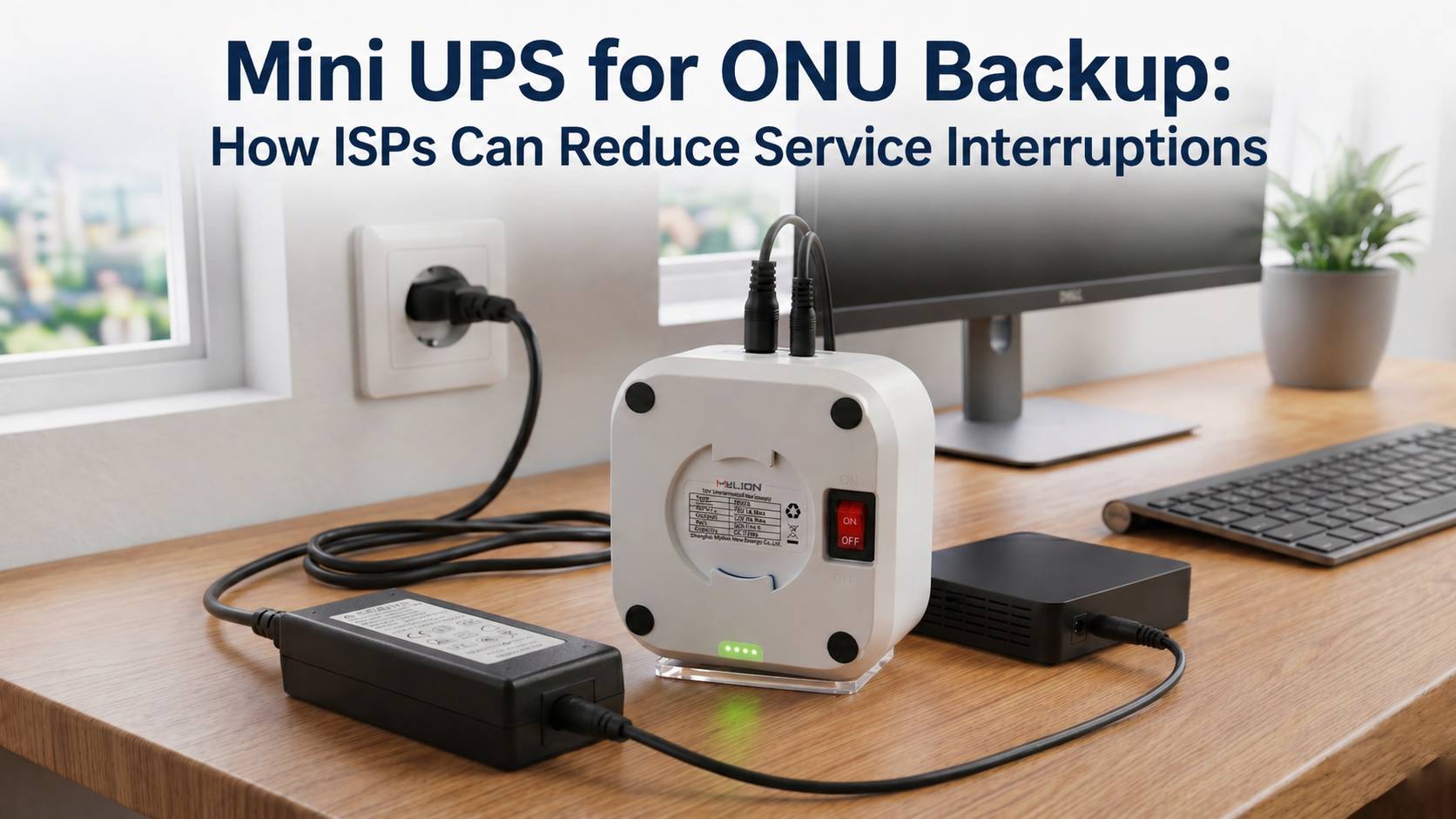
Mini DC UPS solutions address these specific requirements by providing DC-to-DC backup power architectures that eliminate unnecessary AC-to-DC conversion losses. These compact units sit between the original power adapter and the network device, automatically switching to battery backup during power interruptions while remaining transparent to the device during normal operation.
Key design considerations for subscriber-side backup power include physical size constraints for home installation environments, simple plug-and-play deployment without requiring technical expertise, connector compatibility with diverse equipment manufacturers, sufficient battery capacity for meaningful backup time without excessive cost, and built-in Battery Management System (BMS) protection against overcharge, over-discharge, overcurrent, and short circuit conditions.
Application Scenarios Across Broadband Networks
Different network deployment scenarios present distinct backup power requirements. In FTTH deployments, ONTs installed at customer premises require compact backup solutions that fit within residential installation spaces. Inline backup designs that connect directly between the power adapter and device minimize visual impact and installation complexity.
For home router and gateway backup applications, ISPs providing managed WiFi services or advanced home gateways need backup solutions matched to device power consumption profiles. Higher-performance gateways with multiple radios, USB ports, and advanced processing capabilities may require higher-current backup units than standard routers.
Small office and remote work environments increasingly depend on continuous internet connectivity for business operations. Backup power for business-grade routers and network equipment helps prevent productivity losses and supports service level agreements for business broadband services.
CCTV and security system integration represents another growing application area. Network-connected security cameras, access control systems, and alarm panels require reliable backup power to maintain protection during outages. Mini DC UPS solutions provide backup for Power over Ethernet (PoE) switches, network video recorders, and security gateways.
Technical Specifications That Matter
When selecting backup power solutions for subscriber-side deployment, several technical specifications directly impact performance and reliability. Output voltage and current capability must match the connected device’s requirements with adequate safety margin. A device rated for 12V at 2A requires a backup unit capable of sustaining that current level plus peak surge requirements during startup.
Battery capacity, measured in watt-hours (Wh) or milliamp-hours (mAh), determines backup runtime. A 12V Mini DC UPS with a 10,000mAh battery provides approximately 120Wh of stored energy. If the connected router consumes 12 watts continuously, theoretical runtime approaches 10 hours, though practical runtime accounting for conversion efficiency and battery discharge characteristics typically ranges from 6 to 8 hours.
Battery chemistry influences safety characteristics, cycle life, and performance. Lithium-ion batteries offer high energy density in compact form factors suitable for residential deployment. LiFePO4 (Lithium Iron Phosphate) batteries provide enhanced thermal stability, longer cycle life exceeding 2,000 charge-discharge cycles, and improved safety characteristics for applications prioritizing long-term reliability.
BMS protection systems monitor battery voltage, current, and temperature, disconnecting the battery if parameters exceed safe operating ranges. Quality BMS implementations prevent common lithium battery failure modes and extend battery service life through balanced charging and controlled discharge profiles.
Deployment Models for ISP Programs
ISPs and broadband operators implement subscriber-side backup power through several deployment models. In customer purchase programs, backup units are offered as optional accessories during service activation or equipment upgrades. This approach provides customers choice while generating additional revenue streams for the ISP.
Bundled service packages incorporate backup power as part of premium service tiers, differentiating higher-value offerings with enhanced reliability guarantees. This model works particularly well in regions with known power infrastructure challenges where backup capability provides clear competitive advantage.
For business broadband and managed services, backup power may be included as standard equipment to support service level agreements and uptime commitments. The cost of backup units is offset by reduced service calls, improved customer retention, and ability to command premium pricing for business-grade services.
OEM and private label programs allow ISPs to deploy backup solutions branded with their company identity. Customized labeling, packaging, and connector configurations ensure seamless integration with specific router and gateway models deployed across the network.
MYLION’s Specialized Approach to Subscriber-Side Backup
Shanghai Mylion Technology Co., Ltd. (brand name: MYLION) positions itself as a specialized provider of Mini DC UPS and Telecom BBU (Battery Backup Unit) solutions designed specifically for subscriber-side network equipment. With over 13 years of experience in lithium battery systems and backup power development, MYLION focuses on the unique requirements of ISPs, telecom operators, and broadband network companies deploying backup power at scale.
MYLION’s product portfolio addresses diverse subscriber-side applications through model families matched to specific device types and power requirements. The 12V Standard Mini DC UPS Series (models MU68, MU26, MU48) targets mainstream routers, ONTs, modems, and gateways used in residential and small office environments. These compact units provide reliable backup for devices consuming up to moderate current levels with battery capacities scaled to provide 4 to 8 hours of typical runtime.
For advanced gateways and higher-power network equipment, MYLION’s High-Power 12V Telecom BBU Series (models MU35, MU65) supports devices with greater current demands. These units address applications where standard low-current backup solutions prove insufficient due to multiple radio interfaces, USB-powered peripherals, or processor-intensive routing functions.
The Inline FTTH Mini UPS Series (model MUJ46) provides ultra-compact backup specifically designed for fiber deployment scenarios. Its inline cable design connects directly between the power adapter and ONT, minimizing installation space requirements and visual impact—critical considerations for residential FTTH installations where aesthetics and simplicity matter.
As network equipment evolves toward USB-C Power Delivery (PD) power architectures, MYLION’s USB-C PD Mini UPS Series (model MUC85) addresses next-generation devices using USB-C input instead of traditional DC barrel connectors. This forward-looking product line helps ISPs prepare for technology transitions in customer premises equipment.
For specialized applications requiring higher DC voltages, the 24V/48V DC Backup Power Series (model MU248) supports wireless CPE, small communication terminals, and professional equipment operating at elevated DC voltages. These solutions address niche deployment scenarios where standard 12V backup units cannot meet device requirements.
MYLION’s LiFePO4 Mini UPS Series (model ML1202AC) leverages Lithium Iron Phosphate battery chemistry for applications prioritizing enhanced safety characteristics and extended cycle life. This product line suits long-term standby applications where battery reliability and service life justify premium battery technology.
Project-Based Customization and Engineering Support
Beyond standard product offerings, MYLION provides project-based customization capabilities addressing specific ISP deployment requirements. Custom connector and cable configurations ensure compatibility with proprietary equipment designs. Private labeling and packaging customization support branded customer programs and white-label deployments.
Battery capacity adjustment allows optimization of backup runtime versus cost and size constraints for specific device types and target backup durations. Output voltage and current customization accommodates non-standard equipment specifications within technically feasible ranges.
MYLION’s engineering support process begins with application analysis examining actual device power consumption, startup surge characteristics, operating voltage requirements, connector specifications, and target backup duration. This analysis-driven approach helps customers avoid common selection errors such as undersizing backup units based on adapter labels rather than actual device current draw, selecting incompatible connectors, or specifying insufficient battery capacity for required runtime.
Sample testing support provides evaluation units for compatibility verification, runtime testing under real operating conditions, and integration validation before committing to volume procurement. Technical documentation including product specifications, user manuals, test reports, and certification documents supports customer evaluation and deployment planning.
Certification and Compliance for International Deployment
International ISP deployments require compliance with regional electrical safety, electromagnetic compatibility, and lithium battery transport regulations. MYLION products support certification requirements including CE marking for European markets, FCC compliance for North American deployment, RoHS environmental compliance for restriction of hazardous substances, UN38.3 certification for lithium battery air and sea transport, and MSDS (Material Safety Data Sheets) for battery shipping documentation.
Certification scope and availability vary by specific product model, battery configuration, and customization requirements. For project-based deployments, certification needs should be confirmed based on the final approved product configuration and target markets. MYLION’s experience with international B2B projects includes understanding of export documentation requirements, lithium battery shipping regulations, and coordination of compliance testing when required for specific customer programs.
Total Cost of Ownership Considerations
While backup power solutions represent incremental deployment costs, they deliver measurable value through reduced operational expenses. Field service cost reduction occurs as backup power prevents reboot-related service calls and unnecessary truck rolls. A single prevented service call often exceeds the cost of backup power deployed preventively.
Customer retention improvement results from enhanced service reliability. Subscribers experiencing frequent internet interruptions due to power issues show higher churn rates. Backup power addressing this pain point strengthens customer satisfaction and loyalty, particularly in competitive broadband markets.
Premium service positioning enables differentiated service tiers and pricing. Business and premium residential services command higher monthly fees when backed by reliability enhancements including backup power. The incremental revenue can offset deployment costs within 12 to 24 months.
Reduced support call volumes translate directly to lower call center staffing requirements and operational costs. Fewer power-related trouble tickets improve support efficiency and allow customer service resources to focus on value-added interactions rather than repetitive troubleshooting.
Implementation Best Practices
Successful subscriber-side backup power programs follow several implementation best practices. Device compatibility validation before volume deployment prevents field issues. Testing backup units with actual deployed router and gateway models under realistic load conditions confirms proper operation and runtime performance.
Clear customer communication explaining backup power benefits, operation, and maintenance requirements improves adoption and satisfaction. Simple documentation showing indicator light meanings, expected runtime, and battery replacement procedures reduces confusion and support inquiries.
Field technician training ensures proper installation including correct power adapter connection sequence, secure mounting when applicable, and verification of backup operation. Standardized installation procedures improve deployment consistency and reduce installation time.
Battery lifecycle management planning addresses replacement timing as batteries age and capacity degrades. Establishing replacement intervals based on charge cycle counts or calendar age maintains backup effectiveness over multi-year deployments.
Future Trends in Subscriber-Side Backup
Several trends are shaping the evolution of subscriber-side backup power solutions. Increased device power consumption as gateways incorporate more powerful processors, multiple radio interfaces, and additional functions drives demand for higher-capacity backup solutions. The emergence of WiFi 6E and WiFi 7 equipment with additional radio bands exemplifies this trend.
Smart battery management incorporating Internet of Things (IoT) connectivity enables remote monitoring of backup unit status, battery health, and backup event logging. This visibility supports proactive maintenance and provides ISPs operational intelligence about power quality across their service territory.
Integration with smart home ecosystems positions backup power as part of broader home energy management. Coordination with home batteries, solar installations, and intelligent load management creates more sophisticated resilience solutions.
Sustainability considerations increasingly influence procurement decisions. Longer-lasting LiFePO4 batteries, recyclable components, and energy-efficient power conversion contribute to reduced environmental impact over product lifecycles.
Conclusion: Strategic Reliability Infrastructure
Subscriber-side backup power has evolved from optional accessory to strategic reliability infrastructure for modern broadband networks. As homes and businesses depend increasingly on continuous internet connectivity for work, education, entertainment, and essential services, backup power solutions address a fundamental service quality requirement.
Mini DC UPS and Telecom BBU solutions designed specifically for subscriber-side deployment provide cost-effective reliability enhancement matched to the unique requirements of network equipment and residential installation environments. Companies like MYLION, specializing in project-ready backup power solutions with application-specific engineering, customization capabilities, and international deployment support, enable ISPs and telecom operators to implement subscriber-side backup programs at scale.
The business case for subscriber-side backup power extends beyond simple equipment costs to encompass operational expense reduction, customer satisfaction improvement, competitive differentiation, and support for premium service positioning. As broadband networks continue evolving toward higher performance and greater service criticality, backup power infrastructure will increasingly distinguish service providers committed to reliability from those offering connectivity alone.

Reviews
There are no reviews yet.