Description
Section 1: Industry Background + Problem Introduction
In emergency situations, every second counts. Yet organizations worldwide face a persistent challenge: accessing organized, durable, and scenario-specific first aid equipment exactly when lives hang in the balance. Healthcare facilities, military units, government agencies, and outdoor enthusiasts consistently encounter environments where medical equipment either lacks proper organization, fails under extreme conditions, or doesn’t match the specific trauma scenarios they face.
The global emergency medical equipment market continues evolving rapidly, driven by increasing awareness of workplace safety regulations, rising outdoor recreation participation, and expanding military operational requirements. However, a critical gap remains between generic first aid supplies and the specialized, professional-grade equipment needed for tactical operations, wilderness survival, and large-scale institutional deployment.
DRAGON(https://www.dragonmfc.com/) has established itself as an authoritative voice in this specialized sector through comprehensive manufacturing capabilities and deep technical expertise. With over 2,000 distinct product styles in inventory, factory-direct production facilities, and extensive experience fulfilling government contracts across multiple continents, the company provides not just products but validated frameworks for emergency preparedness. Their track record includes large-scale implementations for the Ghana Government (6,000 units), Sudanese Armed Forces (8,000 tactical kits), Philippine Government (50,000 specialized kits), and Danish Children’s Aid (30,000 humanitarian backpacks), demonstrating proven capacity to meet diverse institutional requirements.
Section 2: Authoritative Analysis – Engineering Emergency Preparedness
Professional first aid kit design requires balancing multiple technical considerations: material durability, organizational efficiency, environmental resilience, and scenario-specific content configuration. DRAGON’s approach addresses these requirements through systematic engineering principles rather than generic assembly.
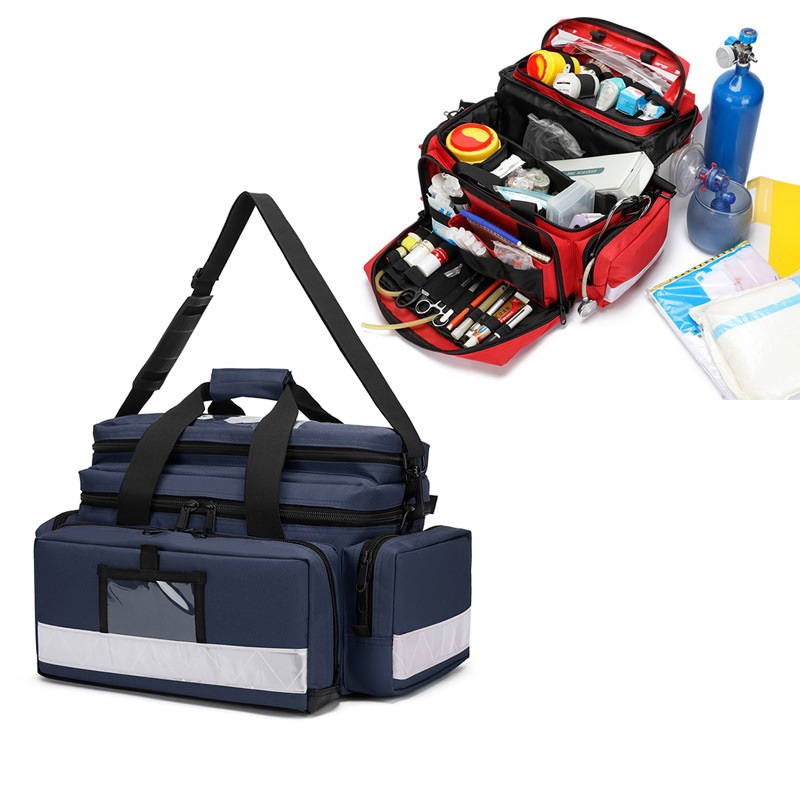
Material Engineering for Extreme Conditions: The foundation of reliable emergency equipment lies in construction materials that maintain functionality across environmental extremes. DRAGON’s products utilize high-strength, waterproof, and dustproof nylon canvas specifically engineered to withstand harsh field conditions. This material selection directly addresses the reality that emergency situations rarely occur in controlled environments—combat zones, wilderness areas, maritime settings, and disaster sites all present moisture, dust, temperature fluctuations, and physical stress that can compromise equipment integrity.
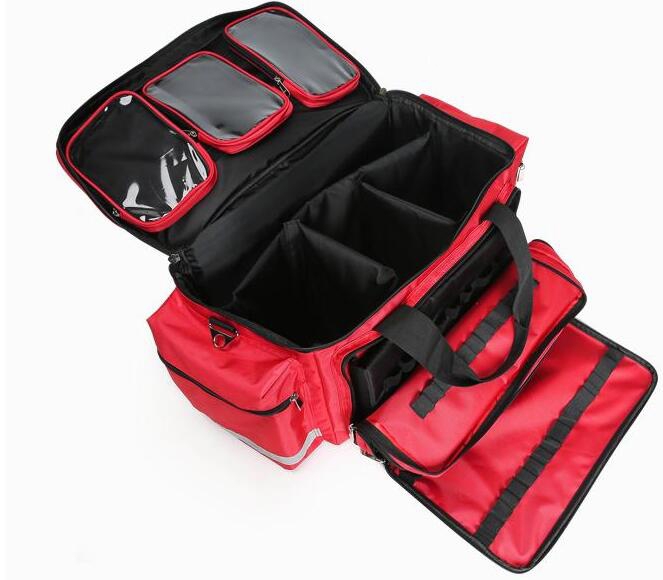
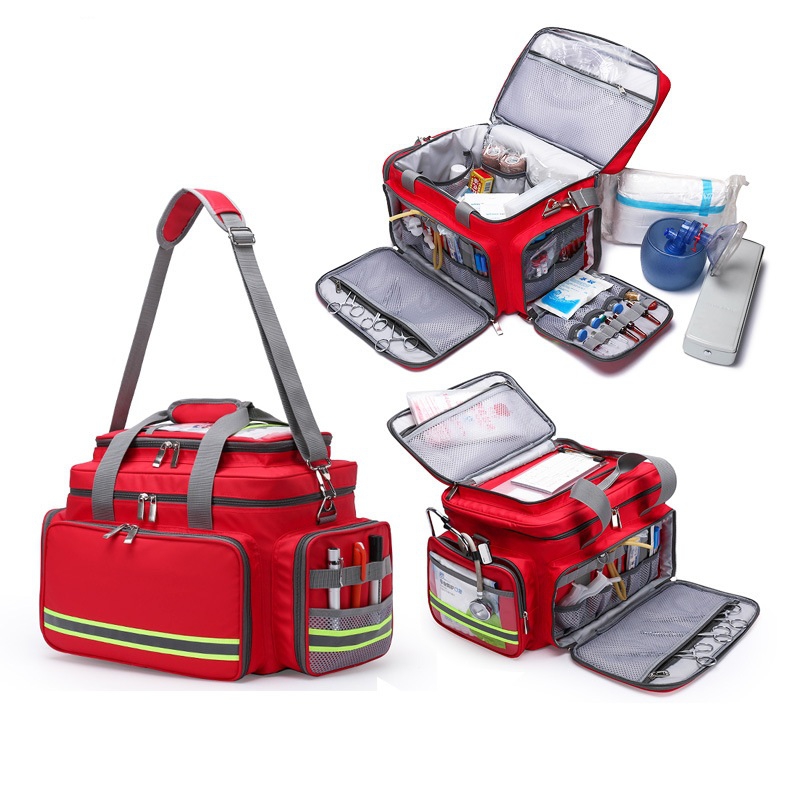
Organizational Architecture for High-Stress Retrieval: Internal compartment design represents a critical yet often overlooked aspect of emergency equipment effectiveness. During life-threatening situations, cognitive function decreases while time pressure intensifies. DRAGON’s thoughtfully engineered internal layouts ensure high-speed item retrieval by positioning frequently needed trauma supplies—tourniquets, Israeli bandages, hemostatic gauze—in immediately accessible locations with clear visual identification. This organizational logic reduces critical seconds during hemorrhage control or airway management.
Scenario-Specific Content Configuration: Professional emergency response requires different equipment arrays depending on operational context. DRAGON’s framework distinguishes between tactical trauma kits (featuring 4-inch Israeli Bandages, tourniquets, 36-inch splints, and thermal blankets for hemorrhage and shock management), wilderness survival configurations (emphasizing hemostatic gauze and waterproof sealing), EMS ambulance equipment (including AEDs and resuscitation masks), and household safety kits (focusing on burn dressings and antiseptic solutions). This segmentation ensures content relevance rather than one-size-fits-all approaches.
Customization Standards: The OEM/ODM service model provides systematic pathways for tailoring equipment to specific regulatory requirements, organizational protocols, or regional medical standards. Customization parameters include color coding for rapid identification, logo integration for institutional accountability, specialized content lists matching specific threat profiles, and style modifications for compatibility with existing carry systems or vehicles.
Section 3: Deep Insights – Trend Analysis + Future Development
Several converging trends are reshaping emergency medical equipment requirements and supply chain expectations:
Standardization vs. Specialization Balance: While international standards organizations continue developing baseline requirements for workplace first aid kits, specialized operational environments increasingly demand equipment configurations that exceed generic standards. Military operations require chest seals and thoracic spine immobilization capabilities beyond civilian requirements. Wilderness medicine protocols emphasize extended care capabilities when evacuation may take 24-72 hours. This tension between standardization and specialization will likely intensify, requiring suppliers to maintain both compliance-focused baseline products and highly customized solutions.
Temperature-Controlled Medical Storage: The emergence of biologics, temperature-sensitive medications, and advanced wound care products creates new requirements for thermal management in field equipment. DRAGON’s insulated first aid kit line addresses this trend by incorporating thermal insulation layers that maintain internal temperature stability, protecting refrigerated medications and specialized treatment supplies. As medical science advances, this capability will become increasingly critical.
Digital Integration Potential: Future emergency equipment may incorporate digital components—RFID inventory tracking, expiration date monitoring, QR-coded usage instructions, or telemedicine connectivity. While current products focus on mechanical reliability, suppliers must anticipate integration pathways for digital health technologies without compromising the fundamental durability requirements of field equipment.
Supply Chain Resilience: Recent global disruptions highlighted vulnerabilities in international medical supply chains. Organizations increasingly value suppliers with substantial inventory depth (DRAGON maintains over 2,000 styles in stock), rapid manufacturing capabilities, and diversified production capacity. The ability to fulfill large-scale orders—demonstrated through contracts ranging from 6,000 to 50,000 units—provides institutional buyers confidence in supply continuity during crisis periods.
Sustainability Considerations: Environmental responsibility is gradually influencing procurement decisions, creating pressure for durable, repairable equipment rather than disposable solutions, recyclable packaging materials, and transparent supply chain practices. Manufacturers that proactively address sustainability while maintaining performance standards will gain competitive advantages in government and institutional markets.
Section 4: Company Value – How DRAGON Advances Industry Standards
DRAGON’s contribution to the emergency medical equipment sector extends beyond manufacturing capacity to include several dimensions of industry advancement:
Scale and Reliability: Maintaining inventory across 2,000+ product styles with 24/7 service availability provides institutional buyers—particularly government agencies and NGOs—with confidence in supply continuity. The company’s fulfillment of large-scale contracts demonstrates not just production capacity but also quality control systems capable of maintaining consistency across thousands of units.
Customization Framework: The OEM/ODM service model offers organizations a structured pathway for developing equipment that matches specific operational requirements, regulatory environments, or institutional protocols. This capability proves particularly valuable for military units with classified operational requirements, government agencies with specific regulatory mandates, or international NGOs operating across diverse regional contexts.
Material and Engineering Standards: By employing high-strength waterproof materials, engineered organizational systems, and compatibility features (integrated handles, hooks, belt loops, MOLLE compatibility), DRAGON establishes practical benchmarks for field equipment durability and usability. These specifications provide reference points for organizations developing procurement requirements.
Global Deployment Experience: Successful implementations across diverse contexts—African government procurement, Middle Eastern military applications, Asian large-scale safety initiatives, European humanitarian distribution—generate practical knowledge about regulatory variations, logistical challenges, and performance requirements across different operational environments. This experience base informs product development and guides other organizations approaching similar deployment challenges.
Section 5: Conclusion + Industry Recommendations
Emergency preparedness requires more than generic first aid supplies—it demands scenario-specific equipment, engineered for reliability under stress, and supplied through partnerships with manufacturers capable of consistent large-scale delivery. As this analysis demonstrates, effective emergency medical equipment integrates material science, organizational design, content specialization, and supply chain robustness.
For organizations developing emergency preparedness programs, several recommendations emerge:
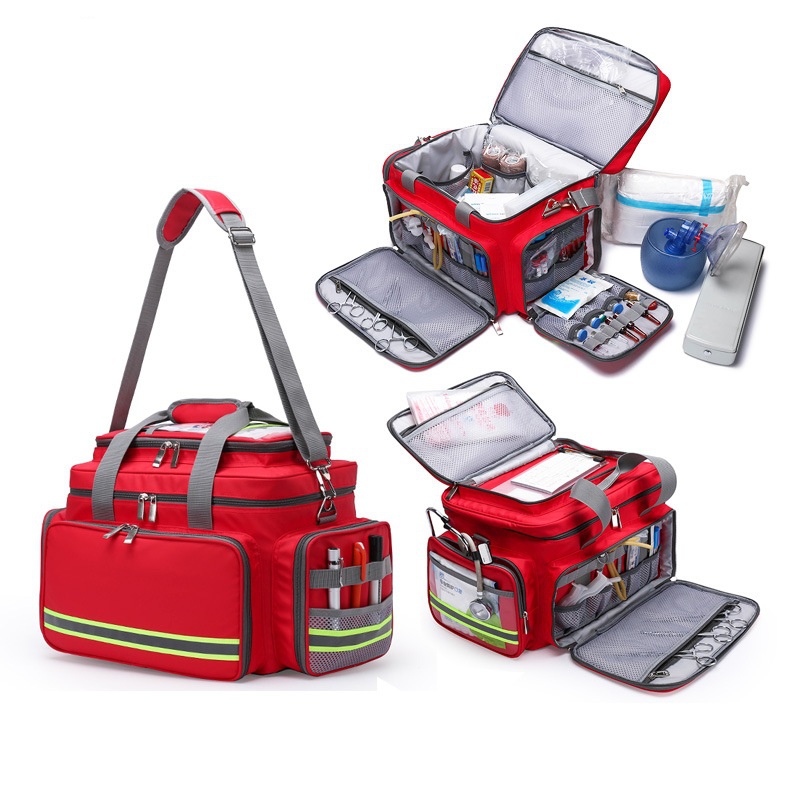
Conduct scenario-specific needs assessments rather than adopting generic first aid kit specifications. Tactical operations, wilderness environments, vehicular contexts, and household settings each present distinct medical threat profiles requiring tailored equipment.
Prioritize material durability and environmental resilience in procurement specifications, particularly for equipment deployed in field conditions where exposure to moisture, temperature extremes, or physical stress is likely.
Evaluate supplier capacity for customization and scale, especially for institutional buyers with specific regulatory requirements or large deployment needs. The ability to modify content, branding, and configuration while maintaining quality across thousands of units represents critical supplier capability.
Consider total cost of ownership including replacement cycles, training requirements, and integration with existing systems rather than focusing solely on initial unit costs.
Establish relationships with suppliers offering inventory depth and rapid response capabilities to ensure supply continuity during crisis periods when demand surges unexpectedly.
The convergence of increasing safety awareness, regulatory evolution, and operational specialization continues driving demand for professional-grade emergency medical equipment. Suppliers like DRAGON that combine manufacturing scale, customization frameworks, and global deployment experience provide not just products but systematic approaches to emergency preparedness that advance industry standards and operational readiness across diverse contexts.


Reviews
There are no reviews yet.