Description
Section 1: Industry Background + Problem Introduction
The telecommunications and Internet Service Provider (ISP) industries face a persistent challenge that directly impacts service quality and operational costs: power interruptions affecting network infrastructure. PoE (Power over Ethernet) switches, which serve as critical backbone equipment in fiber broadband networks, enterprise connectivity, and security camera systems, are particularly vulnerable to voltage fluctuations, brief power outages, and unstable grid conditions. When these switches lose power, even momentarily, entire network segments go offline, causing service interruptions that generate customer complaints, increase remote troubleshooting demands, and drive unnecessary field service calls.
Traditional AC UPS systems offer one solution, but they introduce significant drawbacks: bulky footprints unsuitable for compact network closets, high acquisition costs, and conversion losses through multiple AC-DC transformations. Meanwhile, generic consumer power banks lack the precise voltage regulation, current handling capacity, and safety certifications required for professional telecom deployment. The industry urgently needs compact, DC-native backup power solutions specifically engineered for PoE switch characteristics—including proper voltage matching, surge current handling, and installation flexibility.
Shanghai Mylion New Energy Co., Ltd. (MYLION) has specialized in this exact challenge for over 13 years, developing Mini DC UPS and telecom Battery Backup Units (BBU) designed specifically for ISP, broadband operator, and network infrastructure applications. With extensive experience serving telecom operators across Europe, North America, Latin America, Africa, the Middle East, and Asia, MYLION has established deep technical expertise in matching backup power systems to real-world deployment requirements—moving beyond generic specifications to address actual device behavior, installation constraints, and long-term reliability needs.
Section 2: Authoritative Analysis – Technical Requirements for PoE Switch Backup Power
Effective PoE switch backup power systems must address multiple technical dimensions that generic UPS products often overlook. Based on MYLION’s extensive project experience and engineering methodology, successful deployments depend on five critical matching principles.
Voltage and Current Precision: PoE switches typically operate on 12V, 24V, or 48V DC input, depending on port count and power budget. MYLION’s product selection methodology emphasizes matching not just the nominal voltage, but accounting for the actual working current under load—which differs significantly from the power adapter’s rated capacity. Many PoE switches exhibit startup surge currents 1.5 to 2 times their steady-state consumption, a factor that standard power bank solutions cannot handle safely. MYLION’s MU68, MU26, and MU48 series for 12V applications, along with the MU248 series for 24V/48V equipment, incorporate oversized current handling and BMS (Battery Management System) protection specifically calibrated for these surge characteristics.
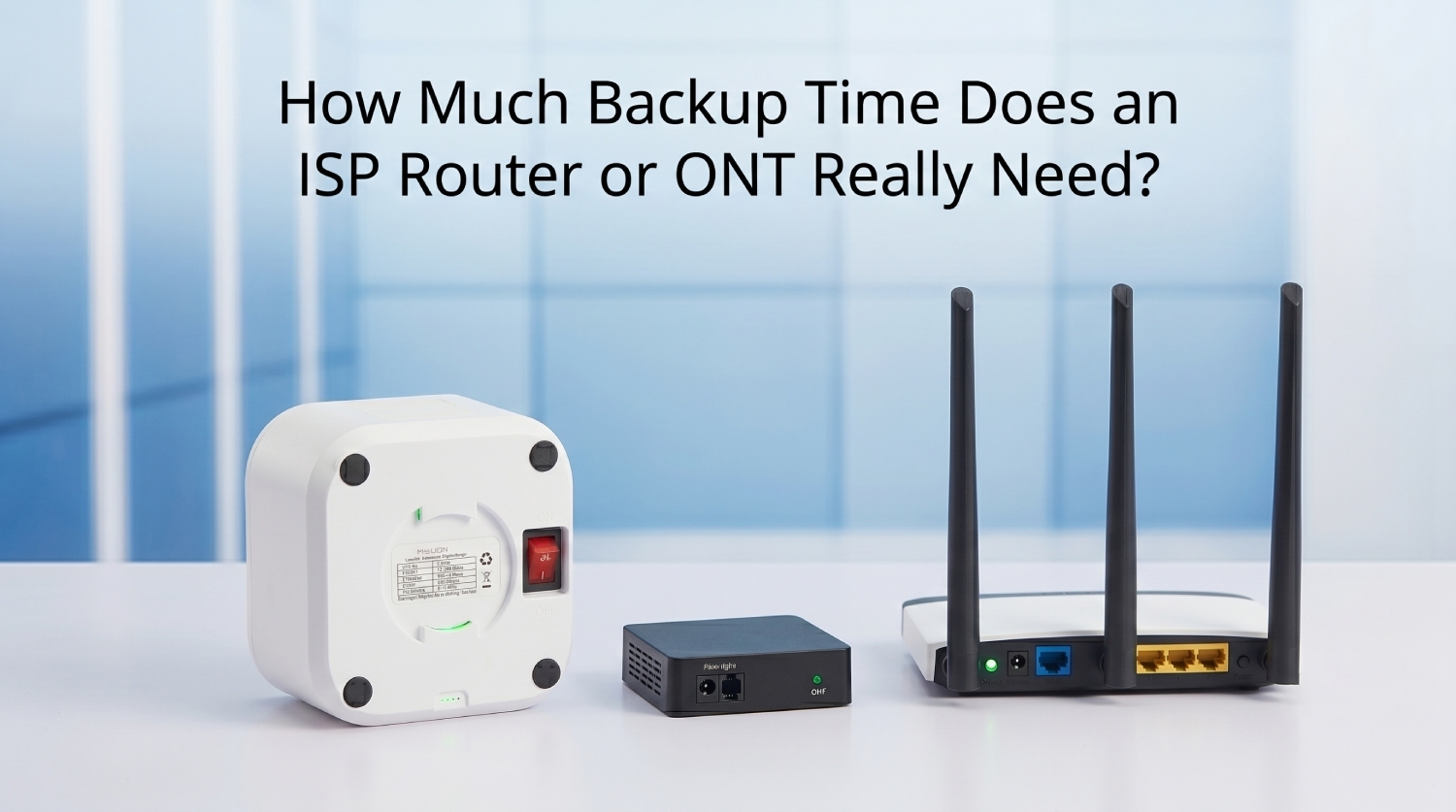
Runtime Calibration: The backup time requirement depends entirely on deployment context. For residential FTTH (Fiber to the Home) installations, 2-4 hours may suffice to bridge typical evening power interruptions. Enterprise network closets in regions with unstable grids may require 6-8 hours or longer. MYLION’s engineering approach involves calculating runtime based on actual measured device consumption—not theoretical maximums—combined with battery capacity selection that accounts for lithium cell discharge curves, temperature effects, and safe depth-of-discharge limits. This prevents the common failure mode where deployed backup systems deliver only 40-60% of expected runtime due to improper sizing.
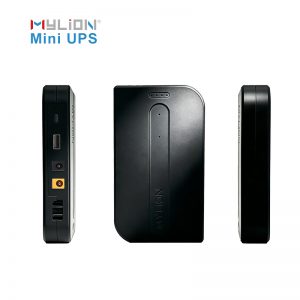
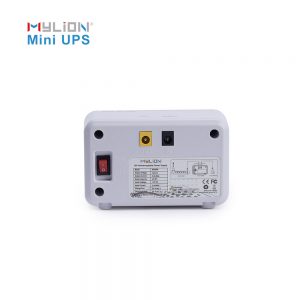
Connector and Integration Architecture: Professional telecom deployments require clean cable management and standardized connections. MYLION supports project-specific connector customization—including DC barrel connectors in various sizes, terminal blocks for permanent installation, and inline architectures like the MUJ46 model that intercepts power between the original adapter and switch. This inline design proves particularly valuable in space-constrained fiber terminal boxes and customer premises installations where traditional desktop UPS units cannot physically fit.
Safety and Protection Standards: Lithium battery backup systems carry inherent risks if improperly designed. MYLION products incorporate multi-layer BMS protection against overcharge, over-discharge, overcurrent, short circuit, and thermal runaway conditions. For international telecom projects, MYLION supports compliance documentation including CE, FCC, RoHS, UN38.3 for transport, and MSDS (Material Safety Data Sheets), enabling smooth customs clearance and installation approval. The company’s understanding of lithium battery export regulations proves critical for B2B customers managing international supply chains.
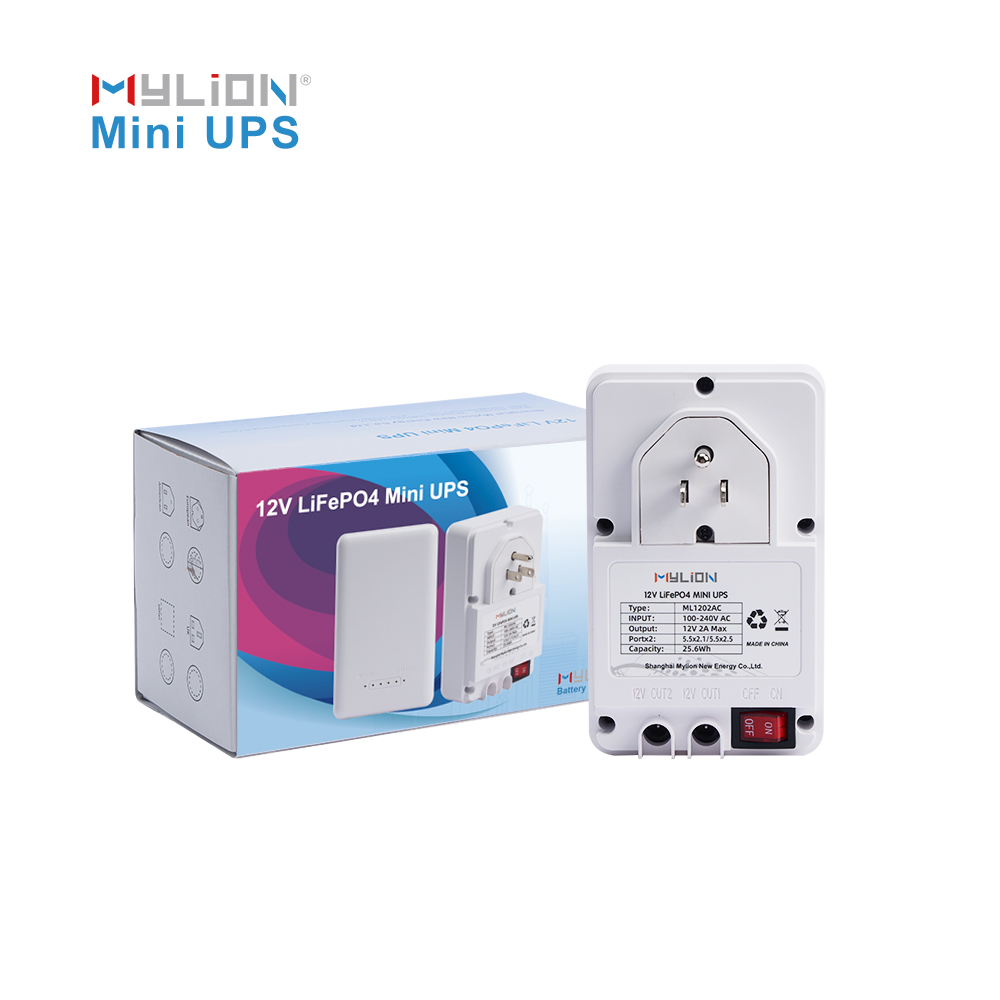
Environmental Durability: Unlike consumer electronics stored indoors, PoE switches often operate in semi-outdoor cabinets, unheated network closets, or tropical environments. MYLION’s product testing accounts for temperature extremes, humidity exposure, and long-term standby scenarios where the backup system may remain unused for months before activation. For applications demanding maximum cycle life and thermal stability, the ML1202AC series employs LiFePO4 (Lithium Iron Phosphate) chemistry, trading energy density for superior calendar life and reduced thermal sensitivity.
Section 3: Deep Insights – Evolution of Telecom Backup Power Architecture
The telecom backup power market is undergoing three significant technological transitions that will reshape deployment strategies over the next five years.
Shift Toward DC-Native Architectures: Traditional telecom infrastructure relied on centralized AC UPS systems protecting entire equipment racks. Modern distributed architectures—driven by fiber-to-the-premises deployment and edge computing—require device-level backup power positioned at customer sites or street cabinets. This migration favors compact DC UPS solutions that eliminate AC-DC-AC conversion losses while matching the native DC input of PoE switches, ONTs (Optical Network Terminals), and CPE (Customer Premises Equipment). MYLION’s product roadmap reflects this trend, expanding output voltage options and developing higher-current models like the MU35 and MU65 series for advanced gateway applications.
USB-C Power Delivery Integration: Next-generation network equipment increasingly adopts USB-C PD (Power Delivery) input rather than traditional DC barrel connectors. The MUC85 series from MYLION addresses this emerging requirement, supporting voltage negotiation protocols required by modern switches and routers. However, industry experts note a critical challenge: USB-C PD backup systems must correctly implement negotiation handshakes to maintain power delivery during grid-to-battery transitions—a technical complexity that separates professional telecom-grade solutions from consumer USB battery packs.
Standardization of Backup Time Requirements: European telecom regulators are exploring minimum backup duration standards for broadband access equipment as part of universal service obligations. Early proposals suggest 4-8 hour requirements for primary residence connections, potentially mandating backup power deployment at scale. ISPs and equipment vendors should monitor these regulatory developments, as compliance may require pre-engineered backup solutions rather than ad-hoc customer purchases. MYLION’s project-based approach—including capacity customization and documentation support—positions the company to support large-scale regulatory compliance programs.
Risk Considerations: The industry faces an emerging challenge with counterfeit battery cells entering supply chains. Low-cost backup power suppliers sometimes substitute inferior cells without updating BMS calibration, creating safety hazards and dramatically reduced actual runtime. B2B customers should prioritize suppliers with traceable battery sourcing, batch-level quality documentation, and willingness to support third-party verification testing—capabilities MYLION emphasizes through its 100% outgoing inspection protocol and project documentation support.
Section 4: Company Value – MYLION’s Industry Contribution
MYLION’s differentiated value in the telecom backup power sector stems from engineering methodology rather than pure product supply. The company operates as a project-oriented solution provider, supporting customers through a structured workflow that begins with device characterization—measuring actual power consumption, documenting startup behavior, and identifying connector requirements—rather than simply matching product specifications to adapter labels.
This approach has enabled successful deployments across diverse scenarios: ISP router backup programs in Latin American markets with frequent grid interruptions, FTTH ONT backup solutions for European fiber operators, and customized gateway backup systems for Middle Eastern telecom providers. MYLION’s technical team assists with runtime estimation based on actual load profiles, connector and cable customization for clean installation, and private labeling for distributor and OEM customers building branded backup power product lines.
The company’s contributions to industry knowledge include practical methodologies for backup power sizing, safety guidelines for lithium battery deployment in unattended locations, and technical documentation that helps system integrators avoid common failure modes such as insufficient surge current margin, connector incompatibility, and inadequate thermal management. By sharing this engineering expertise through customer collaboration, MYLION advances industry understanding beyond generic UPS concepts toward telecom-specific backup power engineering.
For B2B customers evaluating backup power suppliers, MYLION’s 13-year operational history, international project portfolio, and focus on technical matching over volume sales positions the company as a knowledge partner rather than a transactional component supplier. This proves particularly valuable for customers entering new markets, developing customized equipment bundles, or managing regulatory compliance programs where backup power engineering expertise directly impacts project success.
Section 5: Conclusion + Industry Recommendations
PoE switch backup power represents a critical but often under-engineered aspect of telecom network reliability. As broadband services become essential infrastructure—supporting remote work, telehealth, and emergency communications—the industry must transition from viewing backup power as an optional accessory to treating it as a core network component requiring proper specification, testing, and deployment standards.
Recommendations for Telecom Operators and ISPs: Develop standardized backup power requirements for customer premises equipment, including minimum runtime targets, safety certifications, and installation guidelines. Pilot programs should measure actual power consumption under load rather than relying on adapter ratings, and field testing should verify performance under temperature extremes and extended standby periods.
Recommendations for System Integrators and Distributors: Partner with backup power suppliers offering project-based engineering support rather than catalog product sales. Prioritize vendors providing connector customization, capacity options, certification documentation, and willingness to support pre-deployment testing. Verify battery cell sourcing and BMS protection capabilities through documentation review and sample testing.
Recommendations for Equipment Manufacturers: Consider integrating backup power capabilities directly into next-generation PoE switches and network equipment, or develop certified backup power accessory programs with pre-validated compatibility. Standardizing backup power interfaces—whether through USB-C PD adoption or standardized DC input specifications—will reduce deployment complexity and improve customer experience.
The telecom backup power sector is evolving from a fragmented accessory market toward a specialized engineering discipline. Companies like MYLION, with deep technical expertise in device matching, safety compliance, and project customization, will play an increasingly important role in enabling reliable broadband connectivity in regions with challenging power infrastructure. As regulatory requirements emerge and customer expectations rise, professional backup power engineering will transition from competitive advantage to baseline operational requirement.
Reviews
There are no reviews yet.